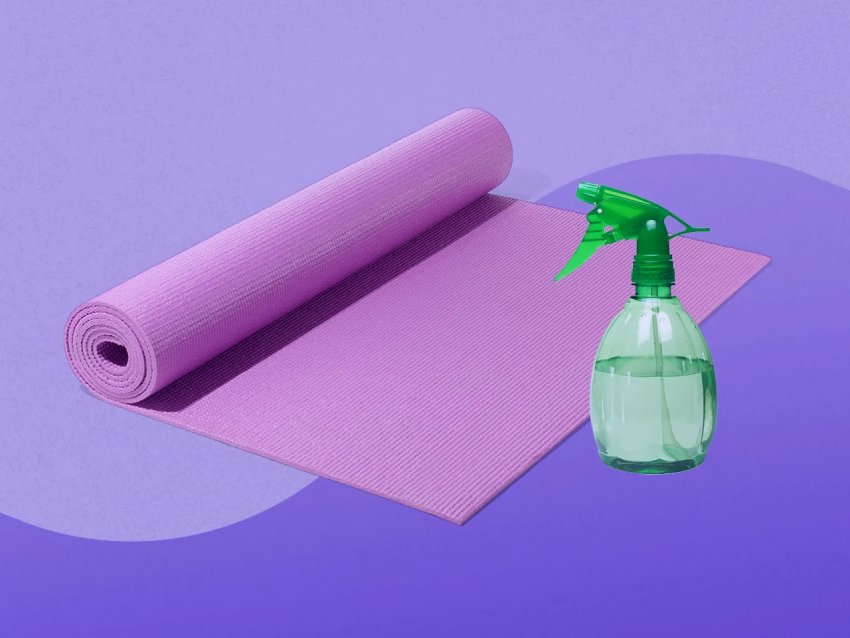
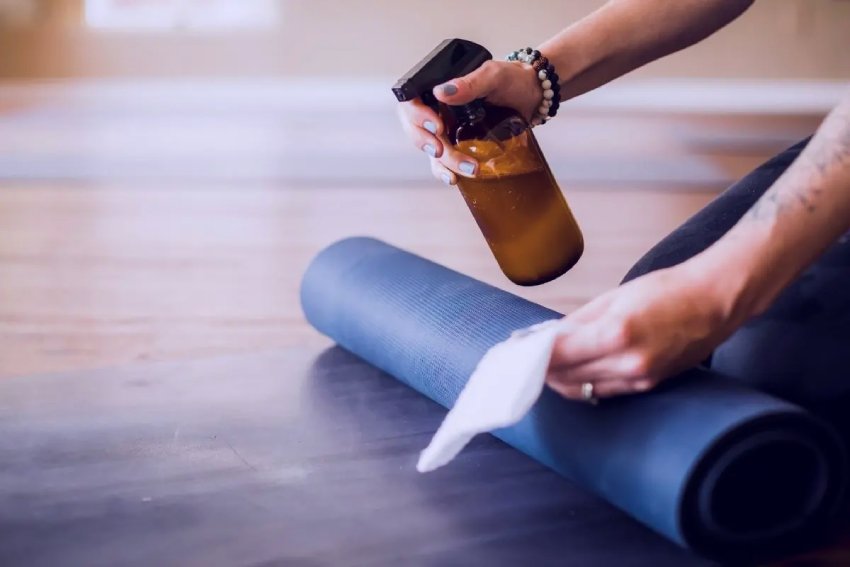
To clean a yoga mat, wipe it down with a cloth or sponge dipped in a mix of mild soap and warm water (or a 50/50 white vinegar and water spray), scrub gently, wipe away residue with clean water, and let it air dry completely before rolling it up. Give it a quick wipe-down after each use and a deeper clean weekly if you practice often. Avoid bleach, harsh detergents, and abrasive brushes, which break the material down over time.
Whether you’re a seasoned yogi or just starting your wellness journey, keeping your yoga mat clean is key to both its longevity and a hygienic practice. Below, our Pros walk through how often to clean different types of mats, the best methods, and what to avoid.
How often should you clean a yoga mat?
It depends on how much you use the mat and how much you sweat. If you practice regularly, clean it at least once a week, plus a quick wipe-down after each session. Practicing outdoors or in shared spaces exposes the mat to more dirt and bacteria, so clean it more often in those cases.
Can you clean a yoga mat in the washing machine?
Check the manufacturer’s instructions first — not all mats are machine-safe. Most standard vinyl or PVC mats can be washed on a gentle, cold cycle without damage, but natural rubber or cork mats often can’t take the agitation and heat, and may lose their shape or quality.
If your mat is machine-washable, use a gentle cycle with cold water, skip harsh detergents and bleach, and remove any straps or accessories first.
What happens if you don’t clean your yoga mat?
An unwashed mat becomes a magnet for bacteria. Germs accumulate on the surface, raising the risk of skin irritations and infections, and the buildup of sweat and dirt also breaks down the material and shortens the mat’s lifespan.
Can you use Clorox wipes on a yoga mat?
Yes — disinfecting wipes can remove bacteria and dirt effectively. Follow the manufacturer’s instructions, and always let the mat dry completely before use, since residual moisture causes slipping. Don’t overuse them, though: prolonged chemical exposure can degrade the mat over time.
How do you deep clean a yoga mat?
Reach for gentle, effective natural ingredients. Spray on a solution of equal parts water and white vinegar and wipe clean, or mix warm water with a few drops of tea tree oil — valued for its antibacterial properties — and scrub the mat with it. Both lift grime and help eliminate the odors that come from bacteria buildup.
How long does bacteria live on a yoga mat?
It varies with the type of bacteria and the conditions, but on average germs can survive on a mat from several hours to several days, with humidity, temperature, and cleanliness all affecting growth.
To keep growth down: clean the mat regularly with an appropriate solution or disinfectant, let it dry fully after each use (moisture encourages bacteria), and avoid sharing it — a towel or mat cover adds extra protection.
How can you keep a yoga mat cleaner for longer?
A few preventive habits go a long way. Lay a towel or mat cover over the mat during practice to limit direct contact with sweat, and wipe it down with a mild soap-and-water solution after each session.
Storage matters too. Roll the mat with the top (practice) side facing outward so bacteria don’t transfer onto the surface you use, and keep it in a cool, dry place out of direct sunlight to discourage mold and mildew.
What should you use to clean a yoga mat?
Antibacterial sprays or wipes that target bacteria work well, as does a DIY mix of water and white vinegar — gentle on the surface but still effective at killing germs.
What should you avoid using on a yoga mat?
Skip harsh chemicals and abrasive materials — harsh scrub brushes, bleach, and strong detergents can damage or degrade the material and won’t necessarily clean it any better. Stick to gentle, non-toxic solutions to protect both the mat and your skin.
What are the steps to cleaning a yoga mat?
Wipe the mat down with a damp cloth or sponge, using a mix of mild soap and warm water to lift dirt and sweat. Scrub gently so every area gets cleaned, rinse thoroughly, and pat dry with a towel.
Then let it air dry completely before using it again — hang it in an open space away from direct sunlight or heat. This prevents bacteria growth and protects the mat’s integrity.
How do you make your own mat spray?
A homemade spray is easy and inexpensive. Combine water, white vinegar, and a few drops of an essential oil like tea tree or lavender for an effective, refreshing cleaner that removes bacteria and keeps the mat smelling fresh.
Going DIY also lets you control the ingredients and skip the harsh chemicals found in some commercial sprays — a safer, more eco-friendly clean.
Is cleaning your yoga mat really necessary?
Yes. A consistent routine keeps your mat hygienic and extends its life by clearing away the germs and contaminants it picks up during use. A clean yoga mat is better for both your health and your practice, making every session more pleasant.