
24 Garage Organizing and Decluttering Ideas
The fastest way to organize a cluttered garage is to empty it, deep clean the floor and shelves, sort everything into keep / donate / toss piles, then put items back with vertical storage — wall shelving, hooks, pegboards, ceiling racks, and clear labeled bins — so the floor stays clear for cars and walking paths. Keep daily-use tools within reach, park seasonal gear high or in corners, lock chemicals in a ventilated cabinet away from heat, and add a door mat so dirt does not track back in. Below are practical declutter and organize ideas that actually stick.

Ideas for cleaning out your garage
These first steps matter more than buying new bins. Skip them and the clutter returns in a month.
- Take it all out. Empty the garage on a dry day and stage items on the driveway in one zone so you can see what you own.
- Deep clean the empty shell. Vacuum floors and shelves, mop concrete (baking soda in warm water for light grime; a degreaser or cat-litter poultice for oil stains), and wipe cabinets. Let surfaces dry fully.
- Wipe the keepers. Dust and cobwebs ride back in on tools and bins if you skip this pass. A quick wipe also shows what is rusty or broken.
- Sort into categories. Tools, auto, garden, sports, seasonal décor, and first aid are common groups — use whatever matches your household.
- Donate, recycle, or dispose correctly. Toss broken gear. Donate duplicates you never use. Expired paint, solvents, pesticides, and automotive fluids are hazardous waste — check local collection rules instead of pouring them down a drain or tossing them in household trash.
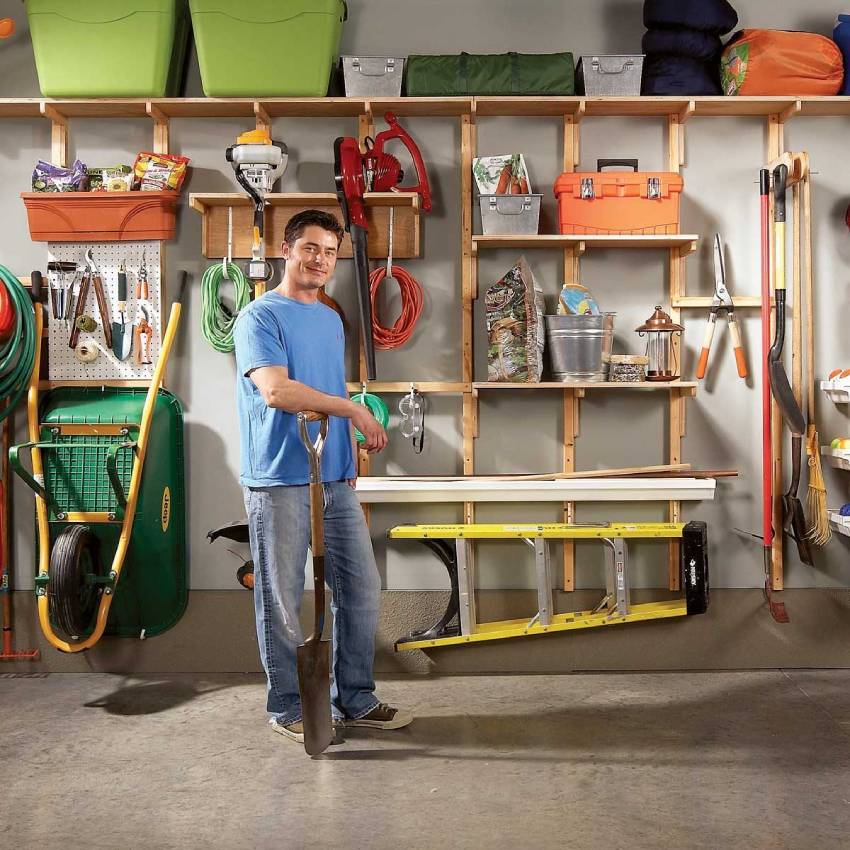
Ideas for organizing your garage
- Sketch a layout first. Mark parking footprints, walking paths, and where each category lives before you start putting things back.
- Put daily-use items in easy reach. Bikes, everyday tools, and cleaning supplies belong at arm level near the door you actually use.
- Park rare items high or deep. Holiday décor, camping gear you use once a year, and archived paperwork can go on high shelves or ceiling racks.
- Keep a clear car zone. Measure the vehicle with doors open. Storage that blocks a door will get shoved aside and become clutter again.
- Leave a landing strip. A small table or wall hooks by the entry for keys, bags, and return-to-house items stops pileups on the hood.
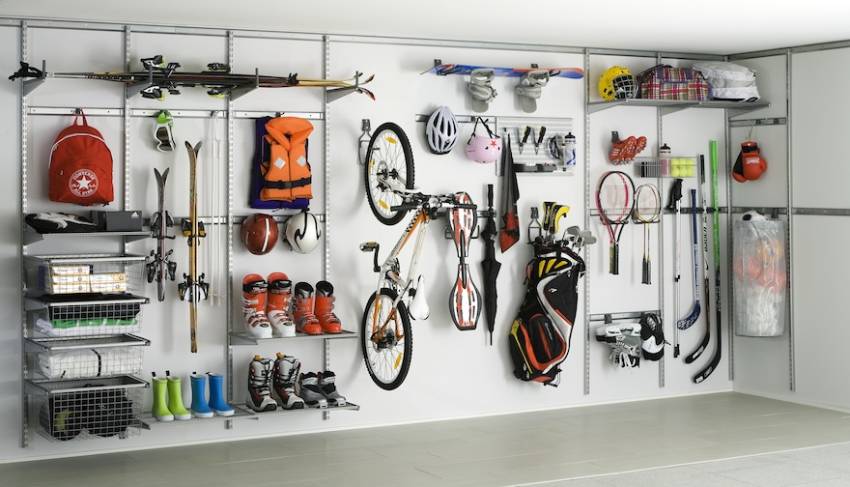
Organizing systems and tools
- Wall and ceiling shelving. Vertical storage frees the floor. Open shelves beat mystery cabinets for everyday access.
- Clear, labeled bins. Labels beat memory. Clear sides save you from opening every box to find one extension cord.
- Pegboard or track systems. Hang frequently used hand tools where you can see the outline — missing tools show up as empty hooks.
- Hooks and bike racks. Get wheels and ladders off the floor. Confirm wall anchors are rated for the weight.
- Ceiling racks for light bulk. Seasonal totes only — never overload with paint cans or heavy toolboxes over a parking spot.
- Magnetic strips and small-parts drawers. Screws, bits, and sockets stay sorted instead of living in a coffee can.
- Locked cabinet for hazards. Pesticides, fertilizers, fuels, and solvents need a locked, ventilated cabinet away from water heaters, sparks, and kids’ reach. Keep original labels.
- Fire extinguisher and first-aid kit in sight. Mount them where you can grab them without digging.
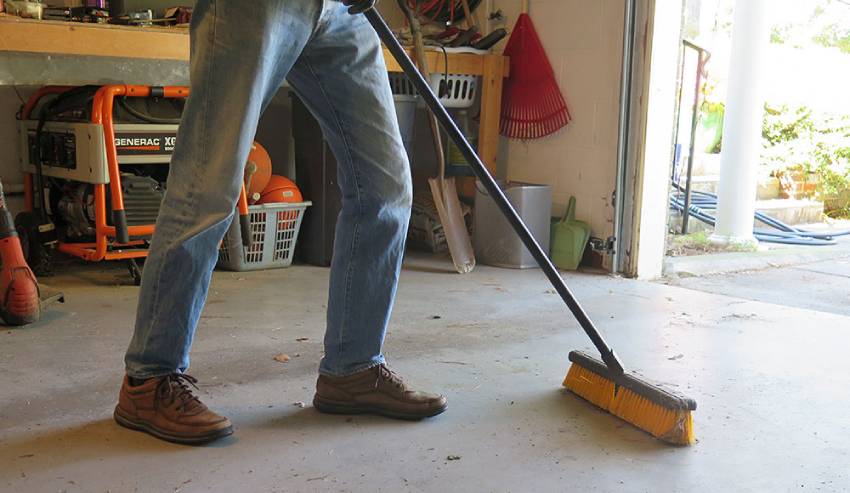
Ideas for keeping your garage clean
- Door mat inside and out. Most garage dirt arrives on shoes. Trap it at the threshold.
- 15-minute weekly reset. Return tools to hooks, break down cardboard, and sweep. Small resets beat annual panic cleans.
- One-in, one-out for bulky gear. New bike, old bike leaves. New holiday décor, something donates.
- Contain project mess. A fold-down workbench with a trash can beside it keeps sawdust and packaging from colonizing the whole bay.
- Control dust and cobwebs. Vacuum high corners monthly — the same fight as indoor dust control, just with more concrete.
- Seasonal audit. Twice a year, pull one shelf category and re-sort. Garages fill slowly; audits catch it early.
Safety notes worth repeating
- Never store gasoline in unmarked containers or near ignition sources
- Keep propane upright and outdoors or in manufacturer-approved spots — not in a sealed living area
- Elevate cardboard and fabric off damp floors to discourage pests
- Leave clearance around water heaters, electrical panels, and egress paths
Frequently asked questions
Should I empty the whole garage to organize it?
Yes if it is badly cluttered. Partial sorts usually shuffle piles. Emptying forces decisions and lets you clean the floor properly.
What should never go on high garage shelves?
Heavy liquids, glass, and anything that would be catastrophic if it fell on a car or person. Put weight low and stable.
How do I keep the garage from getting dirty again?
Mats, a weekly sweep, labeled homes for tools, and a locked chemical cabinet. Organization fails when items have no assigned spot.
Can I organize without buying a full storage system?
Yes. Start with sorting, wall hooks, and clear bins. Add pegboard or ceiling racks only where a real category needs them.
Garage resets are a weekend project; kitchens and bathrooms still need steady care. Pro Housekeepers’ deep cleaning and regular cleaning keep the living spaces under control while you reclaim the bay — and a clean microfiber cloth still earns its keep wiping shelves and door handles.