
How To Organize Your Fridge
To organize a fridge for function and food safety, group items by category and place them by temperature zone: raw meat and fish on the bottom shelf (coldest, and where drips cannot hit food below), dairy and eggs on interior shelves (not the door), produce in the crispers, and condiments and drinks in the door. Keep everyday items front and center, store leftovers in clear airtight containers, and rotate older food forward. Empty and wipe shelves first. This guide covers fridge and freezer layout that cuts waste.
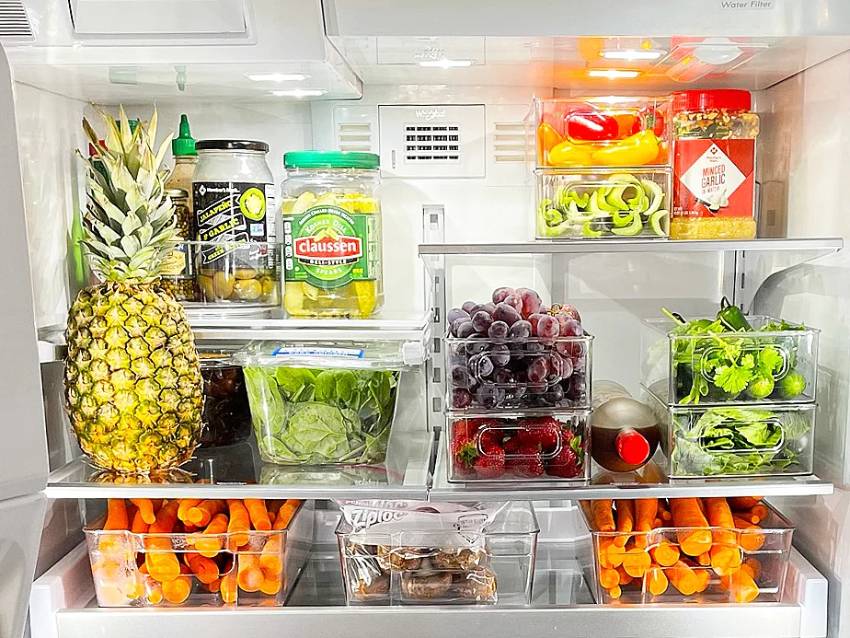
Map out the temperature zones
A fridge is not one uniform temperature. Cold air sinks, so the bottom shelf is coldest; the door is warmest because it meets room air every time you open it.
- Upper shelves — most consistent: leftovers, ready-to-eat foods, drinks, herbs.
- Lower / bottom shelf — coldest: raw meat, poultry, fish (and where drips cannot reach other food).
- Crisper drawers — humidity-controlled: fruits and vegetables (often separate drawers).
- Door — warmest: condiments, juices, water — things that tolerate temperature swings.
Food-safety overrides:
- Raw meat stays on the bottom shelf — always below produce and ready-to-eat food — on a plate or in a bin to catch drips.
- Eggs and milk belong on an interior shelf, not the door. Door egg trays look handy, but the door is the least stable temperature. Keep eggs in their carton on a middle shelf; milk on a shelf, not the door.
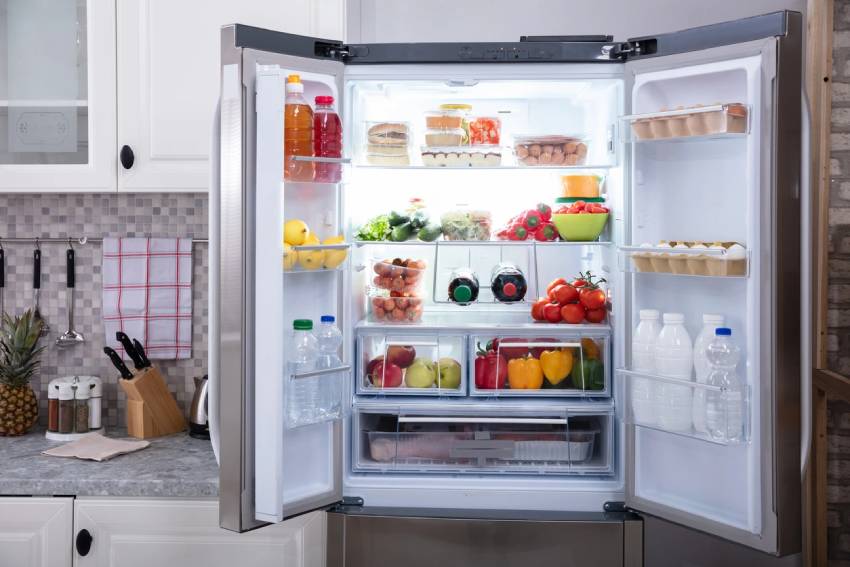
Make food-group sections
Within those zones, group like with like so everything has a home:
- Vegetables — crisper, often higher humidity
- Fruit — crisper, often lower humidity
- Dairy — interior shelf
- Drinks — door or upper shelf
- Leftovers and ready-to-eat — upper shelf, clear containers
- Raw meat and fish — bottom shelf
Put the most-used items front and center. Do not wash produce until you use it — extra moisture speeds spoilage. Use humidity sliders if your fridge has them (high for leafy greens, low for fruit). Leftovers in clear airtight containers at eye level are the biggest waste reducer. Glass containers do not stain or hold odors and go fridge-to-oven.

Clean it out
An empty fridge is the only time sticky shelves and drawers get truly clean.
What you need: mild dish soap and warm water (or baking soda and water), sponge or cloth, dry cloth. Skip harsh or heavily fragranced cleaners — smells transfer to food.
- Toss expired or questionable items (check the freezer too).
- Move the rest to the counter; use a cooler with ice if you need more than 20–30 minutes.
- Remove shelves and drawers if they come out. Let cold glass warm to room temperature before hot water so it does not crack. Wash and wipe interior walls.
- Dry everything, wipe sticky jars, then restock by zone.
An open box of baking soda at the back helps between cleanings.
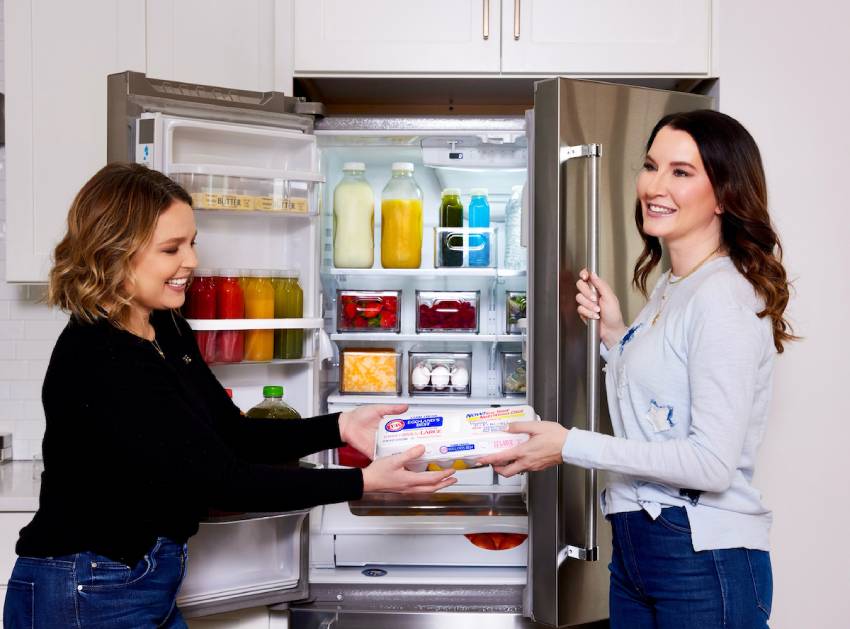
Putting it all back
Place by temperature zones: least-perishable toward the back, most-used front and center. Fit odd items (herbs, awkward bottles) into the door or open gaps once main categories are set. Label leftovers with the date.
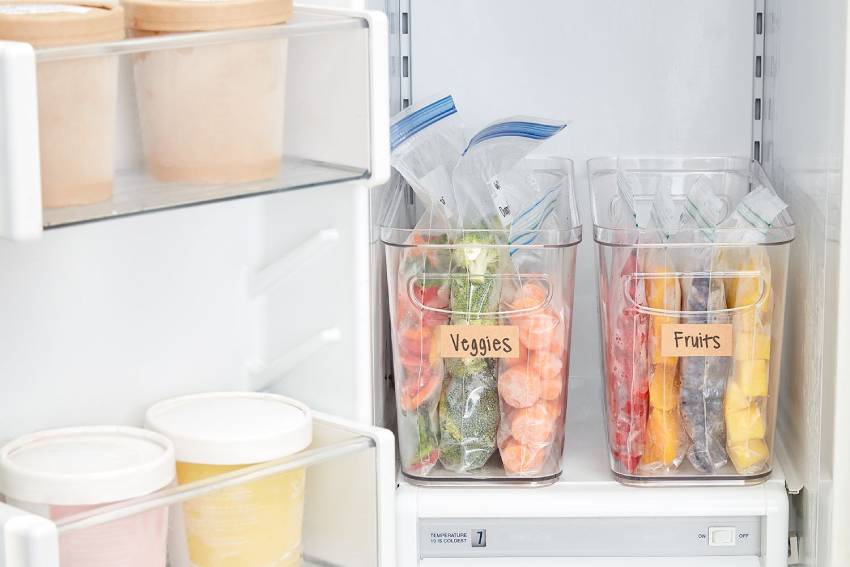
How to organize the freezer
- Stack flat, large items low — pizza boxes and sheet-frozen bags make a stable base.
- Use-first items on top or up front — label and date anything you freeze yourself.
- Keep raw meat together in a bin, separate from ready-to-eat frozen foods.
- Door and side storage for bags, ice packs, and odd shapes; ice cream and tall items on a top shelf.
- Toss freezer-burned food you will not eat; airtight packaging slows burn.
FAQ
Where should eggs go?
Interior shelf in the carton — not the door.
How often should I reorganize?
A quick weekly scan for leftovers and a deeper clean every 1–3 months keeps waste down.
What temperature should the fridge be?
At or below 40°F (4°C); freezer at 0°F (−18°C). Use an appliance thermometer if you are unsure.
Fridge organization is food safety as much as aesthetics. When sticky shelves and the rest of the kitchen need a reset, Pro Housekeepers’ deep cleaning and regular cleaning keep appliances and counters on track between your own resets.