
How to Clean a Cast Iron Skillet (Soap Is OK)
To clean a cast iron skillet, wipe out food while it’s still warm, scrub stuck bits with coarse salt or a pan scraper, rinse briefly, dry completely (a minute on a warm burner helps), then wipe on a thin film of oil. Mild dish soap is fine on a well-seasoned pan — the old “never use soap” rule is outdated. Here’s daily care, burnt-on rescue, and rust repair without stripping the seasoning you want to keep.
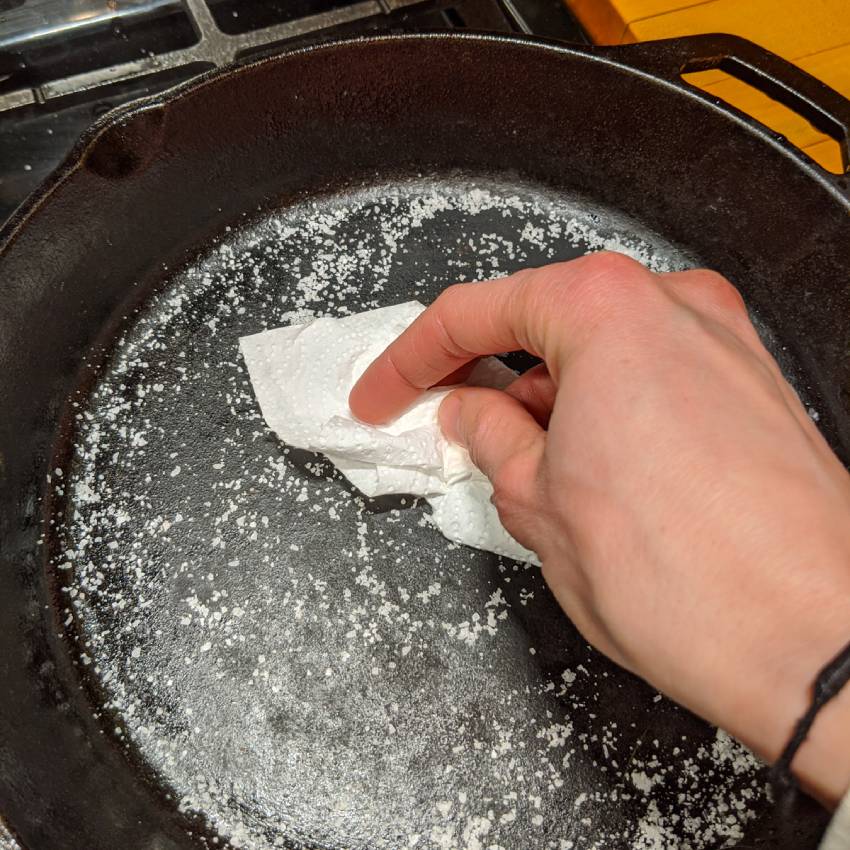
How to clean cast iron after everyday cooking
- Let the pan cool enough to handle, but don’t leave food sitting overnight if you can help it.
- Wipe out grease and crumbs with a paper towel or soft spatula.
- For light stuck food: hot water + a little mild dish soap + a soft brush or chainmail scrubber made for cast iron. Lodge and many modern makers say a small amount of soap will not ruin established seasoning.
- Rinse quickly. Do not soak for hours — prolonged water contact invites rust.
- Dry immediately and thoroughly. Set the pan on low heat for a minute to drive off hidden moisture.
- While warm, wipe on a drop of neutral oil (grapeseed, canola, or your usual seasoning oil) with a towel until the surface looks dry, not greasy. That thin film protects the iron.
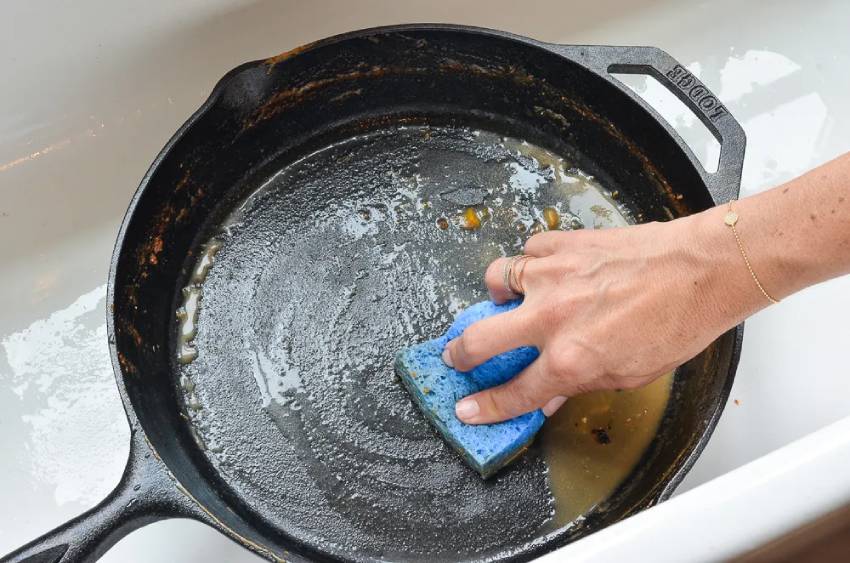
Burnt-on food and black residue
Salt scrub: Add a tablespoon or two of coarse kosher salt and a splash of warm water. Scrub with a cloth or stiff brush, then rinse, dry, and oil.
Simmer method: Cover stuck spots with water, simmer a few minutes, scrape with a wooden spatula, then wash, dry, and oil.
Black residue on towels: Often excess oil polymerizing unevenly or carbonized food, not “the seasoning leaving forever.” Clean the pan, dry hard, and apply a thinner oil coat next time. If food still sticks badly, a short oven re-season (thin oil, upside down, above the oil’s smoke point per your preferred method) rebuilds the surface.
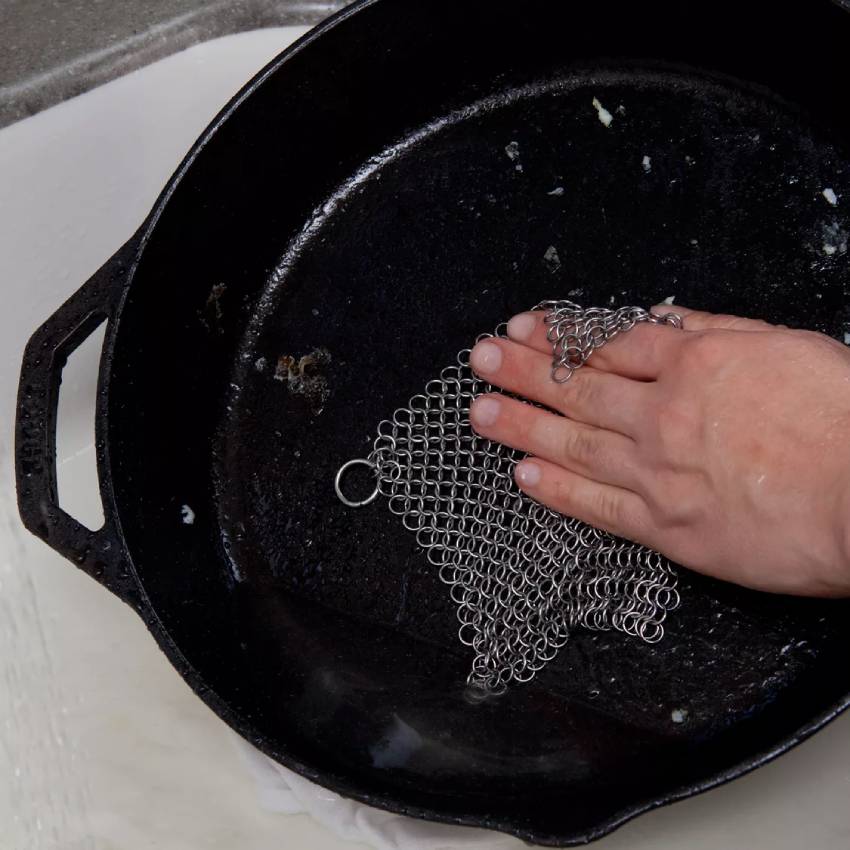
How to clean rusty cast iron
- Scrub loose rust with steel wool, a rust eraser, or coarse salt until you see bare gray iron where needed.
- Wash with hot soapy water, rinse, and dry completely on heat.
- Apply thin coats of oil and bake to re-season (multiple light coats beat one thick sticky coat).
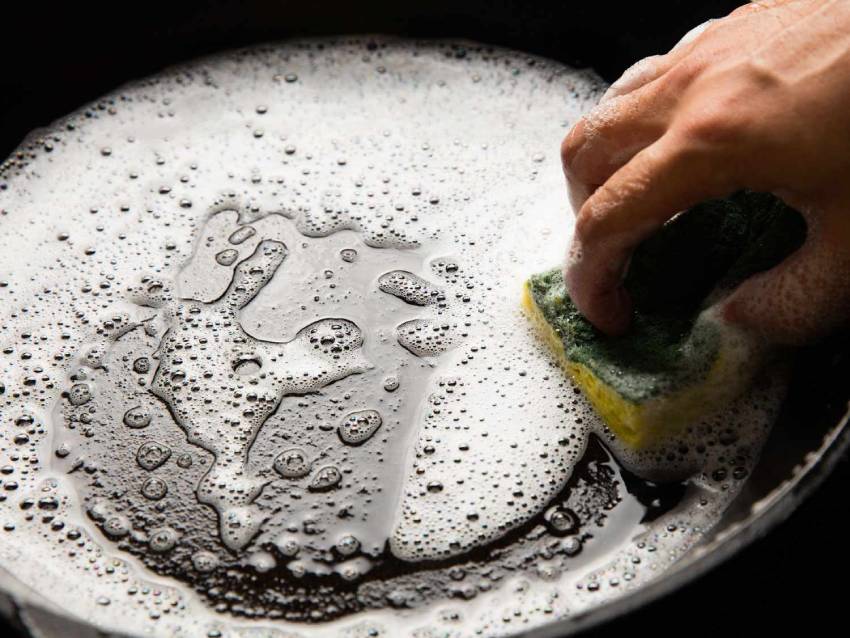
Vinegar rust soaks — use carefully
Equal parts white vinegar and water can dissolve rust on heavily pitted pans, but acid also attacks good iron and seasoning. Limit soak time (often 30 minutes to a few hours with checks), scrub, neutralize with a soapy wash, dry hard, then re-season fully. Do not store pans in vinegar overnight “just in case.”
What not to do
- Don’t leave the pan air-drying in a wet sink
- Don’t put traditional cast iron through the dishwasher
- Don’t use the pan as a cutting board
- Don’t panic at a little soap on a seasoned skillet
- Don’t pour cold water into a ripping-hot empty pan (thermal shock risk)
Frequently asked questions
Is soap really OK?
Yes on well-seasoned modern cast iron when you use a little, rinse, dry, and oil. Avoid long soaks and harsh detergents meant to strip ovens.
Can I cook acidic foods?
Short tomato cooks are usually fine on solid seasoning; long simmering of very acidic sauces can dull seasoning over time. Re-oil afterward.
How is this different from stainless?
Stainless likes different scrubbing chemistry — see stainless steel pans. For other hot cookware quirks, try pizza stones and air fryers.
Seasoning is just thin polymerized oil: keep water brief, heat-dry, oil lightly. When the rest of the kitchen needs the same discipline, book Pro Housekeepers’ regular cleaning or deep cleaning.