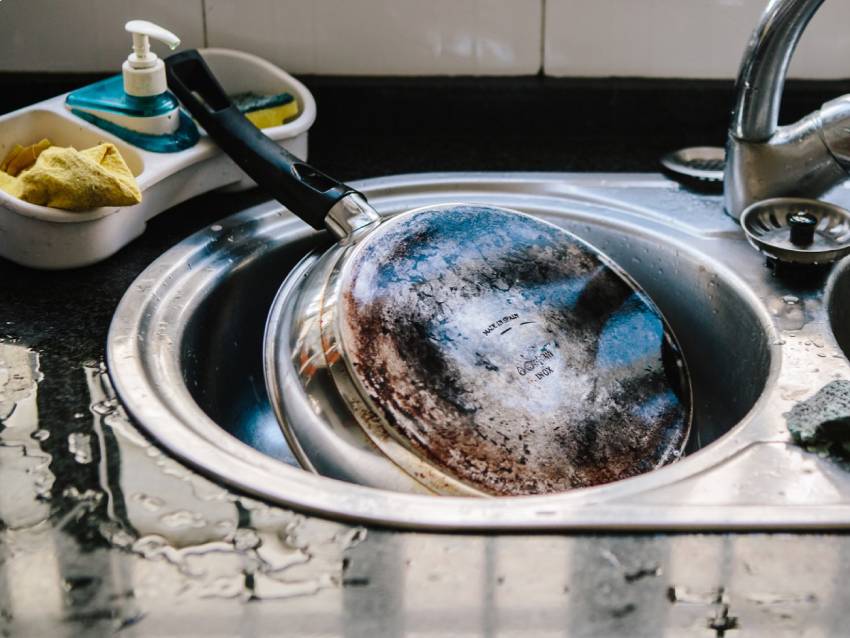
To clean most pots and pans, deglaze them with hot water while they’re still warm, then wash with a sponge and dish soap. For burned-on food, scrub with a baking soda paste or boil a baking soda solution in the pan. The right method depends on the material: hand-wash and re-oil cast iron, avoid abrasives on copper and nonstick, and never use steel wool on a coated pan. Cleaning after every use is the single best habit for both hygiene and longevity.
Pots and pans take a lot of hard wear, and cleaning them properly keeps them performing and lasting longer. Below are the Pro methods for every common cookware type, plus how to rescue burned and rusted pans and keep your kitchen clean and healthy.
Why does cleaning your pots and pans matter?
You might think reusing a dirty pan, or one with burnt-on residue, is fine. Sometimes it is — but there are real risks.
Burnt non-stick pans may transfertoxic chemicals into food if the coating cracks or flakes off.
An improperly cleaned pan may harbor bacteria that can causefood poisoning and other illnesses.
Reusing cooking oils can be a problem too, since they provide an ideal environment for thegrowth of anaerobic bacteria.
In short, cleaning your cookware after every use is essential.
How do you quickly clean a pan after cooking?
The best time to clean a pan is while it’s still hot. Pour hot water in to deglaze it — this lifts even burned-on food and grease almost instantly. Use only hot water on a hot pan, or you risk thermal shock, which can warp the pan.
Once deglazed, clean with a sponge or scourer and a drop of dish soap, then rinse with plain water. That’s it — fresh and clean again.
If a pan cooled with food residue inside, it’s tougher to clean. First, scrape out grease or food remains into the trash — don’t put grease down the sink, as it can clog your pipes. An old jar or soda can works for storing used grease before tossing it.
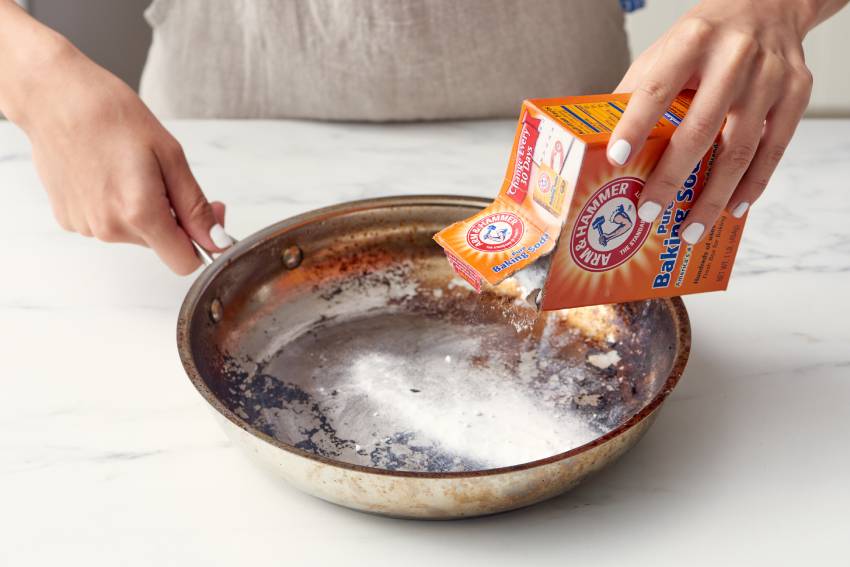
Use a brush or scouring pad with hot water and a drop of dish soap to cut through grease. For burned-on food or scorch marks, break out the baking soda.
Clean the pan as much as possible
Make a paste with baking soda and a little water
Spread the paste across the bottom of the pan
Let it sit for 5 minutes
Work a scouring pad in circles to loosen the stains
Another method: mix 1 cup water with 2 tablespoons baking soda and pour it in until the bottom is covered about ½ inch deep. If the stain climbs the sides, add more solution to cover it.
Put the pan on the cooker and boil until almost all the water evaporates — turn off the heat before it fully evaporates to avoid damaging the pan. You’ll see a white film where the water dried; that’s the baking soda. Move the pan to a cold burner or trivet, hold it with oven gloves, and scrub the baking soda off with a long-handled brush while it’s still hot.
That covers aluminum pans, freshly used or caked in grime. Some pans, though, need material-specific care — here’s how to clean each type.
How do you clean cast iron pans?
Cast iron scares off a lot of home cooks, but with the right care it can last longer than almost any other cookware. The key rule is to avoid temperature shock: hot pan, hot water; cold pan, cold water.
Always wash cast iron by hand — it won’t last long in a dishwasher.
Pour out any excess oil or grease
Rinse the pan in hot water while it’s still warm
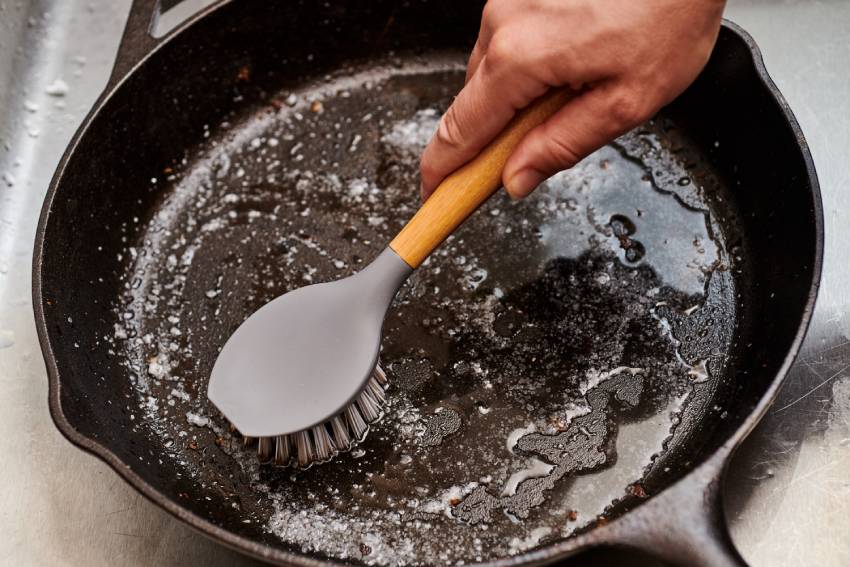
Use a brush or pan scraper to remove burned-on food
If the pan cooled and won’t clean properly, loosen stubborn marks by heating it again.
Pour in water to cover the base about ½ inch deep
Slowly bring it to a boil on the cooker
Use a pan scraper or brush to work the food free
Wash the pan as usual
After each use, dry the pan thoroughly with a microfiber cloth or paper towel, then season it with a small amount of cooking oil, wiping away any excess.
Lodge says it’s okay to use a little dish soap on cast iron if needed, but use it sparingly — too much cuts through the seasoning and can cause rust.
If your cast iron pan rusts, it isn’t the end of the world — just remove the rust and re-season it.
Step 1: Scrub the pan with soapy water and steel wool to remove the rust
Step 2: Rinse the pan and dry thoroughly
Step 3: Apply a thin layer of cooking oil all over the pan
Step 4: Use a cloth or paper towel to remove excess oil
Step 5: Place the pan upside down on the top rack of the oven
Step 6: Bake at 450-500 degrees for 1 hour
Step 7: Allow the pan to cool completely
You may need to repeat steps 3-7 several times to build up the black patina that indicates a properly seasoned pan.
Pro Tip: Place a baking sheet on the bottom rack to catch any oil drips.
How do you clean copper pans?
Copper pans are prized possessions. Copper is naturally antimicrobial, making it one of the safest choices for food prep, and it’s a great conductor that resists corrosion and cleans easily. No wonder chefs have prized copper for centuries.
Copper does need extra care, though. It’s a delicate metal, so abrasive cleaners like scourers can scratch it, and it’s reactive enough to discolor after contact with commercial cleaning solutions.
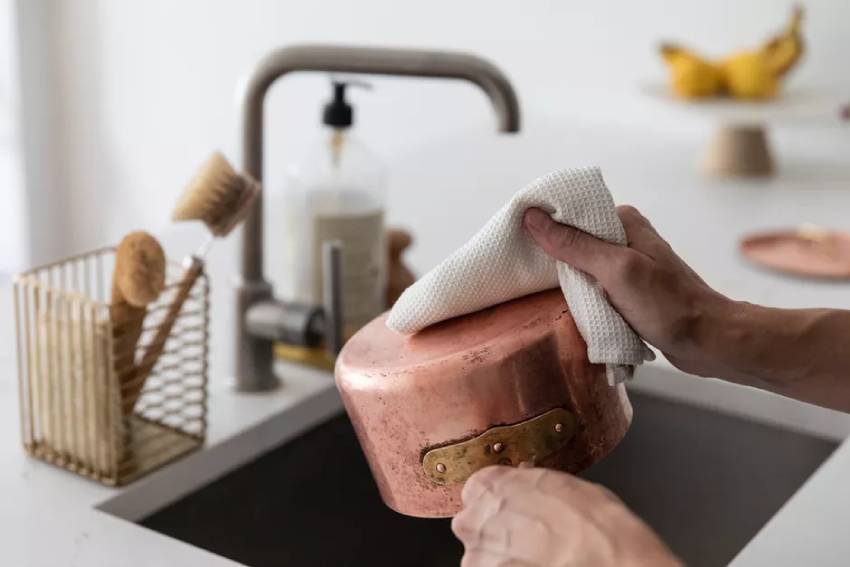
Most copper pans are tin-lined, which gives a good non-stick surface. Clean the inside with a sponge, water, and a drop of dish soap. For stuck-on food, soak in hot water for 15 minutes, then try the soap and sponge again. Dry thoroughly with a microfiber cloth afterward to keep the copper from tarnishing.
How do you clean nonstick pans?
Nonstick pans are convenient, but the coating is easily damaged by abrasives and is heat-sensitive, so a gentle approach matters. You’ll most often find nonstick coatings on frying pans.
How do you clean frying pans?
Let the pan cool completely before cleaning to prevent warping
Use dish soap to remove grease residue after use
Avoid steel wool or abrasive cleaners on nonstick pans
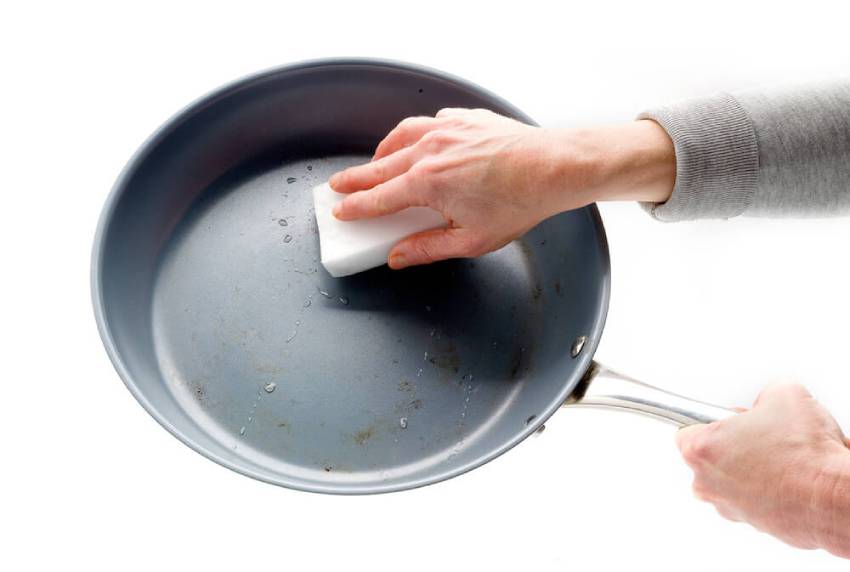
Use a damp sponge and coarse salt for tough stains
Dry the pan with a microfiber cloth after cleaning
When the coating starts to peel, it’s time to replace the pan. Most nonstick pans last two to five years, shorter than other cookware, depending on quality and care.
PAN
DISH SOAP
BAKING SODA
VINEGAR
Aluminum
✓
✓
✓
Cast iron
Sparingly
✓
X
Copper
✓
✓
✓
Nonstick
✓
✓
✓
How do you clean burnt pans?
Sometimes accidents happen and pans end up badly burned or discolored. Don’t worry — they can still be salvaged. Try one of these methods.
Vinegar and baking soda
Half-fill the pan with a 50/50 mixture of water and white vinegar
Bring to a boil and add 2 tablespoons of baking soda
Remove from heat and let stand for 15 minutes
Discard the mixture and scrub the pan with a brush
Repeat as necessary
Baking soda
Fill a large pot or pan with water and add ½ cup of baking soda
Place the burned pan into the pot, fully submerged if possible
Bring the water to a boil
Boil for 15 minutes
Remove the pan and scrub with a brush
Lemons
Fill the pan with water
Add 1-2 lemons, sliced
Bring the water to a boil
Remove from heat after 5-10 minutes
Discard the lemons and hot water
Clean the pan with soapy water and a scrubbing brush
Final Thoughts
In the end, the method matters less than the habit: clean your pots and pans after each use. It’s the best way to keep yourself and your family safe from food poisoning and other issues.
FAQ
What if gentle scrubbing isn’t enough to remove cooked-on food?
It depends on the pan. Never use abrasive scrubbers or products on nonstick, since they damage the coating. Instead, add water to the pan and heat it slowly — the combination of heat and water often loosens cooked-on food so it wipes away easily.
What’s the best way to clean ceramic-coated Dutch ovens?
Use salt. Wash the Dutch oven normally with dish soap and water, then dry it. Sprinkle coarse salt over stubborn areas and rub gently with a damp sponge until the salt dissolves. Rinse and repeat if needed.
How can I clean the bottoms of my pots and pans?
Scrub the bottom with a steel wool pad to loosen burnt-on residue. Turn the pan upside down and sprinkle with salt and baking soda, add dish soap, and work it in with the steel wool. Then soak paper towels in white vinegar, lay them over the bottom for 5 minutes, remove, and wipe clean with dry paper towels. The bottom should look like new.
Can you put pots and pans in the dishwasher?
Most stainless steel and aluminum cookware is dishwasher-safe, but always hand-wash cast iron — the detergent and water strip its seasoning and cause rust. Hand-wash nonstick and copper too, since dishwasher cycles can degrade the coating and dull or discolor the surface.