To clean a smelly dishwasher, remove and rinse the filter (found on the floor under the spray arm), then pour half a cup of baking soda followed by a cup of white vinegar down the drain, let it sit 10-15 minutes, and flush with hot water. For a general clean, run an empty hot cycle with a bowl of white vinegar on the top rack. Most odors come from food buildup in the filter, trap, or drain — clean the filter at least monthly, and if the smell persists after cleaning, call a plumber to check for a blockage. Here’s the full guide.
How to clean a dishwasher
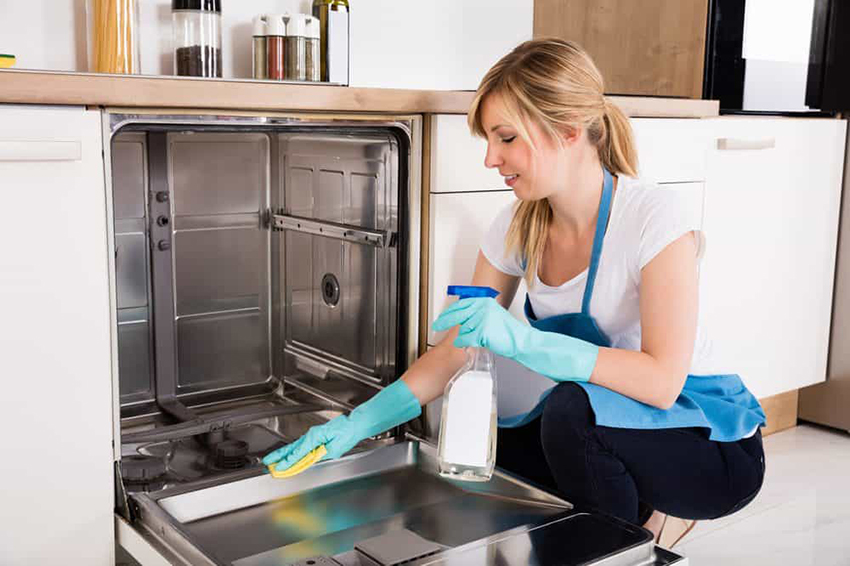
There are many commercial dishwasher cleaners on the market — usually you set the whole bottle on the rack of an empty dishwasher and run a regular cycle. You can’t beat that for convenience, but heavy use of harsh detergents can eventually damage your pipes, and it isn’t exactly eco-friendly.
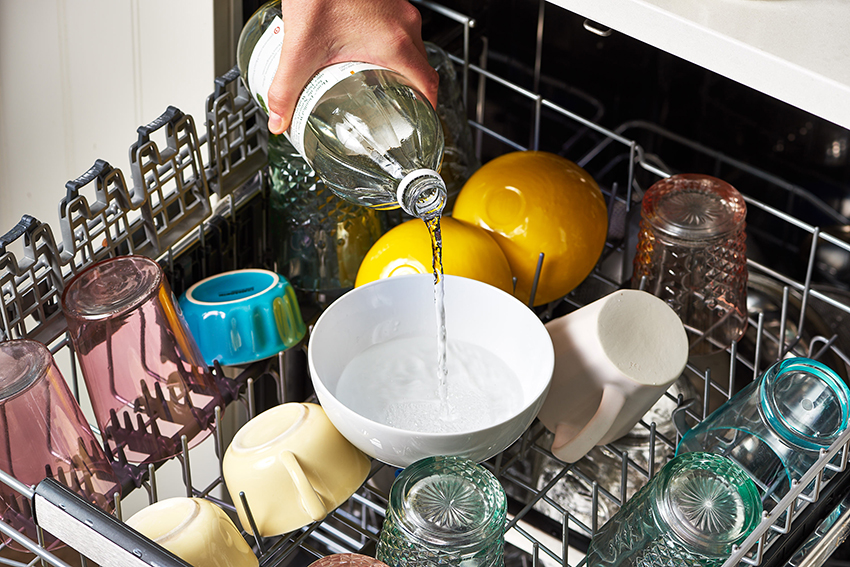
A simpler option: fill a dishwasher-safe bowl with white vinegar, place it on the bottom rack of an empty dishwasher, and run a hot cycle. It gets the dishwasher gleaming again without harming your pipes or the environment.
Pro tip: Done with the dishwasher? Give your microwave a clean next.
How to clean a smelly dishwasher
If your dishwasher smells like sewage, it’s overdue for a cleaning. Bad odors come from a buildup of dirt in the trap or filter, or sometimes a drain blockage. If the methods below don’t stop the smell, it’s time to call a plumber.
How to clean the filter
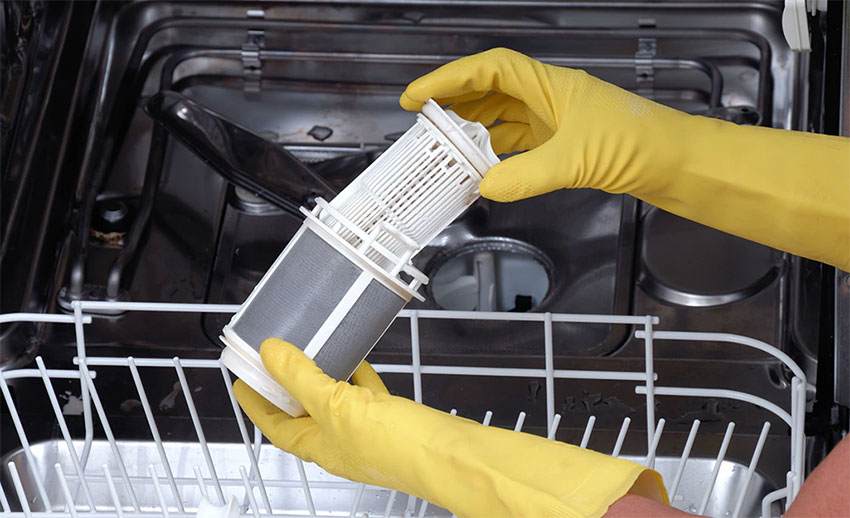
The filter keeps food debris from clogging your drains, but it needs cleaning regularly — at least once a month. You’ll find it on the floor of the dishwasher, under the rotating spray arm. Filters often have a simple twist lock with removal guidance printed on the mechanism; check your owner’s manual if you’re unsure. Rinse the filter well, give it a soak in water and white vinegar or dish soap, then rinse again under hot water before returning it.
How to clean the drain
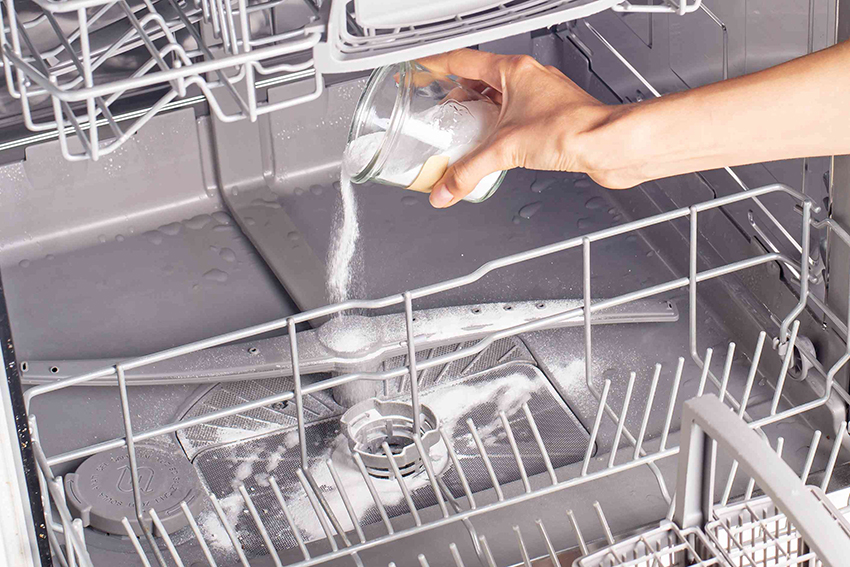
While the filter soaks, check the drain (located under the filter connector) for blockages. Wipe around the filter housing with a damp microfiber cloth to collect dirt and debris — not with your bare hands, since there may be glass shards if anything has ever broken inside. Then pour half a cup of baking soda into the drain, followed by a cup of white vinegar. Let it sit 10-15 minutes, then flush with hot water to clear the drain and hose.
How often should you clean it? It depends on use. If you run the dishwasher daily and don’t pre-rinse, clean the filter and trap at least monthly. If you use it less often or scrape and rinse first, you can clean less frequently — remove the filter occasionally and check for buildup to gauge the right interval.
Pro tip: Keep cleaning! Learn how to clean a glass-top stove.
Dishwasher cleaning FAQ
How do I clean and deodorize my dishwasher?
White vinegar is a favorite because it deodorizes as well as cleans — the strong smell dissipates quickly, taking unpleasant odors with it. If you’d rather not use vinegar, citric acid works too: buy citric acid dishwasher tabs, or put 1-2 tablespoons of food-grade citric acid powder in the detergent holder and run an empty hot cycle.
What’s the best way to clean the inside of a dishwasher?
The way that works best for you — ideally using cleaners you already have on hand, whether a DIY solution like vinegar, baking soda, or citric acid, or specialist dishwasher tablets. Avoid anything with harsh detergents or chemicals, since repeated use can block pipes or damage the dishwasher’s mechanisms.
Can I run the dishwasher empty to clean it?
You should always clean it while empty, but that’s not the same as just running a regular empty cycle. In a pinch an empty cycle helps, but it’s far more effective with a little cleaning solution inside first.
How do you clean a clogged dishwasher?
Start by removing the filter and cleaning the drain trap. Many clogs can be dislodged with baking soda and vinegar and a little patience — you may need to repeat several times for a substantial blockage, flushing with very hot water between treatments. If it stays clogged, call a plumber.
Pro tip: Your dishwasher isn’t the only appliance that needs care. Find out how to clean your washing machine.
Best dishwasher cleaning solutions and methods
Plenty of home cleaning solutions work well on dishwashers, so whether you want something frugal or chemical-free, you probably already have the ingredients for a DIY cleaner.
Baking soda and vinegar
You can boost vinegar’s cleaning power by adding baking soda. Remove the bottom rack and sprinkle 1 cup of baking soda across the floor of the dishwasher, then put 1 cup of white vinegar in a dishwasher-safe bowl on the top rack and run a hot cycle. The two combine to help loosen grime and freshen the interior. (The fizzing reaction is mostly mechanical — it’s the soak and hot water doing most of the work — but it’s a safe, effective routine.)
Without vinegar
You can also clean without vinegar. Citric acid granules make a great all-purpose cleaner — sprinkle across the floor and run a hot cycle. In a pinch, an unsweetened lemonade packet works (make sure it’s unsweetened; sugar and hot water make a sticky mess). Baking soda alone is also effective on its own.
Is vinegar bad for dishwashers?
Vinegar is acidic and mildly corrosive, and its acetic acid can shorten the lifespan of rubber gaskets and hoses over time. Placing it in a bowl rather than pouring it directly means the components only meet a very dilute solution, which keeps the risk low. (If your machine’s manual specifically advises against vinegar, follow that guidance.)
How to clean with bleach
If the interior looks dingy, bleach is tempting — it kills bacteria and is an effective cleaner — but avoid it on machines with stainless steel parts, as it damages the finish. If your dishwasher has no stainless interior, place 1 cup of bleach in a dishwasher-safe bowl on the top rack and run a hot cycle. Never mix bleach with vinegar.
Pro tip: Keep your kitchen gleaming — learn how to clean, seal, and polish granite countertops.
| What to clean a dishwasher with |
| 1 cup white vinegar |
1 cup white vinegar + 1 cup baking soda |
| 1-2 tablespoons citric acid |
1 packet unsweetened lemonade mix |
| 1 cup bleach (non-stainless interiors only) |
Store-bought dishwasher cleaners |
How to make homemade dishwasher cleaner
To take frugality further, you can make homemade dishwasher tablets — they’re surprisingly simple.
You’ll need:
- 1 tablespoon borax
- 1 tablespoon washing soda
- ½ tablespoon salt
- ½ tablespoon food-grade citric acid
Combine the ingredients and add the mixture to your dishwasher’s detergent compartment. You can scale the recipe up — just keep the ratios the same.
Don’t confuse washing soda with baking soda; both are often sold by the same brands. Washing soda (sodium carbonate) improves the effectiveness of many detergents — look for it in the laundry aisle of large grocery stores.
Best practices for keeping your dishwasher clean
Cleaning isn’t the only way to keep your dishwasher working well — prevention is better than cure. A few tips:
- Scrape and rinse dishes before loading to keep food debris from clogging the filter and drain.
- Run the garbage disposal before the dishwasher — their drains are usually connected, so it helps keep them clear.
- Don’t overfill or underfill. Run full loads to save energy, but leave room for water to circulate.
- Run the hot water tap before starting, so the cycle begins with hot water and cleans more effectively.
In conclusion
Keeping your dishwasher clean is a small task that makes a big difference — stay on top of the filter and drain and you’ll avoid blockages and unpleasant smells for good.