
How To Clean a Bathtub
To clean a bathtub, rinse with hot water, sprinkle baking soda, and (on dirtier acrylic or fiberglass) mist with a vinegar-and-water mix — then scrub gently with a non-abrasive sponge, rinse, and dry the fixtures. Match the cleaner to the tub material: baking soda and vinegar are fine on acrylic and fiberglass, never use acids on marble or natural stone, and never scour acrylic with abrasive pads. A short weekly clean stops soap scum and mold before they stick.
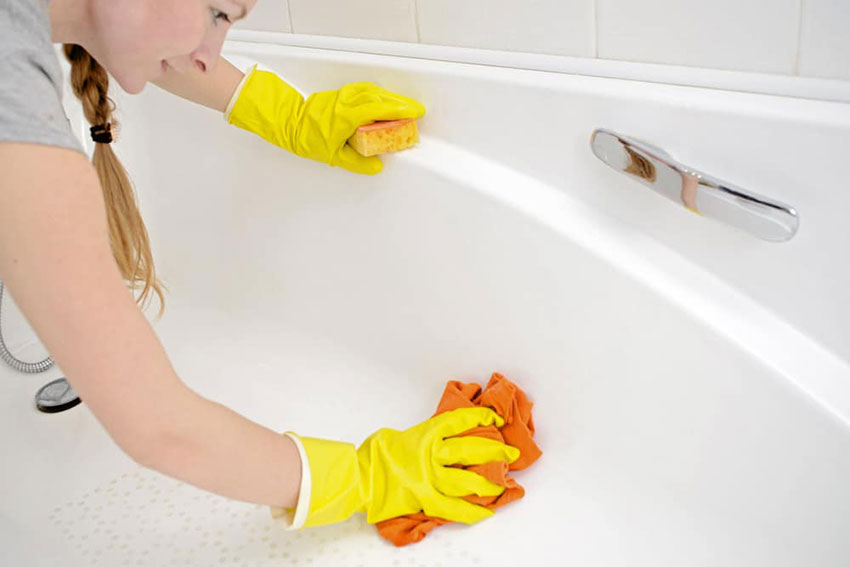
Why a regular tub clean matters
- Mold and mildew love damp tub corners, drains, and caulk lines — especially if anyone in the home has respiratory issues.
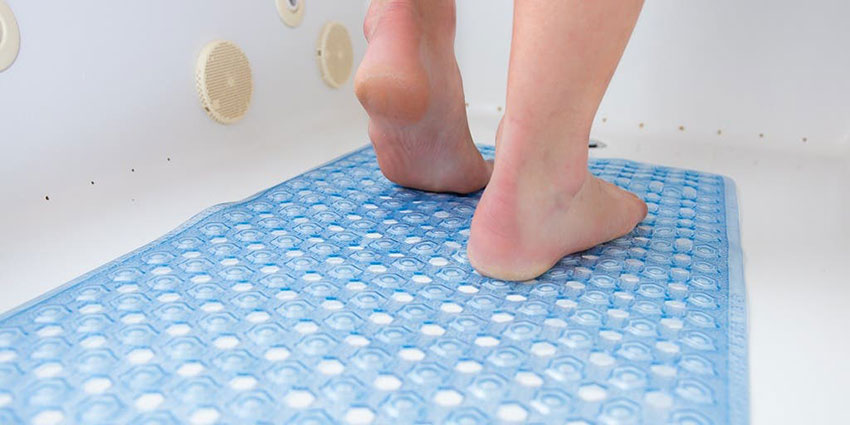
- Pink biofilm and soap scum make the floor slippery; a clean surface plus a non-slip mat cuts fall risk.
- Humidity-loving bathroom pests thrive when organic film sits uncleaned.
Weekly baking-soda method
- Rinse the tub with hot water from the showerhead, or wipe with a wet sponge.
- Dust the surface with baking soda and wait 5–10 minutes.
- If it is heavily soiled, spritz a 1:2 vinegar-and-water mix over the baking soda (skip vinegar on stone or marble).
- Add 2–3 inches of hot water, scrub with a non-abrasive sponge or microfiber cloth, then drain.
- Rinse with clean hot water and polish faucets, fixtures, and the drain with a dry microfiber cloth.
Done weekly, this takes a few minutes and keeps drain odors down. Pair it with ceramic tile cleaning so the surround matches the tub.
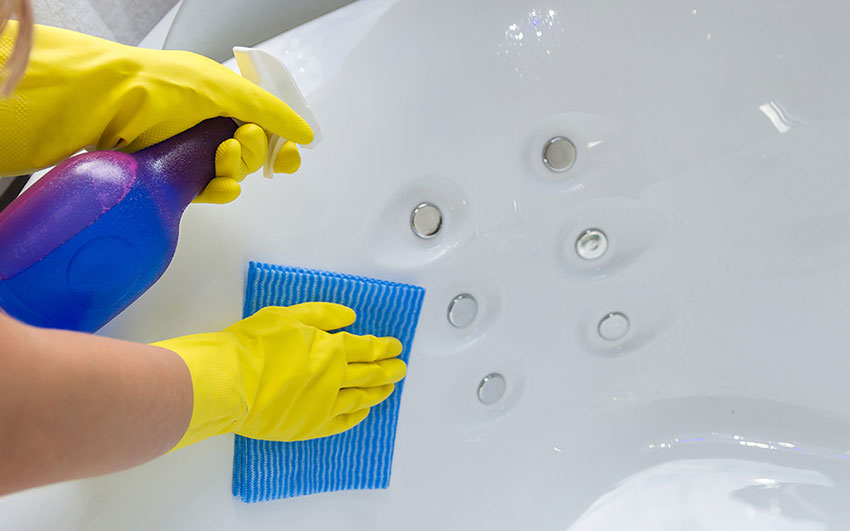
Cleaners by tub material
Wrong chemistry scratches, etches, or strips finishes. When unsure on polished or stone surfaces, use a pH-neutral cleaner and test a hidden spot.
- Acrylic: non-abrasive cleaners, baking soda, white vinegar, mild dish soap. Avoid abrasive scrubbers, bleach, ammonia, acetone.
- Fiberglass: non-abrasive, non-acidic cleaners; baking soda; mild dish soap. Avoid abrasives, bleach, ammonia, strong acids.
- Porcelain-enameled steel/iron: non-abrasive cleaners, baking soda, mild dish soap. Avoid abrasives and harsh acids on chipped enamel.
- Stone resin / cultured marble: mild pH-neutral cleanser or dish soap and water. Avoid baking soda, vinegar, acids, abrasives.
- Natural marble: pH-neutral stone cleaner only. Never vinegar, bleach, or abrasives — acids etch; baking soda can dull polish.
- Copper: mild dish soap and water or copper-safe products. Avoid abrasives, vinegar, bleach, ammonia. Many owners keep the natural patina.
Stains: what the color usually means
- Red-brown: iron deposits or acidic water
- Blue-green: acidic water reacting with copper pipes
- Black: sulfur bacteria or mold
- Yellow: soap scum and skin oils
Hard-water areas leave mineral film; a softener or filter helps long term. For existing stains (only with methods safe for your material):
- Soap scum: vinegar spray (not on stone), wait ~20 minutes, rinse.
- Mold / sulfur smell: baking soda + hydrogen peroxide paste, 30 minutes, nylon brush scrub.
- Rust or blue-green: oxygen bleach paste; a melamine sponge only on tough porcelain — skip melamine on acrylic (it scratches).
Never mix bleach with vinegar or ammonia — that makes toxic gas.
Bathtub drain
- Pour about a gallon of boiling water down the drain.
- Add ½ cup baking soda, then slowly pour 1 cup white vinegar.
- Wait 10–15 minutes, then flush with another gallon of hot water.
This clears mild buildup and odor. For a real clog, use a plunger or snake — do not stack chemical drain cleaners on top of this mix.
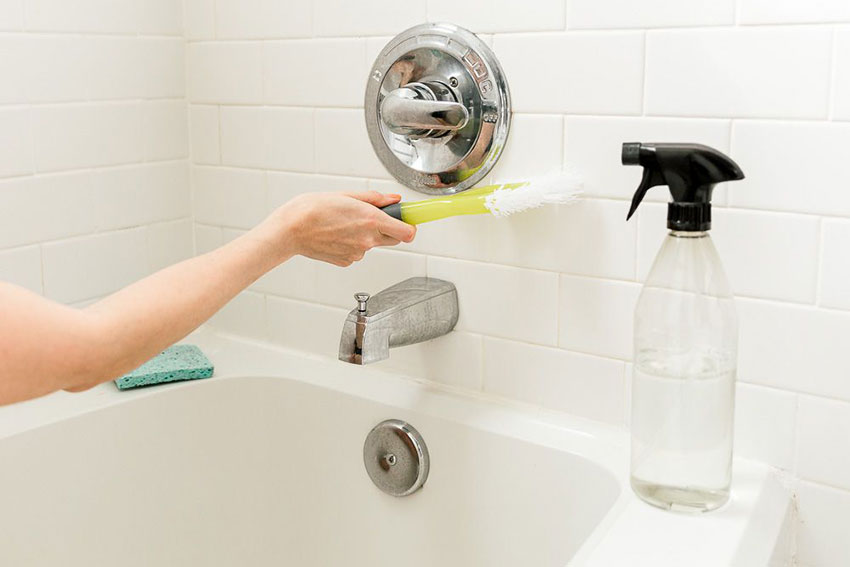
Faucets and fixtures
Wipe with 50/50 white vinegar and water (or hot water with a drop of dish soap), rinse, then dry for a spot-free shine. On unlacquered brass or specialty finishes, skip vinegar and use mild soap only. While you are there, wash the plastic shower curtain.
Jetted tubs
- Fill 2–3 inches above the jets.
- Add 1 cup white vinegar; run jets 15 minutes.
- Drain, refill with clean water, run jets ~10 minutes to rinse.
- Wipe debris that flushed out of the jets.
Check the manual — some brands want a specific jet cleaner instead of vinegar.
When bleach makes sense
Most tubs do not need routine bleach. For a rare deep clean on a compatible surface, mix ½ cup bleach per gallon of hot water, wipe, wait 10 minutes, rinse well, ventilate, and wear gloves. Never use bleach on marble, natural stone, or copper. Never mix bleach with other cleaners.
Bath mats
Soak the mat in cold water with a cup of white vinegar for an hour or two, scrub with a stiff brush, rinse, and hang dry. Many mats are machine-washable on cold delicate — check the label and air dry. A clean mat also helps after you clean the washing machine.
Frequently asked questions
How do I keep the tub clean between deep cleans?
Rinse after every use. A spray bottle of water (plus a little vinegar on non-stone tubs) makes a quick wipe easy.
How do I get rid of soap scum?
Fill with warm water and a squirt of dish soap, soak, then wipe — soap dissolves soap film better than dry scrubbing.
How often should I deep clean?
About once a month on top of weekly quick cleans and post-use rinses.
A material-safe weekly habit beats harsh scrubbing later. For a full bathroom reset, book Pro Housekeepers’ deep cleaning or keep up with regular cleaning.