
How To Wash Plastic Shower Curtains
Most plastic shower curtains and liners can go in the washing machine: warm water on a delicate cycle with mild detergent, then hang to dry — never put vinyl or PEVA in the dryer. For mildew or soap scum you can also wipe the curtain in place with a vinegar-and-water spray, or use diluted bleach on compatible materials for stubborn mold. Pick one cleaner at a time and never mix bleach with vinegar or ammonia. Wash about monthly, keep the curtain spread open after showers so it dries, and replace the liner when mold is embedded or the plastic is cracked.

Know your material
- PVC / vinyl: common clear liners; usually machine-washable
- PEVA / EVA: chlorine-free vinyl alternative; machine-washable; skip ammonia cleaners
- Nylon / polyester fabric curtains: often washable; polyester is more mold-prone than vinyl liners — check the care label (bleach is usually a no for polyester)
Follow the maker’s label when it conflicts with general advice. Outer decorative curtains and inner waterproof liners may need different care — wash them separately if fabrics differ.
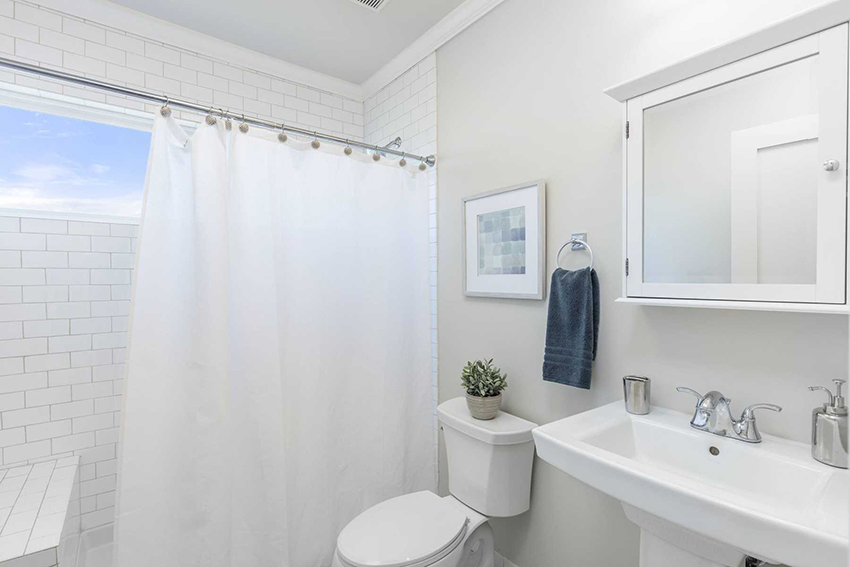
Machine-wash steps (vinyl / PEVA)
- Remove hooks or rings (or wash hooks separately if plastic).
- Shake or wipe loose hair and soap chunks into the trash.
- Place the curtain in the washer with 1–2 old towels to cushion and gently scrub.
- Use warm water, delicate or gentle cycle, and mild detergent. Cold can stiffen some plastics; very hot can warp them.
- Optional: add ½–1 cup white vinegar to the rinse for odor and light mildew — or bleach as below, never both in the same load.
- Remove promptly and hang to dry fully — back on the rod with the bathroom fan on, or outdoors out of harsh midday heat that can bake PVC.
Do not put plastic curtains in the dryer. Dryer heat can melt vinyl and damage the machine. Front-loaders are fine and often gentler than top-loaders. Magnets in the hem are usually machine-safe if sewn securely; hand wash if you prefer not to hear them clank.
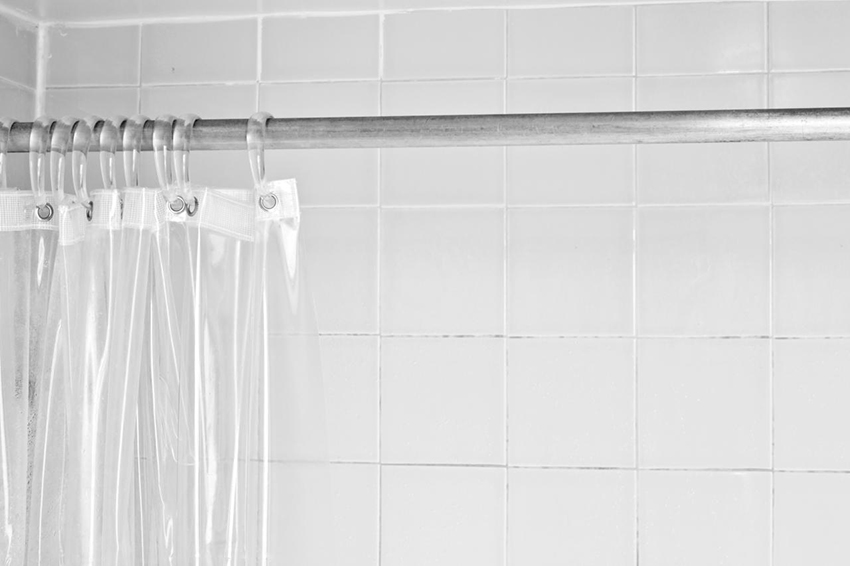
Clean in place (no machine)
- Spray a mix of 2 cups water to 1 cup white vinegar (or mild dish soap and water).
- Wipe with a sponge, focusing on the lower hem and folds where mildew starts.
- Rinse with the showerhead and leave the curtain fully open to dry with ventilation.
Skip ammonia-based glass cleaners on vinyl and PEVA. If you used bleach earlier, rinse thoroughly before any vinegar spray.
Mold and mildew
First line: vinegar spray (1:2 vinegar to water), scrub, dry. Baking soda paste lifts grime — rinse, then use vinegar separately. Mixing vinegar and baking soda in one bowl mostly cancels both into salty water; sequential use works better.
Stubborn spots: hydrogen peroxide spray (about 2:1 peroxide to water), wait ~20 minutes, wipe. Do not combine peroxide with vinegar or bleach.
Heavy mold on vinyl/PVC (not polyester): diluted bleach soak or ¼ cup bleach in the wash, with gloves and ventilation. Color-safe oxygen bleach is safer on dark or printed curtains. See also our mold cleaning guide.
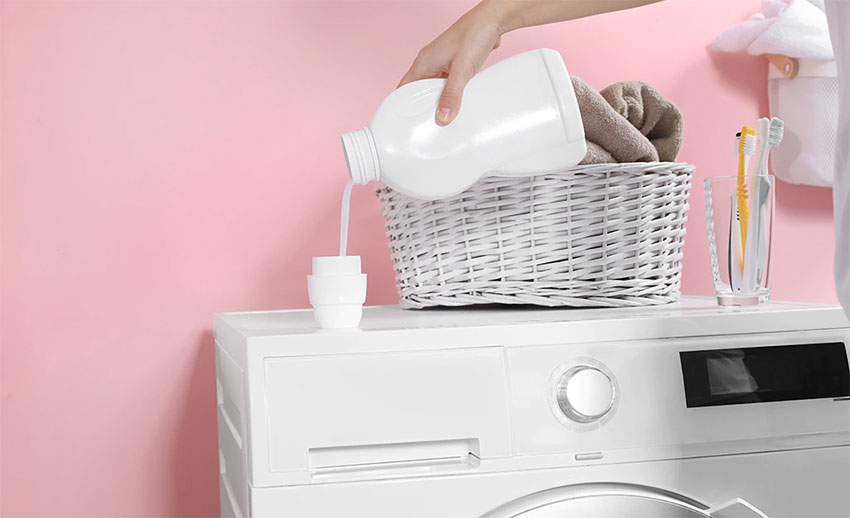
Prevent mildew between washes
- Spread the curtain fully open after every shower so both sides dry
- Run the bathroom fan 20–30 minutes after bathing
- Weekly quick vinegar mist on the lower third
- Wash about once a month in a typical household (more often with multiple daily showers)
Replace the liner vs wash again
Replace the liner when mold is black and embedded in creases, the plastic is sticky/cracked, or odors remain after a bleach wash. Decorative outer curtains often last longer — wash them on the fabric setting and replace only when faded or torn. Cheap liners are designed as consumables; replacing a ruined liner is healthier than endless scrubbing of porous mold.
Safety reminder
Never mix bleach with vinegar or ammonia. Use one chemistry, rinse well, ventilate. Keep bleach away from polyester fabric curtains unless the label allows it.
Frequently asked questions
Can I wash the curtain and liner together?
Yes if both are plastic/vinyl. Wash a fabric outer curtain separately on its own care setting.
Why does pink slime come back?
Airborne bacteria thrive on soap film in damp folds. Dry the curtain open, wash monthly, and wipe the tub edge where the hem rests.
Is PEVA safer than PVC?
PEVA is often marketed with fewer plasticizers/VOCs. Clean it the same way, but avoid ammonia cleaners.
Pair a clean curtain with a fresh tub surround — our bathtub cleaning guide helps — or book Pro Housekeepers’ deep cleaning for a full bathroom reset.