
To clean stainless steel appliances, wipe along the grain (the direction of the polish lines) with a microfiber cloth and a cleaner suited to the job — a dedicated stainless steel cleaner, mild soapy water, or a little vinegar followed by a few drops of oil to polish. Always work top to bottom, then dry immediately to prevent water spots and streaks. Avoid bleach and abrasive or chloride-based cleaners, which corrode and discolor the surface. Here’s the full method, from product choice to removing stains and scratches.
May 27, 2026
How To Clean Stainless Steel Appliances Like a Pro
Choosing the right cleaning products
There are plenty of cleaners formulated specifically for stainless steel — well-regarded brands include Weiman, Therapy, and Magic Stainless Steel Cleaner. Your appliance manual is also worth checking, since manufacturers often recommend specific products that work best with your appliance and help you avoid damage.
Cream vs. spray cleaners
Stainless steel cleaners usually come as creams or sprays. Both work; which you choose depends on the grime:
- Creams: better for deep cleaning and stubborn stains — their thicker consistency stays on the surface longer to break down grime.
- Sprays: ideal for light cleaning and quick touch-ups. They leave less residue and are easier for everyday use.
Avoid harsh chemicals
Bleach is a powerful disinfectant but not suited to stainless steel — it can corrode and discolor the surface and leave rust behind. Acids, alkalis, and chloride-based solutions are similarly damaging — they erode the protective layer, leaving it prone to surface damage and discoloration. Stick to safer alternatives.
Safe cleaning solutions
For a natural, non-abrasive approach, vinegar to clean followed by a little oil to polish leaves stainless steel looking new. A paste of baking soda and a little water is another non-abrasive option for stubborn stains.
Preparing your appliances for cleaning
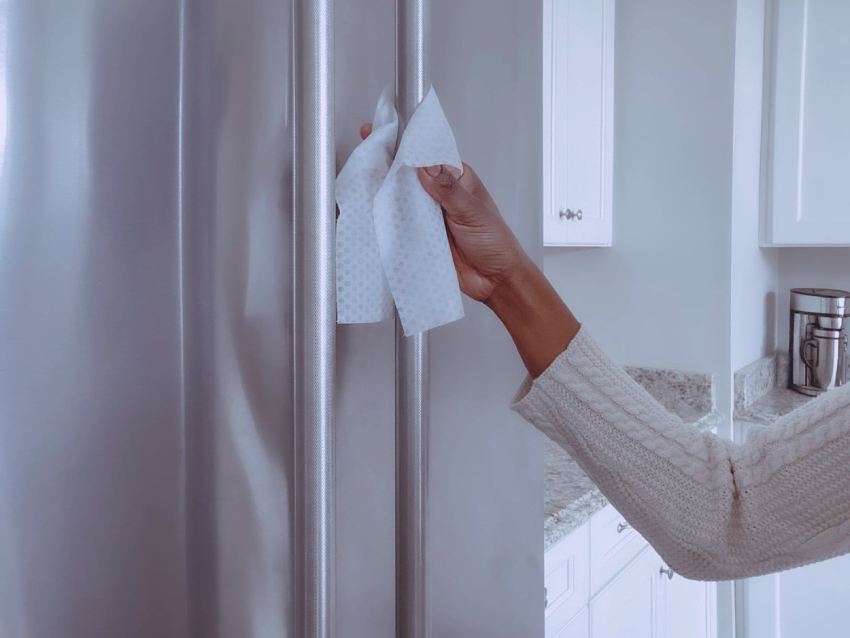
Before you start, unplug the appliance — it’s safer and helps prevent damage. A little prep makes the whole job go more smoothly.
Remove loose dirt and debris
Start by wiping away loose dirt and debris with a microfiber cloth. Stubborn spots may need a little extra effort.
Protect surrounding areas
Cover adjacent surfaces with a sheet, old newspaper, or plastic wrap to catch splashes of water, cleaner, or polish. To protect any wooden parts from water stains, apply painter’s tape over the wooden sections before you begin.
Cleaning techniques for stainless steel
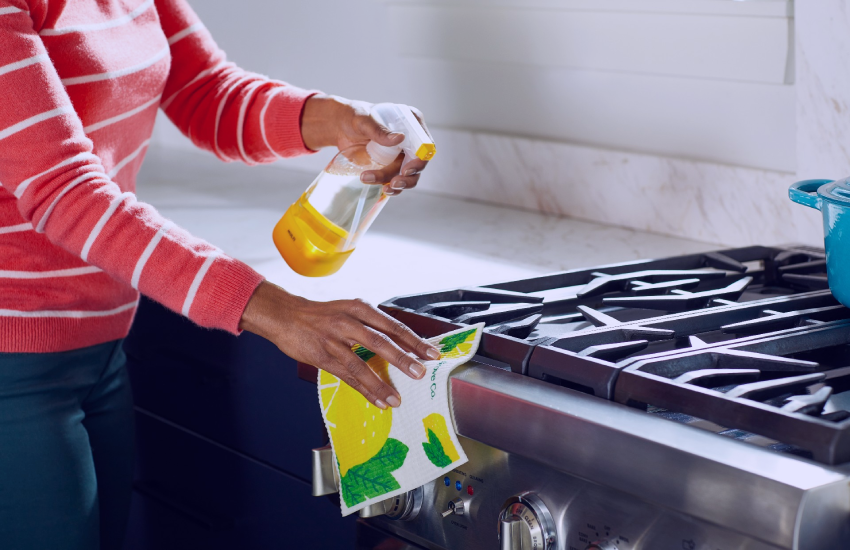
A few habits keep the shine: apply cleaner with a microfiber cloth (which won’t scratch), rinse thoroughly, and dry immediately to avoid water spots and streaks.
Use a microfiber cloth
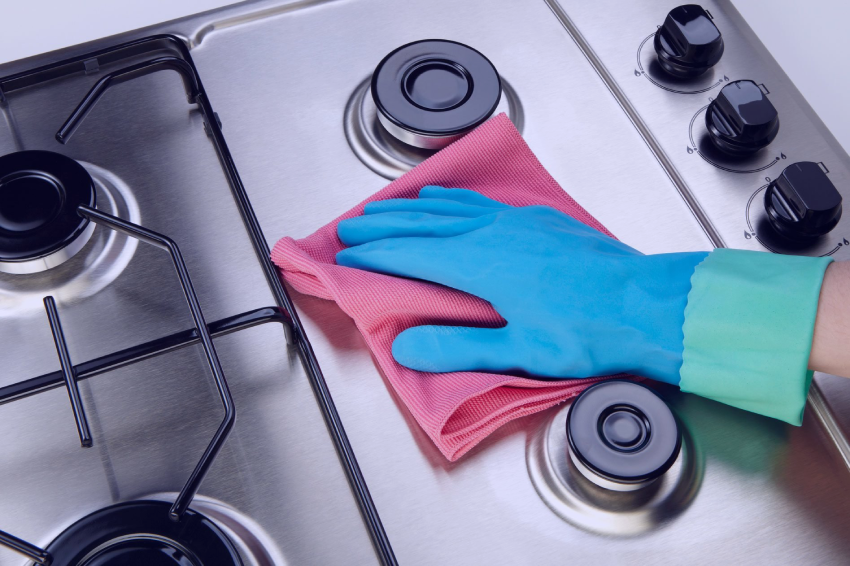
A microfiber cloth is the best tool for the job:
- Its fine fibers lift and trap dust and grime more effectively than a traditional cloth.
- It won’t scratch stainless steel, preserving the finish.
- It’s machine washable, so it’s reusable and eco-friendly.
- It works on other surfaces too, including glass and wood.
Apply the cleaner
- Work from top to bottom, so the cleaner doesn’t drip onto areas you’ve already done.
- Don’t rush — for a streak-free finish, let the cleaner sit for a few minutes before wiping it off.
Wipe with the grain
Pay attention to the grain — the direction of the polish lines on the surface. Wiping along the grain rather than against it keeps the shine even and avoids scratches from trapped dust and grit.
Polish and buff
For a final mirror shine, apply a small amount of stainless steel polish to a soft, clean cloth and buff — which also helps hide minor scratches. Buff along the grain rather than in circles, and give a little extra attention to edges and handles. Consistent care keeps the finish looking good for years.
Maintaining the shine
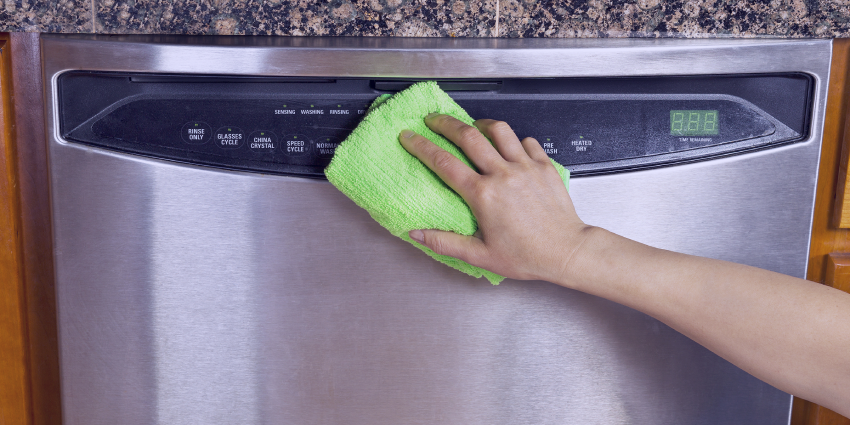
Day-to-day maintenance keeps appliances looking new without any professional help.
Regular dusting and wiping
Regular dusting prevents grime buildup. A quick wipe-down each evening or right after cooking keeps surfaces clean and prevents damage.
Prevent water spots
Always dry appliances after cleaning, paying extra attention to areas near the dishwasher or sink. Don’t leave wet items sitting on the surface — use coasters, mats, or trays under wet containers or plant pots to minimize water spots.
Troubleshooting and stain removal
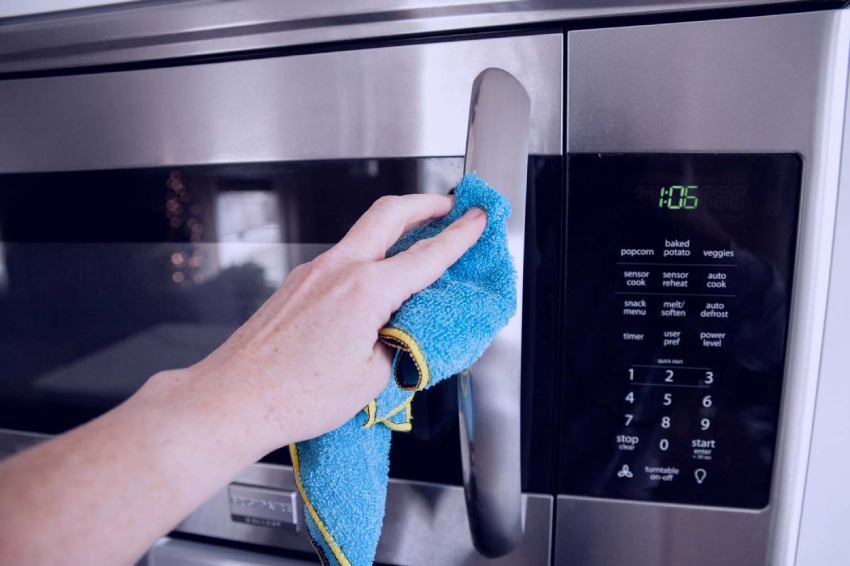
Most stains on stainless steel are surface-level and easy to resolve, and scratches or discoloration can usually be blended with the right cleaner or polish.
Remove stubborn stains
For stubborn stains, apply your cleaner and let it sit a few minutes to penetrate before wiping. Avoid intense scrubbing, which can scratch the surface — for a highly resistant stain, a professional cleaner can help you avoid damage.
Deal with scratches
Wipe away dust first, then buff the area with a stainless steel cleaner or baking soda paste on a microfiber cloth, working with the grain. With patience, scratches become far less noticeable.
Fix surface discoloration
Rainbow-like tints are usually heat stains — let the surface cool and apply a stainless steel cleaner to even it out. For cloudiness, gently rub with a solution of vinegar and water, then wipe dry immediately to prevent new spots.
Frequently asked questions
Can I use olive oil to polish stainless steel?
Yes — apply a small amount to a soft cloth and rub it gently onto the surface, then wipe off any excess so it doesn’t leave a greasy residue.
Can I clean stainless steel appliances in the dishwasher?
No — the high heat and harsh detergents can damage the surface. Stick to manual cleaning for stainless steel appliances.
Can I use glass cleaner on stainless steel?
It’s not recommended, as glass cleaners may contain chemicals that damage the surface. Use mild soapy water or a specialized stainless steel cleaner instead.
Can I use lemon juice to clean stainless steel?
Yes, for light cleaning — mix equal parts lemon juice and water and wipe with a soft cloth. The mild acidity helps lift stains and restore shine. Dry afterward to avoid spots.