
How to Clean Microfiber Cloths the Right Way
To clean microfiber cloths the right way, wash them alone (they vacuum lint from everything else), use little or no detergent, and skip fabric softener, bleach, and dryer sheets — those coat or clog the fibers and kill absorbency. Cool or warm water, a thorough rinse, then air dry or low/no heat keeps cloths soft and working for years. Here’s the full wash-and-dry guide.
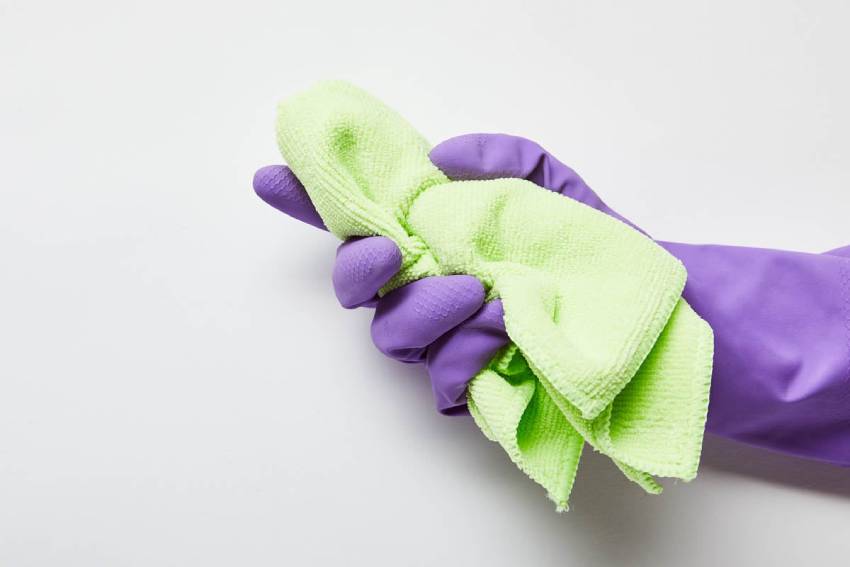
Why microfiber works — and why laundry products wreck it
Microfiber’s huge surface area of ultrafine filaments traps dust, grease film, and moisture better than cotton, often with water alone. That same dense weave also traps detergent residue and softener film. Once clogged, cloths streak glass, push dirt instead of lifting it, and start to smell.
- Absorbent and effective damp or dry
- Soft enough for screens, mirrors, and finished wood when clean
- Lint-free when washed correctly — ideal for mirrors and TV screens
- Reusable for many wash cycles if you avoid fiber-clogging products
How often to wash
Wash after each real cleaning session. A damp, dirty cloth parks bacteria and grit in the fibers; the next wipe can scratch or re-soil the surface. Color-code cloths by room (bathroom vs kitchen) so you do not cross-contaminate.
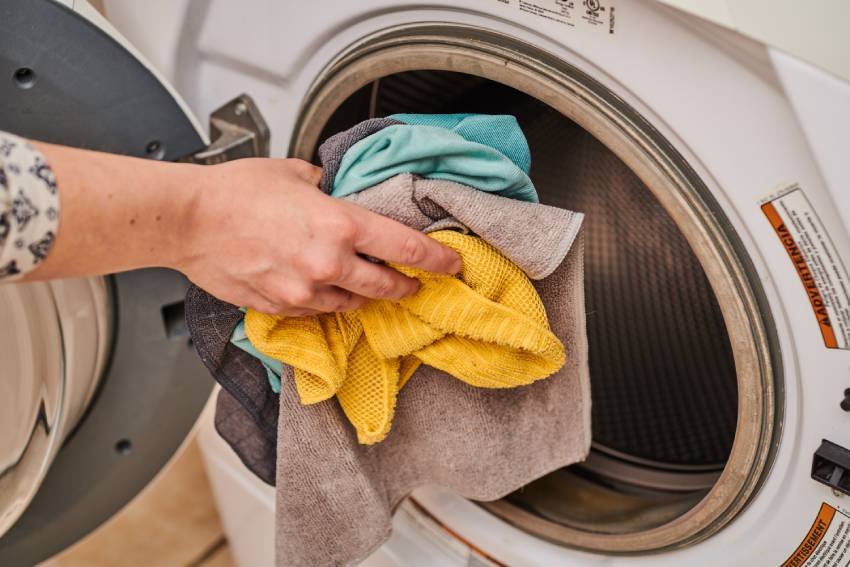
How to clean microfiber cloths by hand
- Check the care label.
- Shake out loose dust outdoors.
- Soak a few minutes in cool water with a teaspoon of mild unscented detergent — or water alone for lightly soiled cloths.
- Rub the fabric against itself; rinse until the water runs clear.
- Wring gently and dry as below.
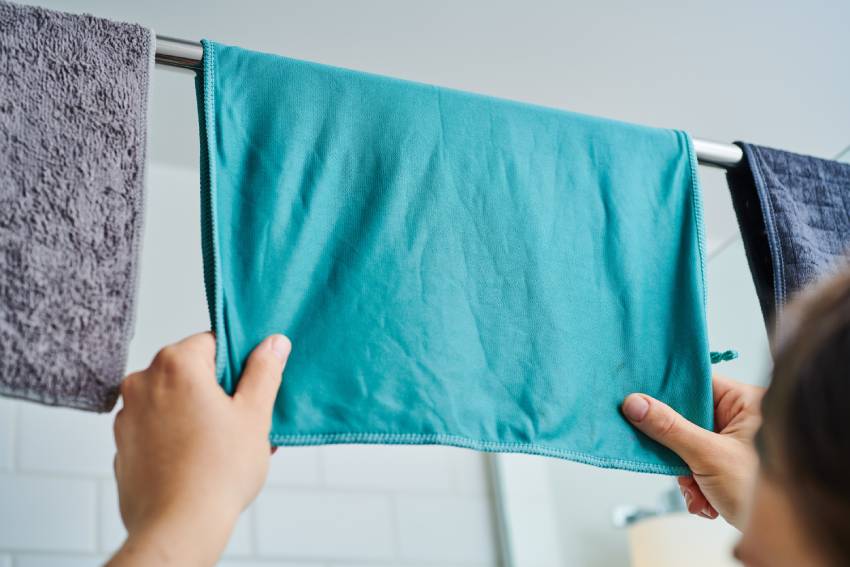
How to wash microfiber in a washing machine
- Wash microfiber only with microfiber. Mixed loads clog the cloths with lint and hair.
- Optional pretreat: spot stain remover or a short soak.
- Use cool or warm water. Hot water can fuse lower-quality fibers; quality brands often allow warm — follow the label.
- Use a small amount of detergent (a few teaspoons). Extra soap does not rinse out and cakes the weave.
- Skip bleach, fabric softener, and scent beads. An occasional splash of white vinegar in the rinse can help odor; never mix vinegar with bleach.
- Run a full rinse so no suds remain.
A clean washing machine drum helps too — leftover softener from other loads will redeposit on microfiber.
How to dry microfiber cloths
Air dry on a line or rack when you can — gentlest and lint-free. If you tumble dry, use low or no heat and keep microfiber separate from towels and cotton. Never use dryer sheets; the coating ruins absorbency the same way liquid softener does. High heat melts the fine filaments.
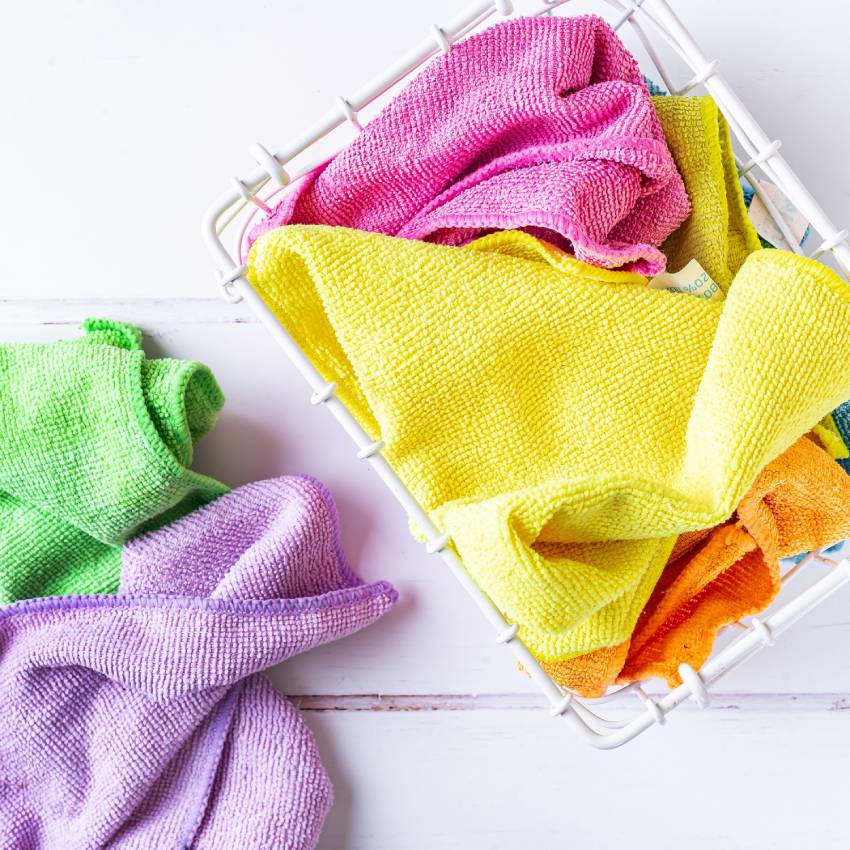
Can you reuse microfiber cloths?
Yes. Proper washing removes soil and most everyday germs people worry about on cleaning cloths. With no softener or dryer sheets, a good cloth often lasts a year or two of regular use before absorbency drops and it’s time to recycle or replace it.
Five non-negotiables
- Wash microfiber alone
- Minimal detergent, thorough rinse
- No fabric softener
- No bleach as routine laundry chemistry for these cloths
- No dryer sheets; low or no heat only
Frequently asked questions
Why do my microfiber cloths smell after washing?
Usually leftover detergent or incomplete drying. Re-wash with less soap, add a vinegar rinse once, then air dry fully.
Can I use microfiber on stainless steel and glass?
Yes when the cloth is clean. Dirty microfiber becomes a mild abrasive. For cookware habits that pair well, see stainless steel pans.
Is vinegar required every wash?
No. Occasional odor rescue is enough; constant acid soaks are unnecessary.
Treat microfiber like a tool, not a regular towel: separate loads, light chemistry, gentle heat. That keeps streak-free wiping ready for Pro Housekeepers’ regular cleaning days or a deeper reset with deep cleaning.