
How To Wash Baby Clothes for New Parents
To wash baby clothes safely, use a fragrance-free, dye-free detergent and follow the garment care label for water temperature. Fresh soil (spit-up, formula, diaper mess) should be blotted and cold-rinsed first so heat does not set protein stains. Hand wash or use a gentle machine cycle; put socks, mittens, and hats in a mesh bag. Air-dry when you can, skip fabric softeners and dryer sheets that leave residue on newborn skin, and wash new clothes before the first wear. Here is a practical routine for new parents.
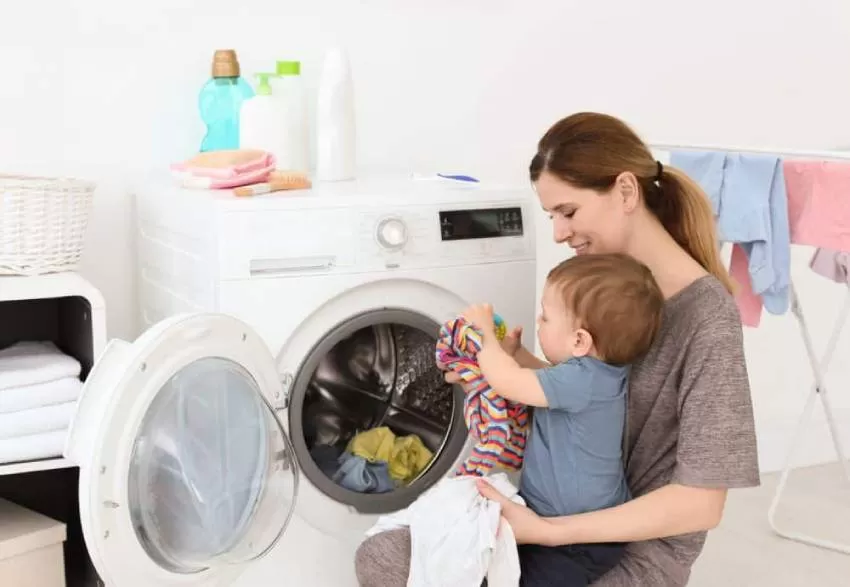
What you need
- Fragrance-free, dye-free (hypoallergenic) baby or free-and-clear detergent
- Mesh garment bag for small items
- Drying rack or line
- Paper towels or clean cloths for blotting
- Optional: baking soda for odor; oxygen bleach only on colorfast whites if the label allows — never chlorine bleach on baby clothes unless a care label explicitly allows it
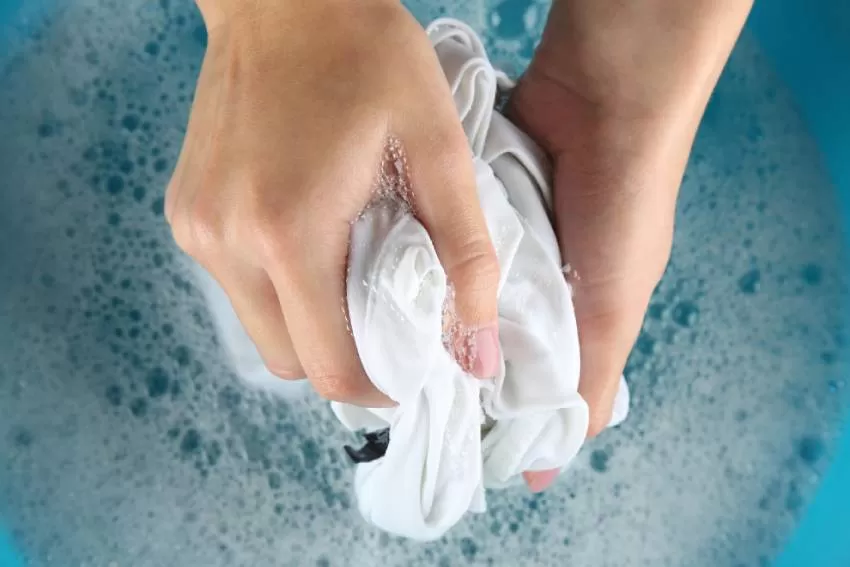
Best default: gentle wash, fragrance-free detergent
Separate baby laundry from the rest of the household when you can, especially newborn items that sit against skin. Check care labels — most cotton onesies tolerate a gentle wash; wool, silk, or embellished pieces may need hand wash only.
- Blot fresh messes; do not scrub stains deeper into the fabric.
- Rinse under cold water first for protein stains (milk, spit-up, blood).
- Pretreat remaining spots with a dab of fragrance-free detergent; wait a few minutes.
- Hand wash: lukewarm or cool water with a small amount of detergent; swirl gently; rinse until water runs clear.
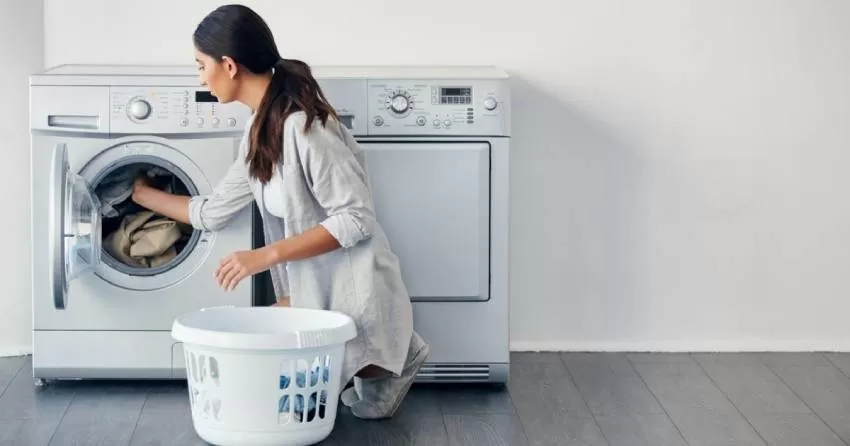
- Machine: gentle/delicate cycle; mesh bag for tiny pieces; measure detergent lightly — excess soap irritates skin.
- Extra rinse if your machine offers it.
Popular fragrance-free options include Seventh Generation Free & Clear, Tide Free & Gentle, ECOS Hypoallergenic, and dedicated baby formulas such as Dreft or Puracy Baby — choose what your pediatrician or dermatologist prefers if your baby has eczema.
Water temperature and stains
- Cold or lukewarm is the safest default for mixed baby loads and for setting fewer protein stains.
- Hotter water can help sanitize some soils when the care label allows it (for example sturdy cotton after illness) — never override a “cold only” or wool label.
- Skip chlorine bleach on baby clothes unless the label says otherwise; it is harsh on fabric and skin. Color-safe oxygen bleach is a better whitener when needed.
Drying without shrinking or irritating
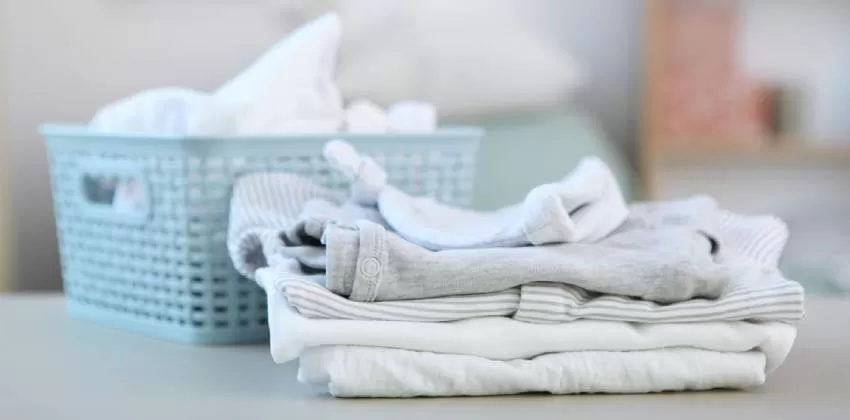
- Prefer air-drying on a rack — less shrinkage, less dryer-sheet chemistry.
- If you use a dryer: low heat, remove promptly, and skip dryer sheets and liquid fabric softener.
- Do not overdry elastics and printed onesies.
Homemade detergent (optional)
Some parents mix castile soap with water and a spoonful of baking soda for a simple wash. Keep recipes mild, rinse thoroughly, and stop if you see skin redness. Commercial free-and-clear detergents are usually more consistent for hard water.
Frequently asked questions
Should I wash baby clothes before first wear?
Yes. New garments can carry finishing chemicals and warehouse dust — wash once with fragrance-free detergent before dressing baby.
Can I wash baby clothes with the family’s laundry?
After the newborn stage many families combine loads. For newborns or sensitive skin, separate washes reduce transfer of adult detergent fragrance and heavy soil.
How do I get formula or poop stains out?
Cold rinse first, pretreat with detergent, then wash. Avoid hot water until the stain is gone so proteins do not set.
Are essential oils safe in baby detergent?
Skip added fragrance oils on newborn laundry; they are a common irritant.
Final cautions
- Fragrance-free and dye-free detergent for baby loads
- Cold rinse protein stains before any hot cycle
- No fabric softener / dryer sheets on baby clothes
- Follow care labels over any generic tip
Laundry is one piece of a healthy home. When you want help with nurseries, bathrooms, and high-touch surfaces, Pro Housekeepers’ regular cleaning and deep cleaning keep the rooms around the crib guest-ready — pair this with our tip on reducing household dust.