
How To Clean a Child’s Car Seat Safely
To clean a child’s car seat without weakening it, start with the manufacturer’s manual — the cover, harness, and shell are not all cleaned the same way. Spot-clean the fabric with a cloth just damp with warm water and a little mild, fragrance-free soap. Never soak or machine-wash the harness straps. Rinse the buckle in warm water only, with no soap. Air-dry every piece fully before you put the seat back in the car. Skip vinegar, bleach, baking soda, ammonia, and steam on the straps and buckle; those can damage webbing, flame-retardant treatment, and the latch.
Safety first
A car seat is crash equipment, not upholstery. Britax, Graco, Chicco, and the major safety groups all land on the same three rules:
- The manual wins. Models differ on whether the cover is machine-washable, how the harness comes off, and which soaps are allowed. Most manuals are on the manufacturer’s site if the paper copy is gone.
- Do not soak the harness. Webbing is built for a specific stretch in a crash. Submerging it, running it through a washer, or hitting it with vinegar, bleach, or baking soda can weaken fibers or strip flame-retardant treatment.
- No soap in the buckle. Residue lubricates the mechanism so it can fail to stay latched. Warm water, press the release repeatedly, air-dry. No WD-40, no dish soap, no “just a drop.”
- Do not hose it, steam-clean it, or put the whole seat in a washing machine. Water trapped in foam grows mildew and is almost impossible to dry. Heat from a steamer or dryer can shrink covers and damage labels you need.
- Do not install a wet seat. Reassemble only when the cover, padding, straps, and buckle are dry to the touch.
- After a moderate or severe crash, replace the seat even if it looks fine. Follow the manufacturer and your insurer — hidden cracks are the point.
How often
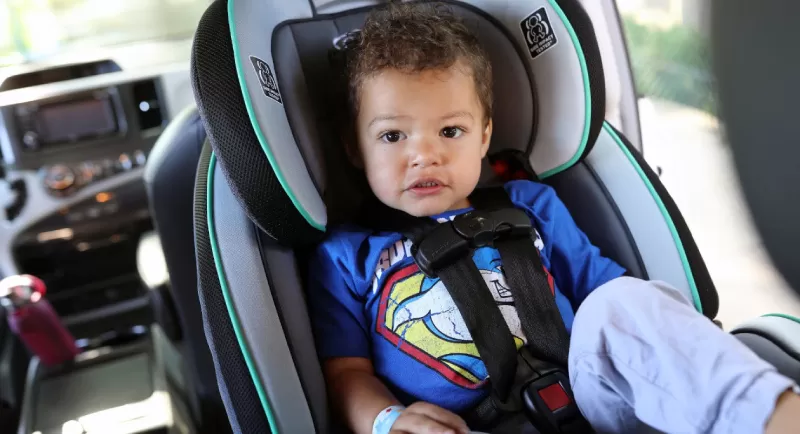
Vacuum crumbs weekly. Spot-clean spills the day they happen — urine, milk, and vomit set fast. A more thorough cover cleaning every few weeks is enough for most families. Check the harness and buckle when you clean: they should still tighten smoothly and click crisply.
What you need
- The seat’s manual (or the PDF)
- Mild, fragrance-free soap or baby wash — only where the manual allows soap
- Warm water, two microfiber cloths, a soft toothbrush
- A vacuum with a narrow tool
- Paper towels for blotting
- Gloves, if you want them
How to clean pee from a car seat
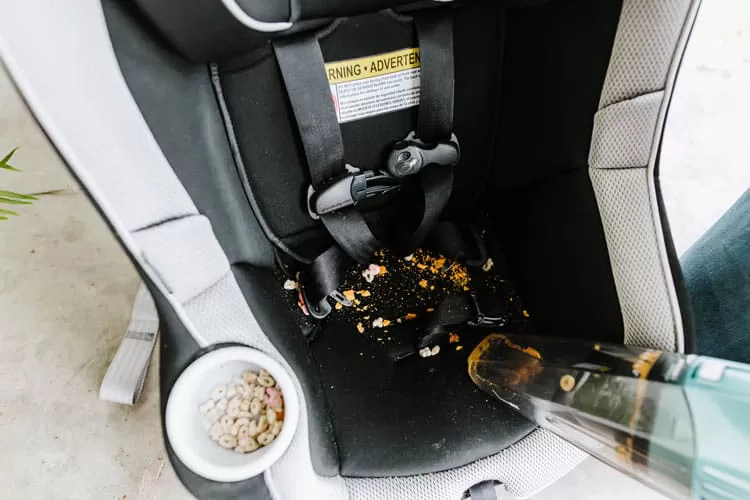
- Blot, don’t scrub. Press towels into the wet area until they come up nearly dry. Rubbing drives urine into the foam.
- Open the car doors. If the manual lets you take the cover off, do that — drying is the hard part, and a cover dries faster off the shell.
- Wipe the fabric with a cloth wrung out in warm water and a small amount of mild soap (skip this if the manual says water only). Follow with a plain-water wipe so soap is not left in the fibers.
- Air-dry fully. Sun and a breeze help. Do not use a dryer, hair dryer, or heater on the cover or straps.
Skip vinegar. It is a common household odor trick and a bad match for car-seat webbing and many flame-retardant fabrics. If urine reached the harness, use the strap method below — not the cover method.
How to clean vomit from a car seat
Same blotting-and-damp-wipe idea, plus:
- Lift the cover if the manual allows, so you can reach seams the mess ran into.
- Wash a removable cover only the way the tag and manual say. That is often cold, gentle, mild detergent, no fabric softener — or hand-wash only. Air-dry. Never the dryer; heat shrinks covers and can ruin printed safety labels.
- A wet/dry vacuum on a removed, still-damp cover can lift what a cloth misses. Do not soak the foam in the shell.
- If odor remains on the dry cover only, a light sprinkle of baking soda, left a few hours and vacuumed off, is a maybe — and only if the manufacturer does not ban it. Never put baking soda on the harness or in the buckle.
Harness straps (the part that actually holds the child)
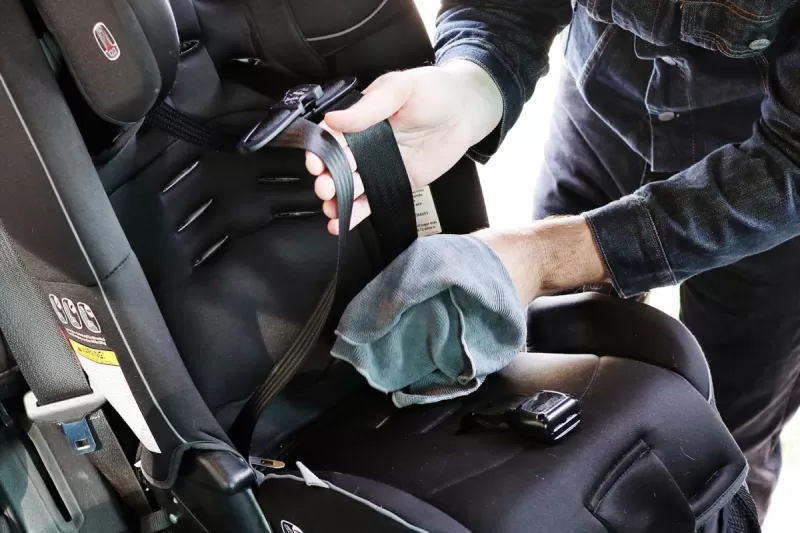
- A cloth damp with warm water. Wring it hard. Mild soap only if the manual says the webbing can take it.
- Wipe along the strap. A soft toothbrush is fine for dried food, still barely damp.
- Wipe again with plain water if you used soap.
- Lay the straps flat to air-dry. No dryer, no hair dryer, no radiator.
Do not: soak or machine-wash the straps; use vinegar, bleach, baking soda, ammonia, or “natural” essential-oil sprays; iron or steam them; or keep using straps that stay stiff, fuzzy, or stained after a careful clean. Manufacturers sell replacement harnesses. That is cheaper than a compromised seat.
The buckle (water only)
- Unlatch and, if the manual shows you how, take the buckle off the seat. Do not force a one-piece harness you are not supposed to unthread — many seats are not designed for that, and rethreading wrong is a safety failure.
- Rinse the metal/plastic latch under warm water. Press the release over and over so grit flushes out.
- No soap, no lube, no household cleaner.
- Shake out water. Air-dry completely.
- Test: it should click firmly and not slide open when you tug the straps. If it stays sluggish after a second rinse, call the manufacturer for a replacement buckle. Do not keep using it.
Crumbs, sticky food, and the plastic shell
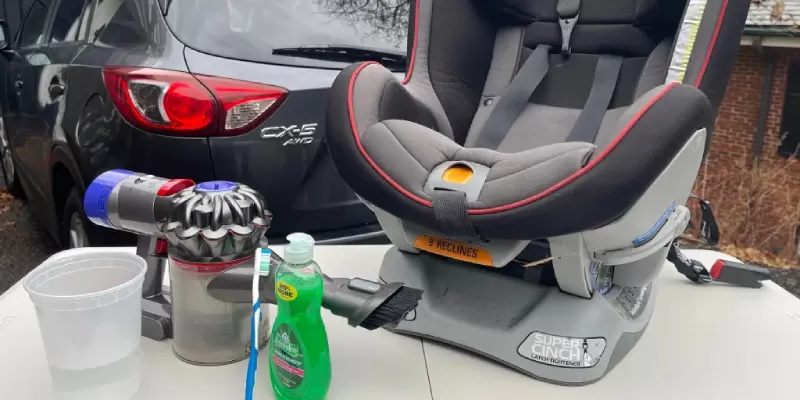
- Pick out the big pieces, then vacuum seams with a crevice tool.
- Sticky spots on the cover: damp soapy cloth, then a water wipe.
- The plastic shell: the same mild soap and water, then towel-dry. Do not scour labels, date stickers, or the LATCH belt path. You need those.
- Dry everything, then reinstall by the manual — Crotch strap routed correctly, chest clip at armpit level, harness snug, car’s seat belt or LATCH tight enough that the seat does not move more than an inch at the belt path.
When to replace, not clean
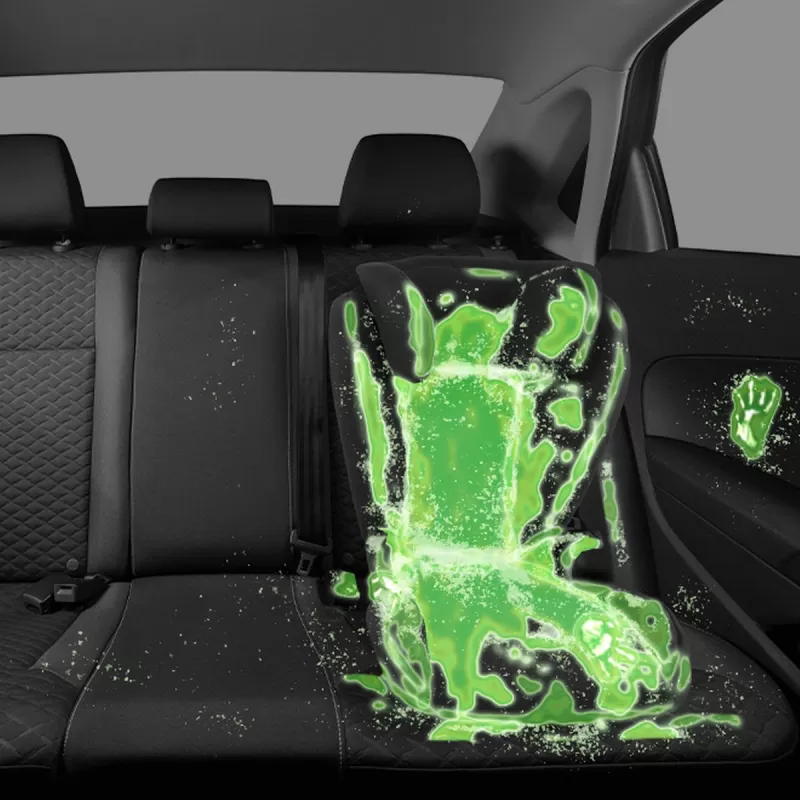
- Expired seat (the date is on a label on the shell — often six to ten years from manufacture).
- A moderate or severe crash, or a crash the manufacturer says is enough to retire the seat.
- Cracks in the shell, a buckle that will not click, webbing that is cut, melted, or badly frayed.
- Mold, a pest infestation, or an odor that survives a proper dry-out. Call the maker before you try aggressive cleaners; many will tell you to replace.
This is not the car’s leather seats
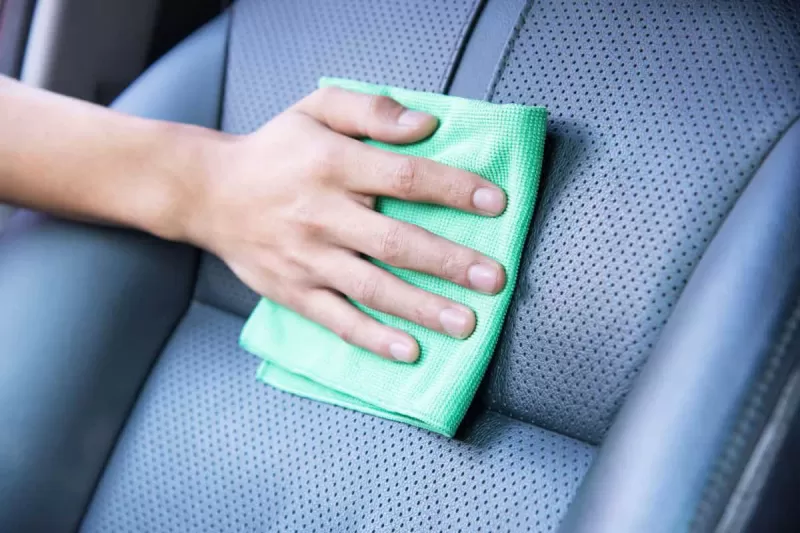
Vehicle upholstery is a different job. A child’s car seat follows the child-restraint manual. The car’s leather or cloth seats follow the automaker. Do not put vinegar, saddle soap, or a carpet extractor on a child restraint because it worked on the captain’s chairs. For leather jackets and furniture, we have a separate leather guide.
FAQ
Can I put a car seat in the washing machine?
Never the whole seat. The removable cover only if the manual explicitly allows a machine wash — cold, gentle, no softener, air-dry. Straps and buckle stay out.
Can I hose it down in the driveway?
No. You will not get the foam dry, and soaking the harness is the mistake this whole article is trying to prevent.
Can a detailing shop or “baby gear spa” clean it?
Only if they follow the same manufacturer rules: no soaking straps, no soap in the buckle, no high heat. Ask those three questions before you hand it over. If they steam the whole seat, walk away.
What about enzyme cleaners for pee?
Only if the car-seat maker lists that product. A generic pet enzyme is chemistry you have not tested on flame-retardant fabric. Mild soap and water, then a full dry, is the default.
House cleaning will not replace a car-seat manual, but if the mess also hit the rest of the interior and the house you carried the child through, a deep clean can handle floors, fabric, and bathrooms while you dry the seat the slow, correct way.