
How to Clean a Leather Jacket Without Ruining It
To clean a leather jacket without ruining it, never machine wash it or soak it in water — that strips the leather’s oils and causes stiffening, cracking, and watermarks. Spot-clean finished leather with a barely damp microfiber cloth and a tiny amount of mild soap, wipe the residue, air-dry away from heat, then condition. Identify the leather first: suede and nubuck are dry-only jobs. Always test cleaners on a hidden seam.
First rule: don’t soak it
Can you machine wash a leather jacket? No. Submerging it in a sink is almost as bad. Soaking leather (washer or tub) pulls out natural oils and the protective finish, then the jacket dries stiff, shrunken, or watermarked. Leather is cleaned by working the surface, not by washing it through like a hoodie. Start by knowing what you are holding.
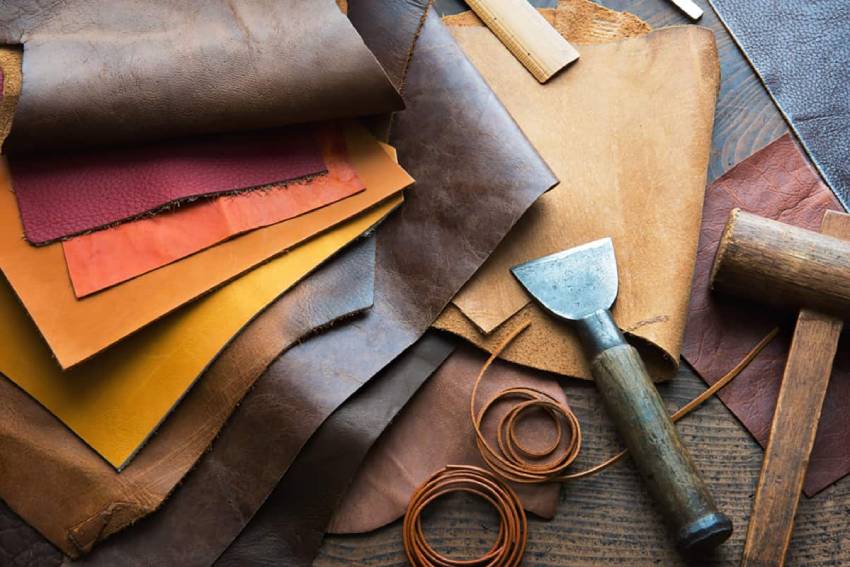
Know your type of leather
Wrong method on the wrong hide is how jackets get ruined. Use the care tag when you have one; otherwise match the surface:
- Finished / coated leather — most modern jackets. A protective topcoat makes them more stain-resistant. The spot-clean method below is for these.
- Nappa — soft, full-grain (often lamb). More delicate; use the same method with even less moisture and pressure.
- Aniline (unfinished) — little or no pigment coat; absorbs water and oil fast. Err toward a leather specialist.
- Suede — napped underside of a split hide. Never wet-clean. Use a suede brush, eraser, and suede cleaner only.
- Nubuck — top grain lightly buffed to a velvet nap. Same rule as suede: dry methods only.
The rest of this guide is for finished and nappa leather. For suede and nubuck, skip every water step and use a dedicated kit. The same leather-care logic applies to softer pieces like a leather couch and to white leather shoes — finish type still decides the method.
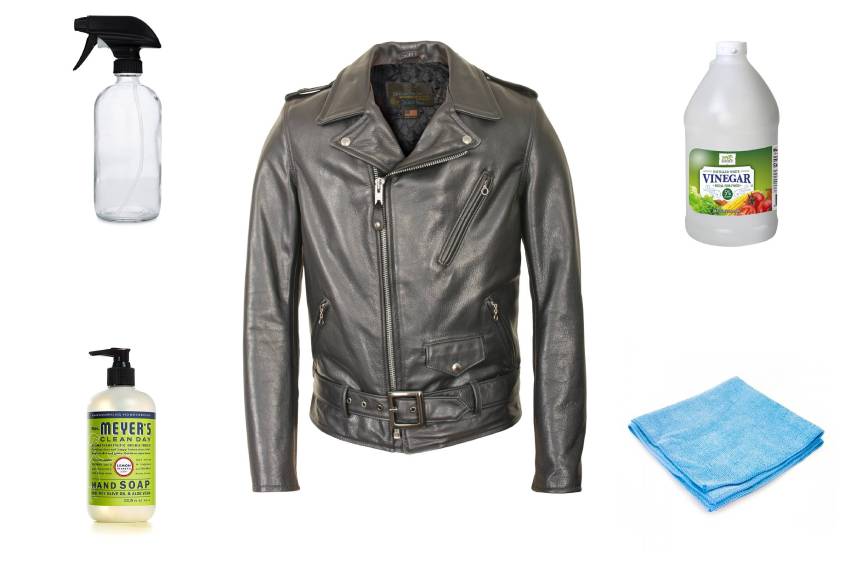
What you need (and what to avoid)
The Leather Institute’s care guide (via Townsend Leather) keeps finished leather simple: mild soap solutions, soft cloths, and products made for finished leather — not household solvents.
Never use:
- Ammonia, bleach, or acetone (including acetone nail-polish remover)
- Harsh solvents, “magic” multipurpose sprays, or undiluted vinegar as a routine cleaner
- A washing machine, dryer, or hair dryer aimed at the leather
Best for routine cleaning:
- A clean, non-shedding microfiber cloth
- Mild soap (leather soap, or a drop of gentle dish soap)
- Lukewarm water — cloth damp, never dripping
- A soft brush for seams and hardware
- A leather conditioner after the jacket is fully dry
Use with caution for specific stains: cornstarch or baking soda as a dry poultice for fresh oil; acetone-free isopropyl alcohol only for stubborn ink or mold spots after a hidden-spot test. Vinegar is acidic — it can dull or dry a finish if used often or full strength. If you use it at all for salt stains, dilute heavily, test first, and condition afterward. Mild soap is safer for everyday dirt.
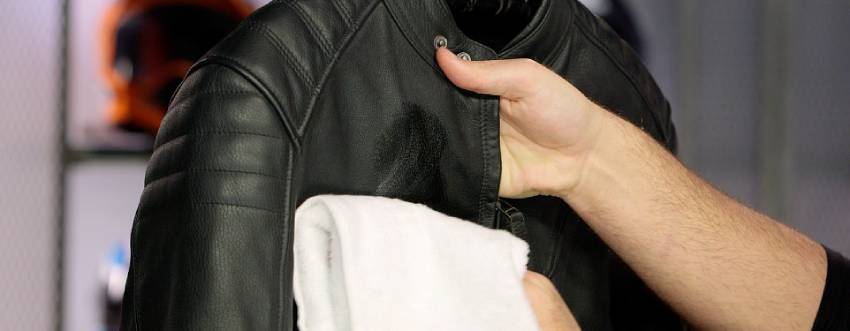
How to clean and restore a leather jacket
- Empty pockets and hang it. Work on a padded hanger or flat on a clean towel so the leather does not crease while wet.
- Dry dust first. Wipe the whole jacket with a dry microfiber cloth so grit cannot grind into the finish.
- Spot-clean in sections. Dampen (do not soak) a cloth with lukewarm water and a drop of mild soap. Wipe in small circles, then immediately wipe again with a clean damp cloth to remove soap film.
- Air-dry completely. Keep it away from radiators, direct sun, and hot air. Stuff sleeves lightly with clean tissue if you need shape — never newspaper ink against pale leather.
- Condition. When the leather is dry to the touch, apply a thin layer of leather conditioner with a clean cloth, let it absorb, then buff. Over-conditioning leaves a greasy film that attracts dust.
If the jacket is expensive, vintage, or heavily stained, a leather cleaner beats DIY. Home methods are for light soil and maintenance, not miracle rescues.
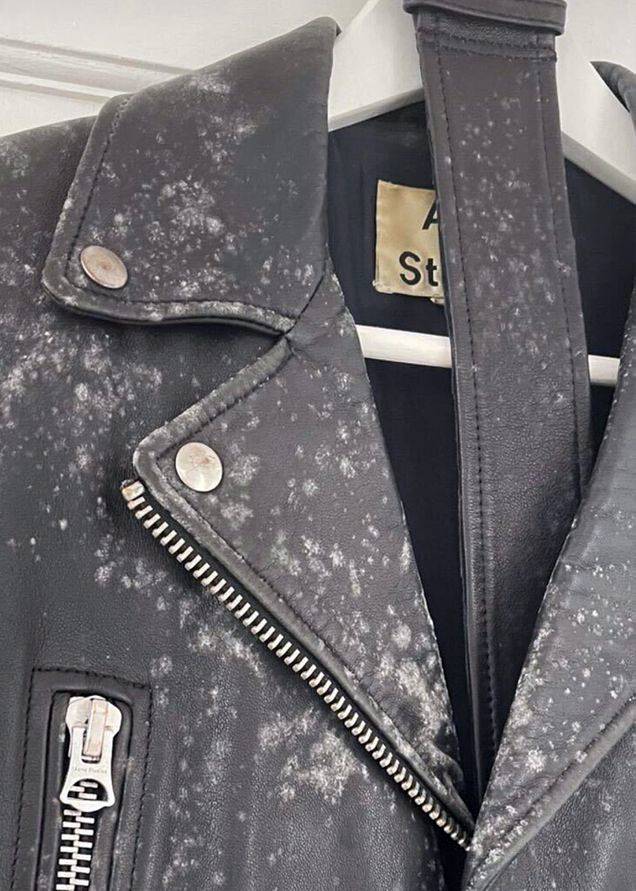
How to clean mold off a leather jacket
Mold means moisture plus poor airflow — a damp closet, a wet commute left hanging sealed in a bag, a humid basement. Work outdoors or by an open window, and wear a mask if the growth is heavy.
- Brush loose mold outdoors with a soft, dry brush. Do not scrub wet mold into the leather.
- Wipe finished leather with a barely damp cloth. For stubborn spots, a lightly alcohol-dampened cloth (acetone-free isopropyl) after a test patch can help; wipe residue with a clean damp cloth.
- Air-dry fully, then condition. Fix the storage problem: dry space, breathable garment bag, not a plastic bin.
Suede or nubuck with mold usually belongs with a professional. Water and alcohol can set permanent marks in the nap.
Removing common stains
- Oil or grease: Blot — do not rub. Cover with cornstarch or baking soda for a few hours, brush off, then spot-clean and condition. Fresh oil lifts easier than set-in grease.
- Ink: On finished leather only, dab acetone-free isopropyl on a cotton swab from the outside of the mark inward. Stop if color lifts. Condition after.
- Salt (winter roads): Wipe with a barely damp cloth as soon as you can. Optional: a heavily diluted vinegar wipe, then a clean water wipe, then condition. Salt left on leather draws moisture and can leave white rings.
- Water spots: Often a finish issue, not dirt. Let the jacket dry fully, then condition evenly so the sheen matches.
Preventative care that actually works
- Hang on a wide, padded hanger — wire hangers leave shoulder dents
- Keep it out of plastic dry-cleaning bags for long-term storage
- Condition a few times a season if you wear it hard; once or twice a year if it is occasional
- Treat leather hats and jackets the same way: spot-clean, dry, protect
Frequently asked questions
Can you put a leather jacket in the washing machine?
No. Machine washing and soaking strip oils, warp the shape, and often ruin the lining and finish.
Can you use vinegar on leather?
Only with caution, heavily diluted, and usually for salt stains — never as a weekly cleaner. Condition afterward. Mild soap is safer for routine dirt.
How often should you condition a leather jacket?
When it feels dry or looks dull after cleaning, or a few times a year with regular wear. More is not better.
What about suede jackets?
Keep them dry. Brush with a suede brush, use a suede eraser for marks, and spray only products labeled for suede/nubuck.
A leather jacket is a careful DIY job; the rest of the house still piles up. Pro Housekeepers’ regular cleaning and deep cleaning cover floors, bathrooms, and kitchens while you keep the jacket on a hanger — and the same microfiber habits that protect leather also help when you cut household dust.