
How To Clean Mirrors Without Streaks
To clean a mirror without streaks, dust it first with a dry microfiber cloth, then wipe with a barely damp cloth of equal parts white vinegar and water (or a glass cleaner sprayed on the cloth, not the glass). Work top to bottom in overlapping side-to-side passes. Buff dry with a second clean cloth, and wipe the edges last — moisture that sits on the rim seeps behind the glass and corrodes the silvering. Skip paper towels, newspaper, and anything abrasive. They lint, scratch, or both.
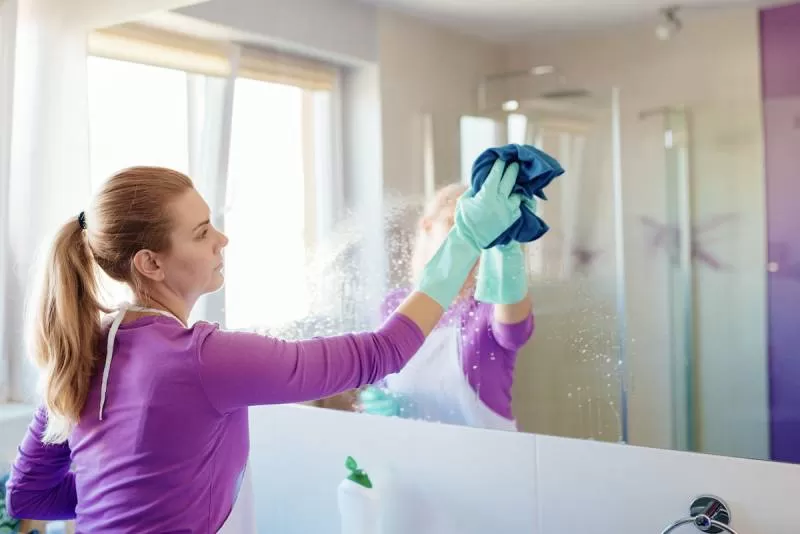
Safety first
- Protect the backing. A mirror is glass with a thin metal coating on the back. Liquid that runs over the edge is what causes the black spots (“desilvering”). Spray cleaner onto the cloth. Never flood the frame or the bevel.
- Never mix ammonia glass cleaner with bleach (or with a bowl cleaner you just used nearby). That pairing makes chloramine gas. Pick one product, rinse, then switch.
- Ammonia fumes. If you use a commercial ammonia glass cleaner, open a window or run the fan. Skip it on antique or damaged-backing mirrors.
- No abrasives. Scouring powder, magic erasers used hard, steel wool, and whitening toothpaste all scratch glass. Scratches are permanent.
- Antiques. Old mercury or foxed mirrors belong to a conservator, not a spray bottle. Dust dry, or a barely damp distilled-water wipe, then dry the edge at once.
What you need
- Two clean microfiber cloths (one damp, one dry). A third if the first one loads up with product.
- White vinegar and water, or a glass cleaner
- A spray bottle
- A window squeegee (optional, best on large mirrors)
- Isopropyl (rubbing) alcohol, for hairspray and oily film
- Distilled water, if your tap water is hard
How to clean a bathroom mirror, step by step
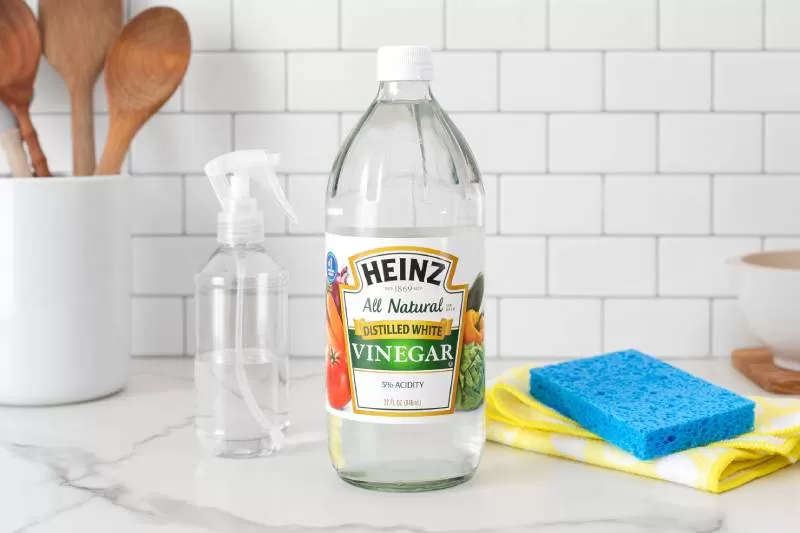
Most bathroom mirrors take five to ten minutes. Larger wall mirrors streak more easily — keep the cloth wrung out and the motion consistent.
- Dry-dust the glass. Cleaner on grit is how you get swirls.
- Mix equal parts white vinegar and warm water. Skip dish soap — suds dry as haze. In a hard-water house, use distilled water so you are not painting minerals back on.
- Lightly mist the cloth, not the mirror. If you do spray the glass, start at the top and stop an inch short of the frame.
- Wipe side to side, working down. Flip to a dry section of cloth as it gets wet. Too little solution streaks; a dripping cloth dumps water onto the vanity.
- Buff with a dry microfiber in a slow S-shape, top to bottom. Dry the edges and the frame last.
If you still see streaks, a squeegee in overlapping horizontal strokes leaves the cleanest finish. Wipe the blade after each pass. Catch runoff with a cloth at the bottom so it does not hit wood or stone.
What actually causes streaks
- Dirty or soapy cloths. Fabric softener on laundry microfiber leaves a film. Wash cloths hot, no softener, no dryer sheets.
- Paper towels. They shed and often have lotion. Use them only if you have nothing else, then buff with fabric.
- Newspaper. The old “ink polishes glass” trick was for a different ink. Modern newsprint smears and can leave gray. Do not use it.
- Hard water. Minerals dry as spots. Distilled water in the bottle fixes most of it. A 1:1 vinegar mix helps dissolve existing scale; rinse and dry.
- Too much product. A squeegee or a second dry cloth beats adding more spray.
Hairspray, makeup, and oily film
Water and vinegar bounce off oil. For sticky hairspray, fingerprint grease, or a cloudy film that returns the same day:
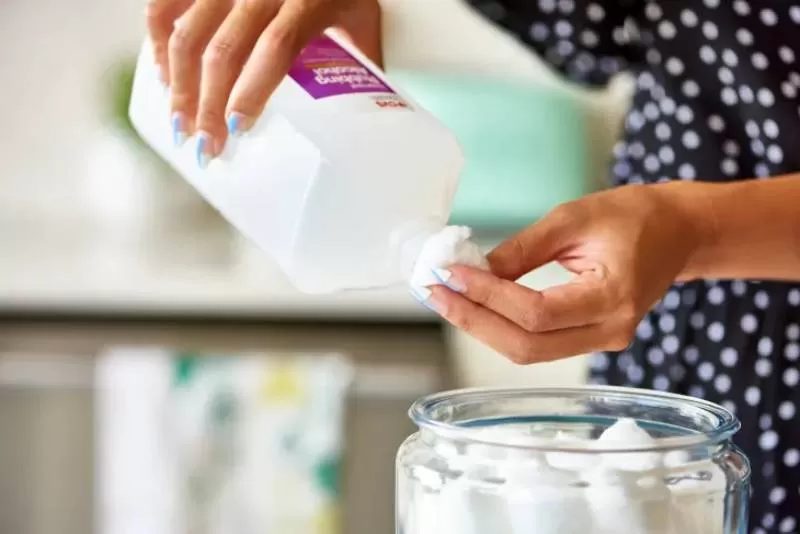
- Dab isopropyl alcohol (70% is fine) on a white or undyed cloth — alcohol can pull dye onto the glass.
- Hold it on the spot a few seconds, then wipe. Do not soak the edge.
- Follow with the vinegar-water pass so you are not left with alcohol marks.
Protect the vanity. Alcohol dulls some finishes and some stone. A towel on the counter is enough.
Hazy, spotted, or “always dirty” mirrors
If a thorough clean still looks milky, you are usually seeing one of three things:
- Hard-water scale — vinegar dwell (a minute, not an hour), then buff. Repeat rather than scrub.
- Soap or product film — alcohol, then vinegar-water.
- Desilvering — black or bronze speckles, usually starting at the bottom edge. That is the backing failing. Cleaning will not reverse it. Keep the edge dry so it spreads slower; replacement is the real fix.
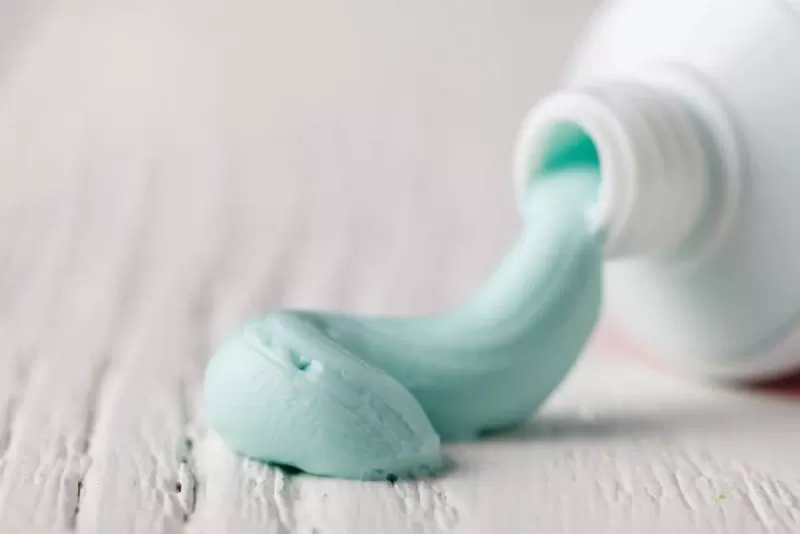
Toothpaste is a leftover internet trick. Even “plain” paste is a mild abrasive. Skip it. Alcohol or a plastic scraper on a stuck bit of tape is safer than scouring the glass.
Framed, beveled, and medicine-cabinet mirrors
Treat the frame as a different surface. Wood and composite frames want a barely damp wipe, not a spray. Metal frames rust if you leave them wet. On a beveled edge, wipe along the bevel so liquid does not sit in the cut. Open a medicine cabinet and wipe the door’s back — that side collects the same steam and never gets cleaned.
What not to use
- Abrasive powders, rough sponges, or a bristle brush
- A dripping cloth at the edge of the glass
- Bleach on the mirror (it does not help, and it is a mixing hazard next to bathroom bowl cleaner)
- Expired or gummy glass cleaner that leaves a white film — dump it and mix vinegar-water
- Cleaner on a dusty mirror
Keep it from getting grimy
A 30-second dry-microfiber wipe after a steamy shower does more than a monthly project. Run the bath fan during the shower and for 20 minutes after. If the house is on a well or hard municipal water, keep distilled water in the spray bottle.
A weekly bathroom clean that includes the mirror, vanity, and glass is faster than letting hairspray bake on. If you want that on a recurring schedule — toilet, shower, mirror, floor — regular house cleaning from Pro Housekeepers covers bathroom mirrors as part of the visit.
FAQ
Why does my mirror look worse after I clean it?
Usually a dirty cloth, hard water, or leftover soap. Switch to two clean microfibers and distilled vinegar-water, and dry the glass completely.
Can I use Windex?
Yes, on modern mirrors. Spray the cloth, not the edge. Ventilate. Do not use it on a mirror whose backing is already peeling, and never in the same session as bleach.
How do I stop the black spots at the edge?
You cannot reverse desilvering. You can slow it: dry the edges every time, run the fan, and stop spraying the frame. A badly spotted mirror needs to be replaced.
Is a squeegee better than a cloth?
On a large, flat mirror, yes. On a small vanity mirror, two microfibers are simpler. The squeegee only helps if the blade is clean and you wipe the runoff.