How To Get Rid of Dust Like a Pro


    To get rid of dust effectively, work top to bottom: dust ceilings and high surfaces first with a microfiber duster (slightly damp microfiber actually traps dust rather than just redistributing it like dry feather dusters), then baseboards, walls, and furniture, and finally vacuum carpets and floors. Run a HEPA air purifier while you clean to catch what gets airborne, and use a vacuum with a HEPA filter so it doesn’t blow fine dust right back into the room. Reduce future dust by closing windows on dry/windy days, using a doormat and removing shoes at the door, washing bedding weekly in hot water, and keeping indoor humidity around 30-50%. Here’s the full guide.

    Why your house is so dusty

    Most household dust is a mix of: skin cells (humans shed about a gram a day), fabric and paper fibers, pet dander, outdoor soil and pollen tracked in on shoes, outdoor particulate that comes in through open windows, and a smaller share of dust mites and their droppings. That mix is why no single fix solves dust completely — it comes from everywhere people, pets, and outdoor air go.

    Common contributors to a dusty home

    1. Open windows and doors on dry, breezy, or high-pollen days let outdoor particles in.
    2. Outdoor dirt and debris tracked in on shoes — one of the biggest contributors that’s easy to address with a doormat and a shoes-off rule.
    3. Carpets, upholstery, and curtains hold dust deep in the fibers when not cleaned regularly. Dust mites thrive in fabric and humid conditions.
    4. Dirty HVAC filters re-circulate fine particles. (A frequently-changed standard furnace filter, or upgrading to a higher-MERV filter, helps more than most homeowners realize.)
    5. Pets shed dander; longer-haired pets contribute more.
    6. High indoor humidity — dust mites thrive above 50% relative humidity. Keeping indoor humidity between 30-50% (a hygrometer is a few dollars) significantly reduces them.

    A note on HVAC duct cleaning: the EPA’s position is that there’s no proven link between routine duct cleaning and reduced household dust in typical homes. Duct cleaning is worth doing in specific situations (visible mold inside the ducts, vermin infestation, or substantial debris being released into the living space) — but for everyday dust, changing the HVAC filter frequently and addressing the sources above is more effective.

    Quick prevention wins

    These habits do more for keeping dust down than any single cleaning session:

    1. Doormat plus shoes-off rule. Outdoor dirt is one of the largest dust contributors. Stopping it at the door is the highest-leverage thing you can do.
    2. Wash bedding weekly in hot water. Sheets, pillowcases, and duvet covers in hot water (or a hot dryer cycle for 30+ minutes) kills dust mites and removes skin cells before they accumulate. Consider mattress and pillow encasements if anyone in the home has dust allergies.
    3. Keep indoor humidity at 30-50%. A small dehumidifier in damp areas, or an HVAC humidifier in dry winter months, keeps you in the sweet spot.
    4. Change HVAC filters frequently. Once a month for cheap filters, every 3 months for pleated ones. A MERV 11-13 filter catches more fine dust without straining most residential systems.
    5. Run a HEPA air purifier in bedrooms and high-traffic rooms. Make sure it’s true HEPA, not “HEPA-style.”
    6. Use microfiber, not feather dusters. Microfiber traps dust electrostatically; feather dusters mostly redistribute it.
    7. Close windows on dry, breezy, or high-pollen days. Open them when conditions are calm and pollen counts are low.

    Should I vacuum or dust first?

    Always work top to bottom. Dust falls when you disturb it, so anything you vacuum first will need vacuuming again. The order: ceiling and high surfaces → walls and baseboards → furniture → floors. Run a HEPA air purifier while you clean to catch dust that goes airborne.

    What you need

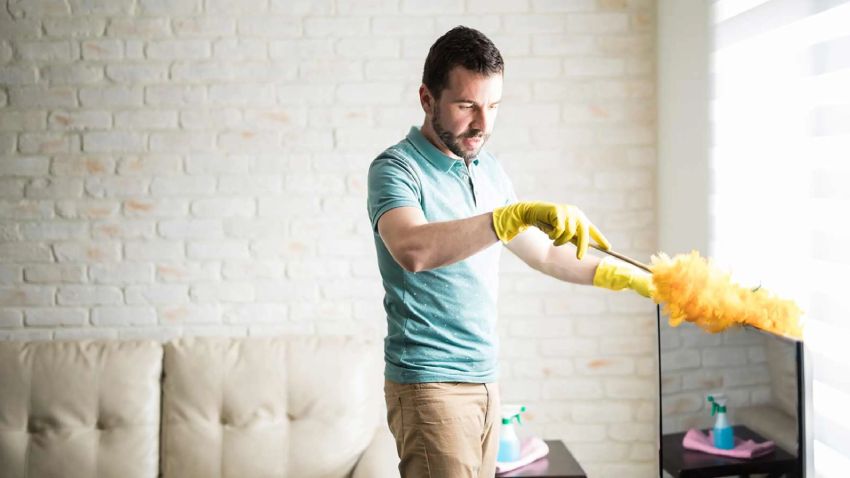
    • A microfiber duster with an extension pole
    • A microfiber cloth (or two) for damp wiping
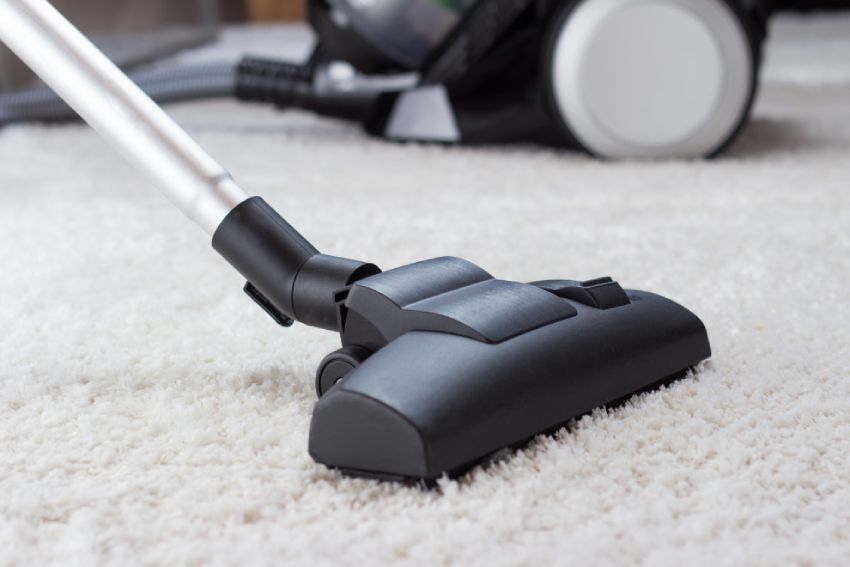
    • A vacuum with a HEPA filter
    • A mop and mild floor cleaner for hard floors
    • A spray bottle of water (for slightly dampening dusting cloths)

    A HEPA-filter vacuum matters: ordinary vacuums often blow fine dust right through the bag and back into the air. HEPA vacuums catch particles down to 0.3 microns.

    Step 1: Ceilings and high surfaces

    Start at the top. Use a microfiber duster with an extension pole. Lightly dust the ceiling (corners are where cobwebs collect), light fixtures, ceiling fans (blades collect surprising amounts), and tops of door frames, picture frames, and tall furniture. A duster that’s been lightly misted with water grips dust better than a dry one.

    A safety note on older popcorn ceilings: popcorn (textured) ceilings installed before 1978 may contain asbestos, which can release fibers if disturbed or scraped. If you have a popcorn ceiling and aren’t sure of its age, don’t aggressively vacuum or brush it — a very light dusting with a microfiber pad is okay, but anything that breaks the surface should wait until a contractor can test for asbestos. For confirmed asbestos-free popcorn ceilings, a soft brush vacuum attachment on low suction works.

    Step 2: Walls and baseboards

    Walls collect a fine layer of dust over time, especially above radiators and heating vents (warm air rising deposits dust on the wall above). Baseboards are even worse — they’re at floor level where dust settles and they’re easy to forget.

    1. Run a microfiber duster down the walls to lift the surface layer of dust.
    2. For baseboards and any sticky spots, use a damp (not wet) microfiber cloth wrapped around a soft brush or extension. Wipe in long, even strokes; rinse and re-dampen the cloth often.
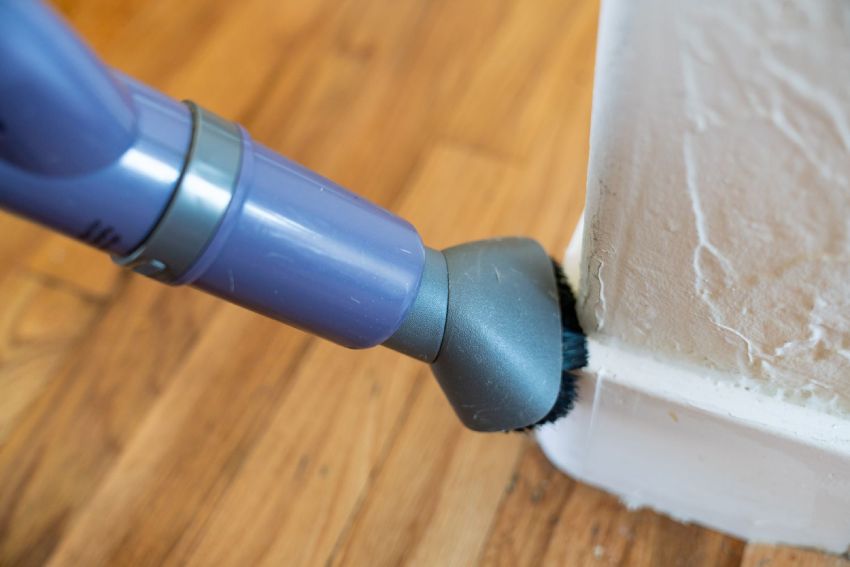
    3. For textured walls, a vacuum with a soft brush attachment works better than a cloth.

    Step 3: Furniture and electronics

    Now the visible surfaces — tables, shelves, dressers, electronics, bookcases.

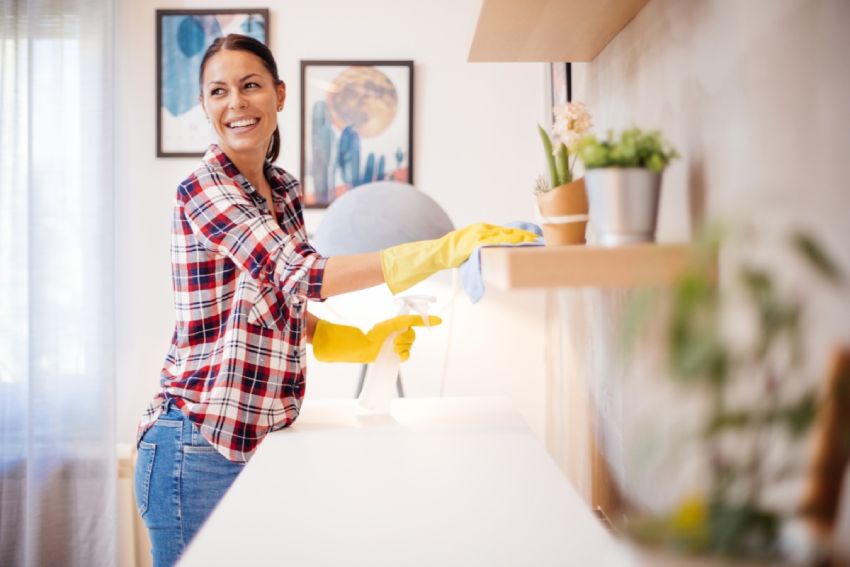
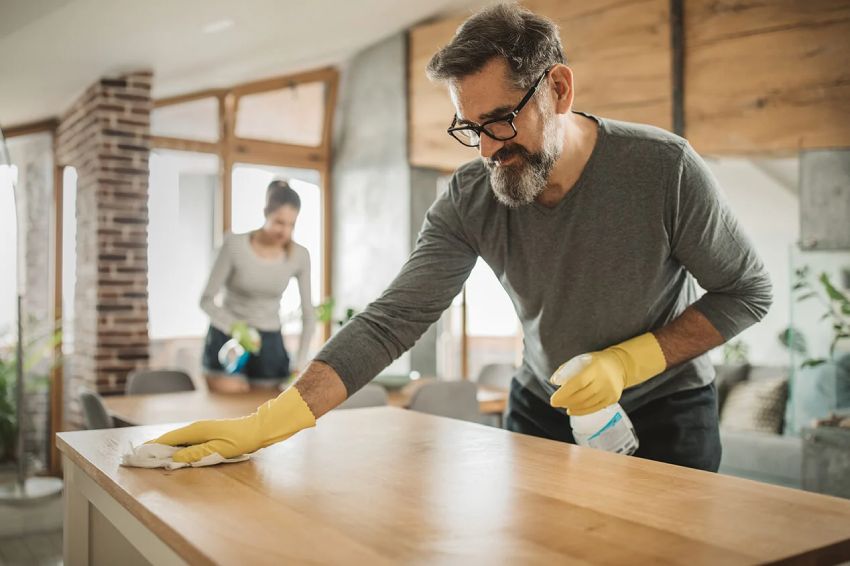
    1. Dust horizontal surfaces with a slightly damp microfiber cloth, working in one direction and lifting (not sweeping) dust off the surface.
    2. For electronics, dust dry only — a microfiber cloth (without water) for the screens and exterior; a soft brush or a few short bursts of compressed air for vents and keyboards. Don’t use water on electronics.
    3. Vacuum upholstered furniture (cushions and crevices) and curtains — they hold dust deep in the fibers. Use the soft brush attachment for delicate fabrics.
    4. Books: a clean dust brush or vacuum brush attachment along the tops of the books lifts what’s settled there.

    Useful vacuum attachments for dust

    • Extension wand for ceilings, high corners, and behind furniture
    • Upholstery attachment for couches, mattresses, curtains
    • Soft dusting brush for delicate surfaces, electronics, and lamp shades
    • Crevice tool for baseboards, between cushions, and tight spaces

    Step 4: Floors

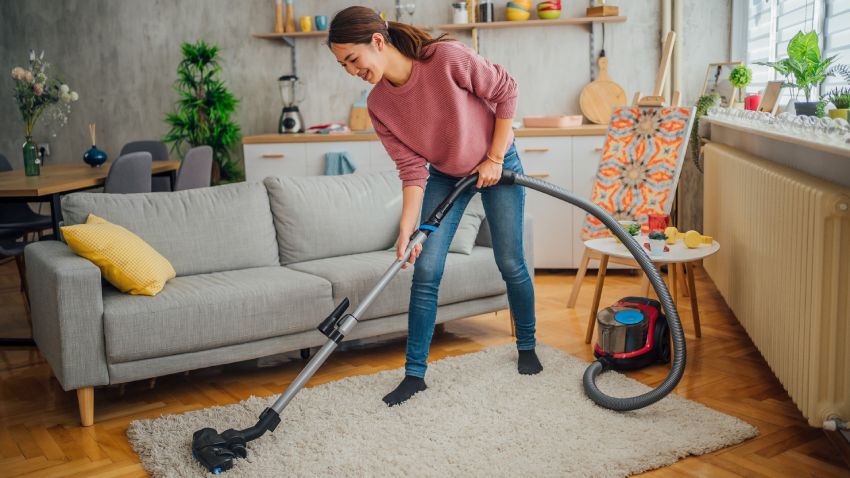
    Vacuum carpets thoroughly — several passes in each direction. Dust gets stirred up at first, so go over each area more than once. For hard floors, vacuum first (a hard-floor setting if your vacuum has one), then mop with a barely-damp microfiber mop and a mild cleaner. Wring the mop out frequently — a wet mop just pushes dust and dirt around.

    For small rugs, take them outside and shake them out (or vacuum well first, then shake) to keep that dust outdoors rather than redistributing it inside.


      The fastest way to dust a house

      If you only have 20-30 minutes, focus on what affects you most:

      1. Run the HEPA air purifier on high in the room you’re cleaning — it works while you do.
      2. Damp-microfiber the visible horizontal surfaces — coffee tables, end tables, dressers, electronics. This is where dust shows.
      3. Vacuum the main traffic areas of the carpet (or hard floor) with a HEPA vacuum. You’ll miss baseboards and corners, but you’ll handle 80% of what people breathe and walk on.
      4. Strip and rewash the bedding if you didn’t this week. Dust-rich, breathing-zone, easy win.

      Save the ceiling, walls, and deep furniture vacuuming for when you have a longer session.

      Don’t wait until you start sneezing

      If dust is visible on surfaces, it’s been there a while — a weekly light dusting prevents the buildup that triggers allergies and turns into hours of work. The schedule that works for most homes: a thorough top-to-bottom session twice a month, the quick fast-dust above on the off weeks, weekly bedding wash, and frequent HVAC filter changes. With the right tools (microfiber, HEPA vacuum, HEPA purifier) the work is far quicker and far more effective than dry-dusting with the wind.