
How To Clean Air Ducts (Honest DIY Guide)
Most homes do not need routine air duct cleaning. The EPA does not recommend cleaning ducts on a schedule — only as needed, when there is a specific problem: visible mold inside the ducts, vermin or insect infestation, or substantial debris blowing into living spaces. For everyday air quality, changing your HVAC filter regularly and keeping vent covers clean does more. You can clean registers and accessible returns yourself; genuine in-duct contamination calls for a NADCA-aware professional with specialized equipment. Here is the honest guide to what DIY can and cannot do.
What the evidence actually says
The duct-cleaning industry markets aggressively. According to the EPA:
- Duct cleaning has never been shown to prevent health problems.
- Studies do not conclusively show that dirty ducts raise dust levels in homes — much dirt sticks to duct surfaces and does not enter the air you breathe.
- Cooking, cleaning, pets, and outdoor air often contribute more particles than ducts.
- There is little evidence that cleaning ducts alone improves HVAC efficiency (cleaning coils, fans, and heat exchangers can help — that is a different job).
EPA bottom line: do not clean ducts routinely, only as needed. NADCA may suggest every 3–5 years as preventive maintenance — that is the trade group’s view, not a public-health mandate. Clean when there is a reason, not on autopilot.
When you should clean air ducts
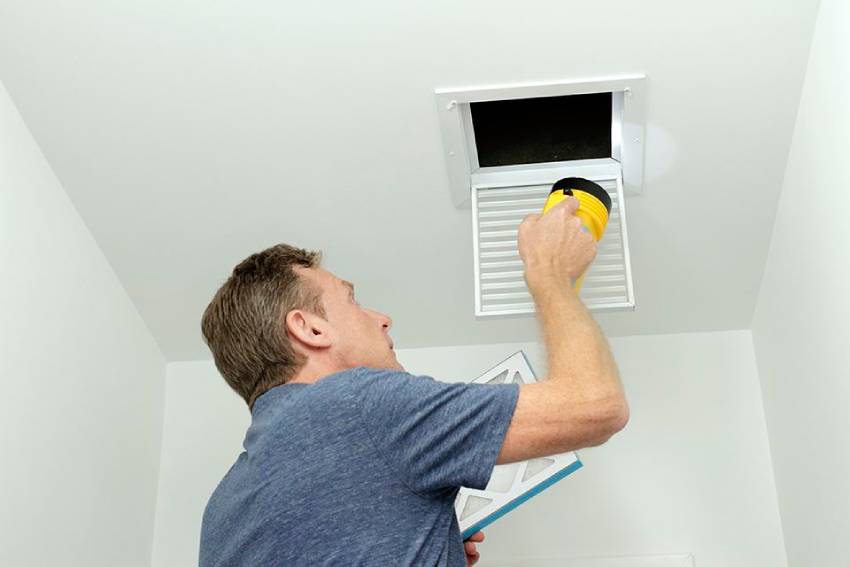
Clear cases where cleaning is warranted:
- Visible mold inside ducts or on HVAC components. Many spots look like mold; if unsure, have it assessed. Wet or moldy fiberglass duct insulation should be replaced, not just cleaned.
- Vermin or insect infestation — remove animals first, then clean and sanitize ducts.
- Substantial debris clogging ducts or blowing from registers — for example after renovation, fire, or uncovered construction.
If none of these apply, spend on filter changes and clean registers instead. Separately: if you have a fuel-burning furnace, stove, or fireplace, have it inspected and serviced before each heating season for carbon monoxide safety — more important annually than routine duct cleaning.
What you can clean yourself
You can clean vent covers (registers) and the accessible first stretch of duct with household tools. You cannot clean an entire system deep into walls with a brush and shop vac — that needs a professional’s negative-air machine and rotary brushes. DIY is great for freshening visible parts; mold, vermin, or heavy debris is hire-out work.
Tools: vacuum with hose (shop vac works well), stiff or long-handled duct brush, screwdriver, microfiber cloths, replacement HVAC filter, dust mask and eye protection.
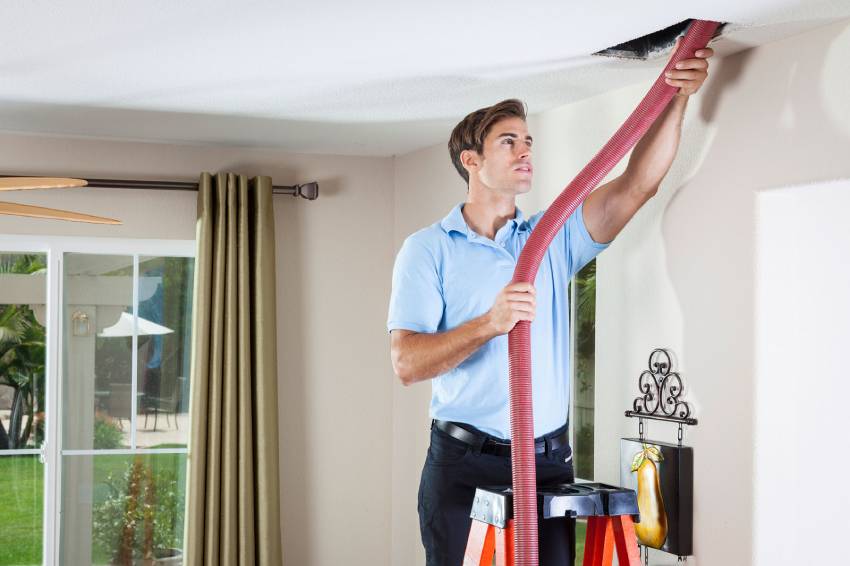
Register and accessible-duct steps
- Turn off the HVAC at the thermostat.
- Unscrew vent covers, wash with mild soap and water, and set aside to dry.
- Brush to loosen dust in the reachable duct. Wear a mask and goggles.
- Vacuum as far as the hose reaches. Wipe tools between vents.
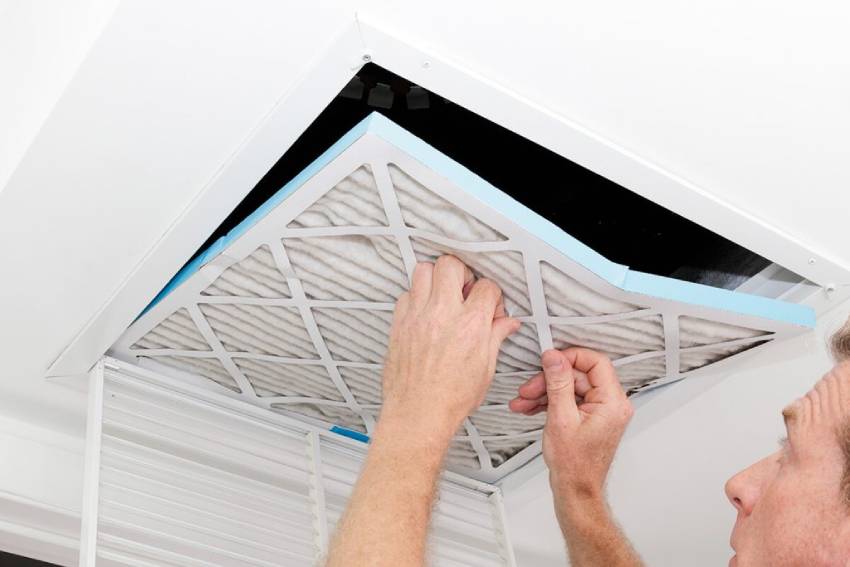
- Replace the HVAC filter — this step does the most for air quality — then re-fasten dry covers.
Open a window or run a fan while you work.
DIY vs hiring a professional
DIY: inexpensive (mainly a new filter); good for registers and reachable duct; cannot reach deep systems or fully remove mold.
Professional (prefer NADCA-aware): whole-system reach with proper equipment; right choice for mold, vermin, or post-renovation debris; typically a few hundred dollars depending on system size.
EPA caution: some companies push chemical biocides or sealants inside ducts whose value is unproven. Be skeptical of upsells, get scope in writing, and do not agree to chemical treatments without understanding them. Check references and a clear estimate.
What actually improves indoor air
- Change HVAC filters regularly — monthly for cheap filters, about every 3 months for pleated ones. MERV 11–13 can help finer filtration if your system handles it.
- Run a HEPA air purifier in rooms you use most.
- Keep humidity around 30–50% to discourage mold and dust mites.
- Vacuum with a HEPA vacuum and cut dust at the source — see our guide to getting rid of dust and how to clean a vacuum.
- Fix moisture problems promptly — damp ducts are where mold becomes a real duct issue.
Frequently asked questions
How do I know if my air ducts need cleaning?
Look for visible mold, vermin evidence, or debris/dust visibly blowing from vents. Absent those, routine cleaning is not necessary. A musty “dirty sock” smell when the system starts can point to a dirty evaporator coil or moisture — have HVAC tech diagnose before assuming full duct cleaning.
Can I sanitize ducts with bleach spray?
No. Do not spray bleach or household chemicals into ductwork. Residue and fumes are risks; mold remediation inside ducts is a professional scope.
Will duct cleaning lower my energy bill?
Usually not by itself. Coil and blower cleaning plus a clean filter matter more for airflow and efficiency.
Clean registers and honest filter habits go further than routine full-system duct cleaning for most homes. If renovation dust or whole-home soil is the real problem, Pro Housekeepers’ deep cleaning resets living spaces while you address HVAC with a qualified tech.