
How to Clean a Popcorn Ceiling (Asbestos-Safe)
To clean a popcorn ceiling, start gently and dry: run a vacuum with a soft brush attachment lightly across the surface (do not press, or you will knock off texture), or use a feather duster or soft broom for cobwebs and dust. For stains, lightly mist a targeted cleaner — never soak the ceiling, which makes the popcorn layer fall off. Lay down sheeting first to catch debris. Critical caution: textured ceilings installed before the mid-1980s may contain asbestos. If yours could be that old and has not been tested, read the asbestos section before any cleaning that could disturb the texture.

Asbestos warning (read this first)
Popcorn / acoustic ceilings installed before about 1979 often contained asbestos, and leftover stock means asbestos can appear in ceilings installed into the 1980s. Intact, undisturbed asbestos is generally left alone; abrading, scraping, sanding, or soaking until chunks fall can release fibers that are hazardous to inhale.
- If the ceiling may predate ~1990 and has not been tested, do not scrape, sand, or aggressively vacuum.
- Have a certified lab test a small sample before intensive cleaning or removal — testing is inexpensive.
- If the test is positive, hire a licensed asbestos abatement contractor. Do not DIY removal.
- If the ceiling is confirmed asbestos-free or clearly modern, the gentle methods below are appropriate.
See the EPA asbestos guidance for homeowner context. Until a ceiling is cleared, skip aggressive vacuuming that could aerosolize fibers.
What a popcorn ceiling is
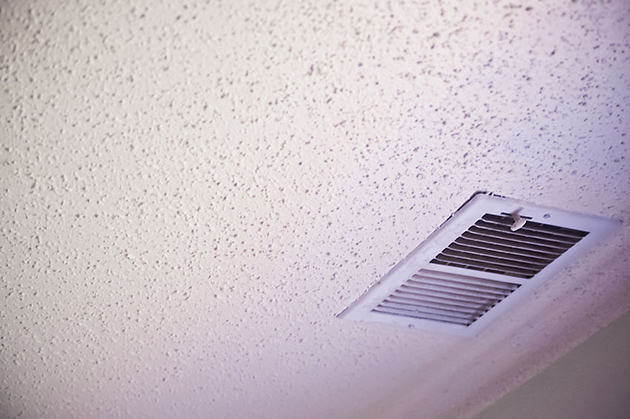
Also called stipple, acoustic, or textured ceiling, the bumpy finish is usually sprayed vermiculite or polystyrene mixed into a coating. It hid imperfections and dampened sound. Love it or hate it, gentle cleaning beats knocking texture onto the floor.
Tools
- Vacuum with soft brush attachment
- Feather duster or soft broom
- Plastic sheeting / drop cloths and painter’s tape
- Spray bottle with light mist setting
- Microfiber cloths
- Stable stepladder (follow ladder safety — keep hips between the side rails)
Dry cleaning: dust and cobwebs
- Cover floors and furniture.
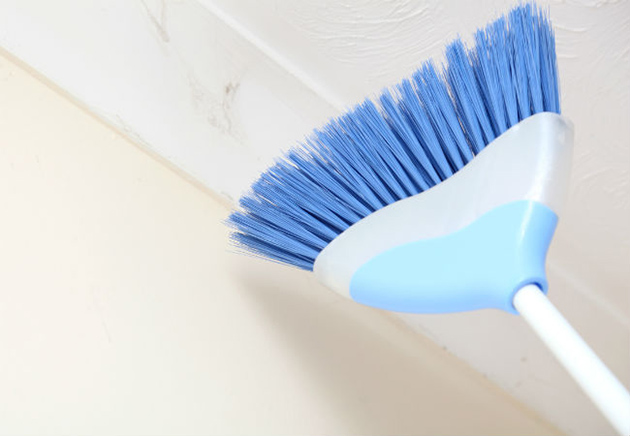
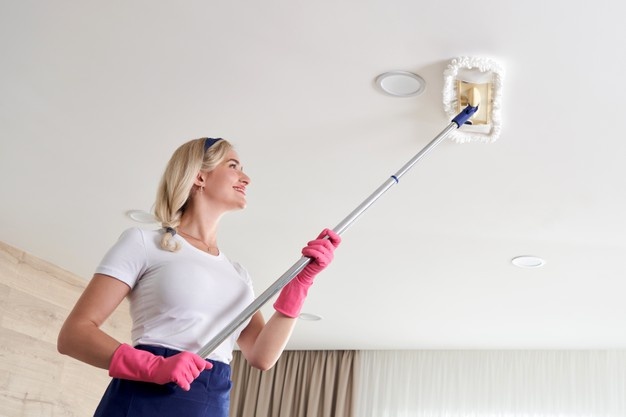
- Dust cobwebs with a feather duster or soft broom — long strokes, light pressure.
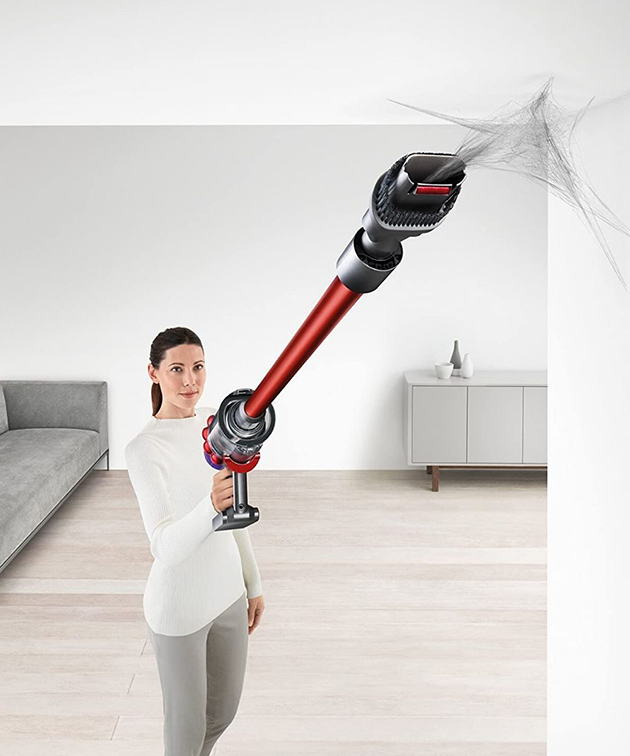
- Vacuum on low suction with a soft brush, hovering more than pressing.
- Empty the vacuum outdoors so fine dust is not dumped back inside.
While you are on the ladder, dust nearby window blinds and shades so debris does not resettled on the ceiling.
Kitchen grease
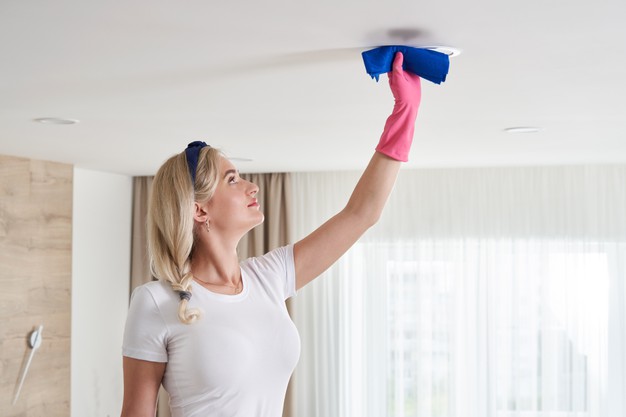
Light mist of warm water with a drop of dish soap onto a cloth (not a soaking spray into the texture). Dab — do not scrub. Follow with a clean barely damp cloth, then let air-dry. Heavy yellow grease may need multiple light passes; soaking will drop popcorn.
Cigarette smoke and nicotine
Nicotine film is sticky. After dry dusting, lightly mist a 50/50 white vinegar and water mix onto a cloth and dab stained areas. Work small sections. Strong odor often needs professional cleaning or sealing paint after the surface is clean and dry — cleaning alone may not erase years of smoke.
Water stains
Confirm the leak above is fixed first, or the stain returns. On asbestos-cleared ceilings, a light mist of dilute bleach solution (follow label ventilation rules) or a hydrogen peroxide cleaner can lighten some water marks — mist the cloth, dab, never saturate. Severe stains may need texture touch-up or a stain-blocking primer after cleaning.
Mold on popcorn ceilings
Fix humidity or leaks first. For small spots on a cleared ceiling, light application of a mold cleaner labeled for painted surfaces, dabbed not soaked, then dry thoroughly with airflow. Large or recurring mold, or any asbestos-suspect ceiling, is a professional job. More detail in our mold cleaning guide.
All-purpose light brightening (asbestos-cleared only)
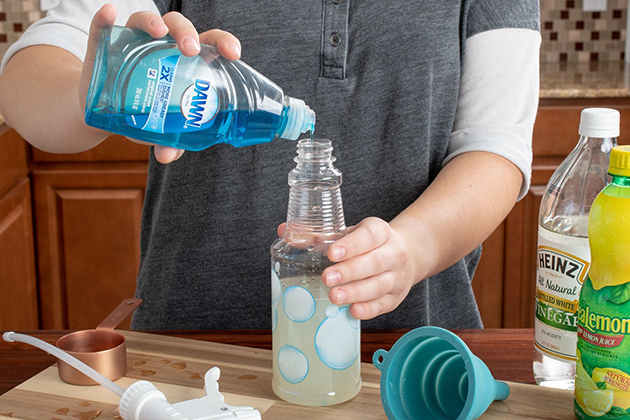
For overall dinginess after dry dusting: mix warm water, a drop of dish soap, and a splash of white vinegar in a spray bottle set to mist. Lightly dampen a microfiber cloth, dab section by section, and avoid drips. Vinegar helps cut film — more on cleaning with vinegar. Stop immediately if texture softens or drops.
When to call a pro or remove the texture
- Asbestos-positive or untested older ceilings
- Widespread mold or unresolved roof / plumbing leaks
- Large areas of failing texture
- Desire to scrape to smooth drywall — often a full abatement / renovation project
Frequently asked questions
Can I paint over a dirty popcorn ceiling?
Paint locks in soil and can weigh texture down. Dry-clean first; use paint rated for textured ceilings and a sprayer or thick nap roller designed for the job.
Is a Swiffer safe?
Light dusting yes; pressing hard no. Same rule as vacuuming — pressure knocks peaks off.
How often should I clean it?
Dust a few times a year; spot-treat stains when they appear. Kitchens may need grease attention more often.
High ceilings and asbestos-safe work are easier with a trained team. Book Pro Housekeepers’ deep cleaning for dust and detail work throughout the home.