
How To Clean a Toilet (Bowl, Tank, and Seat)
To clean a toilet, put on gloves, crack a window or run the fan, and start in the bowl so splashes land on surfaces you have not wiped yet. Apply bowl cleaner (or a generous pour of white vinegar) under the rim and around the waterline, wait at least 10 minutes, scrub with a stiff brush, then flush. Wipe the tank, flush handle, lid, seat (top and underside), bowl exterior, base, and the floor around it with a disinfectant — top to bottom, dirty cloths never going back up to the seat. A weekly wipe plus a deeper clean every two weeks is enough for most bathrooms. Never mix bleach with vinegar, ammonia, or rubbing alcohol. The fumes are toxic in a small room.
Safety first
- One chemistry at a time. Bleach + vinegar → chlorine gas. Bleach + ammonia (including some glass cleaners and urine) → chloramine. Pick a bowl cleaner, use it, flush well, and only then use something else. Do not dump a second product into a bowl that still has the first.
- Ventilate. Bathroom fans exist for this. If you use a bleach bowl cleaner, stay out of the cloud.
- Gloves. Forearm-length if you have them. Take them off before you touch the rest of the house.
- Bowl cleaner stays in the bowl. Hydrochloric-acid and bleach gels etch stone, ruin wood, and fade a plastic seat. They are not all-purpose bathroom spray.
- Skip in-tank bleach tablets. They wreck the rubber flapper and fill-valve seals. Then the toilet runs, and you have a plumbing bill instead of a cleaner tank.
- Do not mix a “natural” vinegar clean with a leftover bleach gel you forgot was under the rim. Flush a few times first.
How often
High-touch wipe (seat, handle, lid) weekly, or more often in a busy house. Deep clean the bowl, under the rim, the base, and the floor every 10–14 days. The tank only needs a real clean a couple of times a year unless you have heavy minerals or visible slime. Let a ring sit a month and you will be arguing with a pumice stone.
What you need
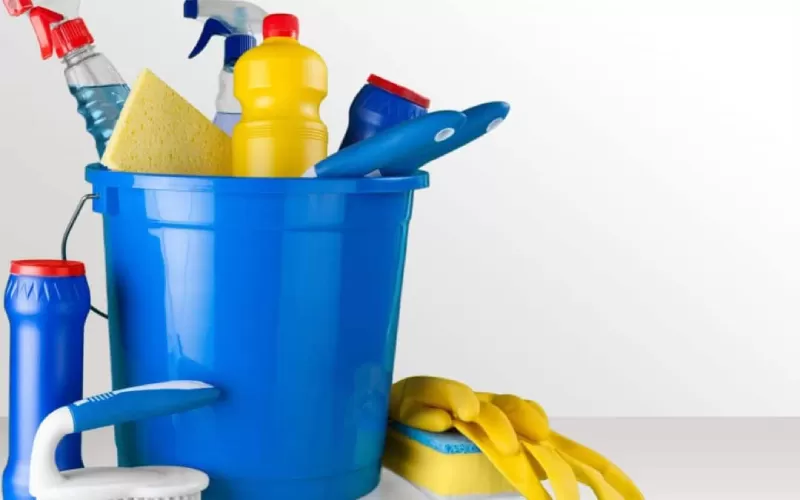
- Toilet bowl cleaner, or white vinegar for a no-bleach bowl
- A stiff-bristled bowl brush with a decent handle (flimsy brushes just paint the stain around)
- Disinfecting spray or wipes for the outside
- Microfiber cloths you are willing to launder hot
- Gloves
- A toilet pumice stone, used wet, only for porcelain mineral rings
How to clean the bowl
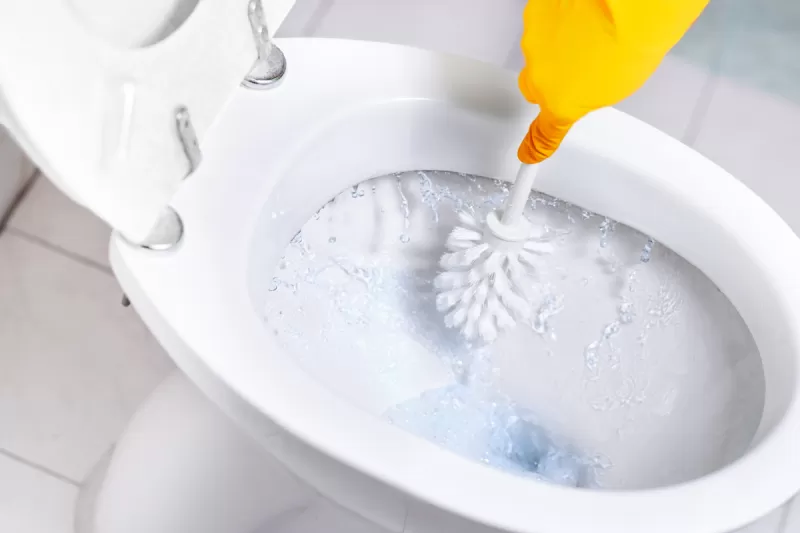
If you want the cleaner concentrated, turn the shutoff valve at the wall clockwise, then flush so the bowl does not refill. That is optional for a weekly clean and useful for a stained waterline. Remember to open the valve when you are done.
- Coat under the rim — that is where the jets hide and where the worst scale lives — then the rest of the bowl. Wait at least 10 minutes. An hour is better on a hard-water ring, as long as you are not mixing products while you wait.
- Scrub the whole interior: under the rim, the waterline, the trap opening. If a stain does not move, reapply and wait. Grinding harder usually means you are scratching the glaze.
- Turn the water back on. Flush a few times.
How to clean the tank
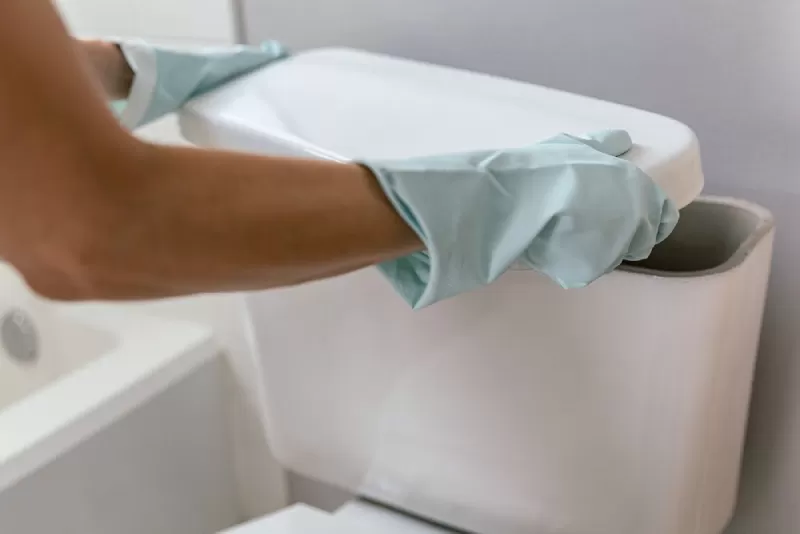
Only if you have a second bathroom, or can skip flushing overnight. The lid is ceramic and heavy — set it on a folded towel.
- Pour white vinegar into the tank until the water is about an inch below the rim. No bleach, no tablets, nothing else. Let it sit up to 12 hours.
- Flush a few times. Shut the water off so the tank stays empty.
- Scrub the walls with a brush and a cleaner that will not destroy rubber or plastic parts. The flapper and fill valve are the expensive bits.
- Water on, flush, lid back.
If the tank hardware is already crumbling, cleaning will not save it. Replace the flapper rather than pouring harsher chemicals in.
Seat, lid, handle, base, floor
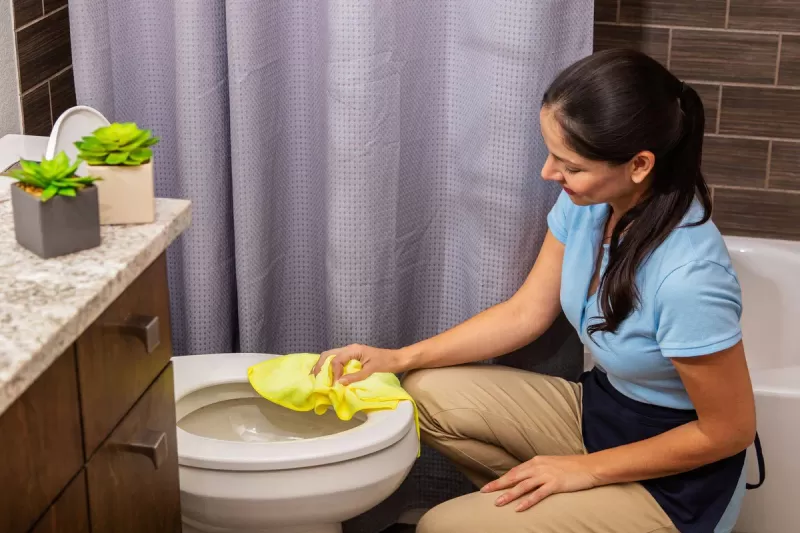
Spray disinfectant on a cloth (or use wipes) and work down:
- Tank lid and tank
- Flush handle — actually get the underside
- Lid, then the seat top, then the seat underside and the bumpers. Those bumpers are where urine dries and the smell lives.
- Rim top and underside
- Bowl exterior and hinges
- The base, including the back against the wall, then the floor around the toilet. Do not walk the same cloth back up to the seat.
Wipe the brush holder too. If the seat is wood or a fancy finish, use a milder disinfectant on that piece and keep acid bowl gel off it.
What to use (and what the fizz is for)
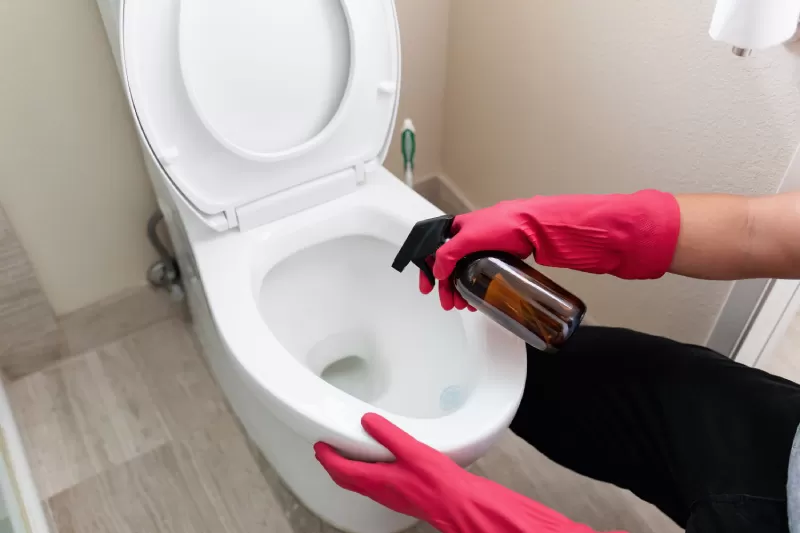
- Commercial bowl cleaner — effective. Follow the label, ventilate, do not mix.
- White vinegar — the honest no-bleach option for minerals. Pour a lot, wait a long time, then scrub.
- Hydrogen peroxide — useful as a surface disinfectant on the exterior, not a miracle on a thick ring.
- Oxygen bleach — gentler stain lift than chlorine. Still do not mix it with an acid or with chlorine bleach.
- Baking soda + vinegar in the bowl — the fizz is the acid and base canceling each other. Fine as a ritual; vinegar alone, or baking soda as a mild abrasive on the brush, does the work. It is not a clog treatment.
Hard-water ring
Acid and time, not heroics. Vinegar at the waterline for an hour (or a labeled lime remover that is compatible with your last product — flush first). A toilet pumice, kept soaking wet, used with light pressure on white vitreous china only. Dry pumice scratches. Do not pumice a colored, painted, or plastic-lined bowl. Test behind the trap if you are unsure.
The brush and the plunger
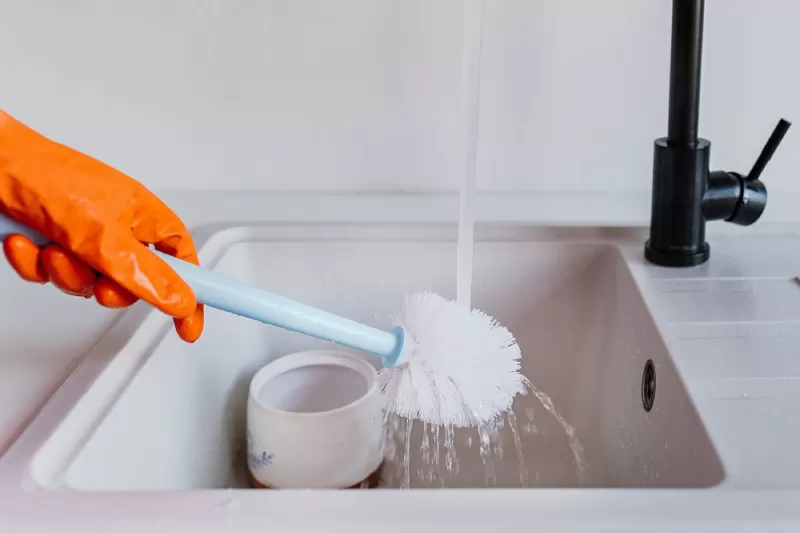
After you scrub, hold the brush over the bowl, pour a little fresh cleaner on the bristles, let it drip, flush. Every couple of weeks, soak the bristles in hot water and vinegar in the bowl (or a bleach cleaner — not both), then rinse and drip-dry before the holder. Same idea for a plunger: rinse, dry, do not store it dripping in a closed cabinet.
Clogs are not a cleaning problem
A flange (toilet) plunger, then a toilet auger. A pan of hot — not boiling — water can help a slow drain; boiling water can crack porcelain. Overnight salt-and-soda is not a clog cure. If the water rises while you are cleaning, stop putting product in and plunge.
When to stop and call
A running toilet, a soft floor around the base, or water at the wax ring is plumbing, not more cleaner. Recurring black rings right after a clean often mean the rim jets are scaled — a pro can clear them, or you can use a labeled rim-jet method with the water off. For the rest of the bathroom — shower glass, vanity, floor, toilet — deep cleaning from Pro Housekeepers is the job we actually do every day. Skip vinegar on marble or natural stone; it etches. Use stone-safe products there.
FAQ
Do I have to drop the water in the bowl every time?
No. Weekly, a gel under the rim and a brush is enough. Lower the water when you are fighting a ring and want the product undiluted.
Are blue in-tank tablets a good idea?
No. They are easy, and they destroy flappers. Clean the bowl on a schedule instead.
Can I use bleach in the bowl?
Yes, as a labeled bowl cleaner, alone, with the fan on. Flush thoroughly before any vinegar, ammonia glass cleaner, or rust remover goes in.
How long does a full bathroom take?
The toilet itself is 15–30 minutes plus soak time. Shower, glass, vanity, and floor are the rest of the hour (or two, if it has been a while).