To clean a wood-burning fireplace, first let everything cool for at least 24 hours after the last fire — ashes can hold live embers for up to 3 days. Scoop the ash with a metal shovel into a metal container with a tight-fitting lid (never a paper bag, cardboard box, or plastic bin), and store the container outdoors on a non-combustible surface at least 10 feet from the house for 3-4 days before disposal. Then vacuum or sweep out the firebox, scrub the bricks gently with a paste of baking soda, dish soap, and water, and clean the glass doors. Have the chimney professionally inspected and swept annually — creosote buildup is the leading cause of chimney fires. Gas fireplaces clean differently: turn off the gas, vacuum lightly without disturbing the ceramic logs, and have it professionally inspected yearly. Here’s the full guide.
Critical safety point: the NFPA reports nearly 10,000 house fires per year from improperly discarded ashes — the ash-disposal steps below aren’t optional. Also: every home with a fireplace should have working smoke and carbon-monoxide alarms on all levels, near sleeping areas.
Know what you’re dealing with: ash, soot, and creosote
Three different residues, three different concerns:
- Ash is the gray, powdery remains of burned wood that collects on the floor of the firebox. It’s the bulk of what you clean out, and the part that can hold live embers for days — the main fire-safety concern in routine cleanup.
- Soot is the fine, black, carbon-based residue that coats the inside walls of the firebox. It’s messy and stains surfaces but isn’t itself a major fire risk.
- Creosote is the tar-like, flammable byproduct of incomplete wood combustion that builds up inside the chimney flue, not the firebox. This is the big fire-safety concern over time: creosote buildup is the leading cause of chimney fires, which can spread to the house. It comes in three stages — flaky (Stage 1, removable by a chimney sweep), tar-like (Stage 2, harder), and glazed/hardened (Stage 3, requires specialized chemical treatment by a professional). This is why annual chimney inspection by a CSIA-certified chimney sweep isn’t a luxury — it’s standard practice.
How to clean a wood-burning fireplace
Before you start
- Wait at least 24 hours after the last fire — ashes can stay hot enough to ignite combustibles for 24-72 hours after a fire appears out. Don’t assume “cool to the touch” means safe.
- Wear eye protection and a dust mask — fine ash is irritating to lungs and eyes, and the carbon in soot is a respiratory irritant.
- Close any open doors or vents to other rooms so airborne ash doesn’t spread.
What you’ll need
- Metal ash shovel (not plastic — plastic can melt on any residual heat)
- Metal ash container with a tight-fitting lid (a dedicated ash bucket from a hardware store)
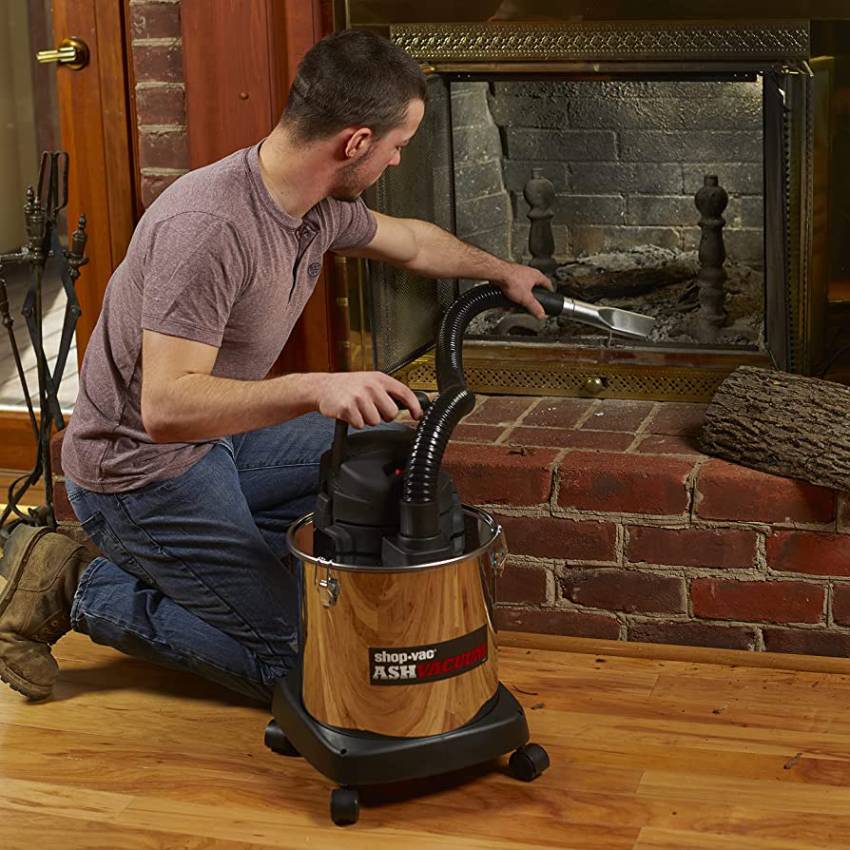
- Stiff-bristled hand brush and dustpan, or a wet/dry shop vacuum (only for fully cooled ash — see safety note below)
- Newspapers or a drop cloth to protect flooring
- Eye protection and dust mask
- Rubber gloves
- Baking soda, dish soap, water, and a soft-bristled brush for firebox bricks
- A separate bucket of clean water for rinsing
Don’t use a household vacuum on ash — fine ash particles slip through standard filters and can damage the motor or, if any embers remain, ignite the vacuum itself. Use only a shop vac rated for ash, and only on ash that’s been cool for several days.
Step by step
- Lay newspaper or a drop cloth in a path from the fireplace to your exit door. Put on eye protection, mask, and gloves.
- Scoop the ash with the metal shovel into your metal ash container. Work slowly so you don’t kick fine particles into the air.
- Lid the container immediately and carry it outside. Place it on a non-combustible surface (concrete, brick, stone, slate) at least 10 feet from the house, deck, fence, or anything flammable. Leave it there for at least 3-4 days, lid sealed, before adding the ashes to your regular trash. (Garden tip: cooled wood ash is rich in potassium and calcium and makes a good soil additive for some plants — sprinkle in moderation around tomatoes, for example. Don’t use ash from pressure-treated or painted wood, only natural firewood.)
- Sweep down the firebox walls with a stiff hand brush, working top to bottom, into the dustpan. Take it slow to avoid stirring particles into the air.
- Make a cleaning paste: mix about 3 tablespoons of dish soap with ½ cup of baking soda and just enough water to form a spreadable paste.
- Scrub the firebox bricks with a soft-bristled brush and the paste. Work in sections, rinsing the brush in clean water between passes. Don’t use vinegar or acidic cleaners on firebox bricks — they can degrade the mortar over time.
- Wipe away residue with a damp cloth, then let everything air dry fully before the next fire.
Regular maintenance during burning season
A little routine care prevents the big jobs.
- Don’t remove every bit of ash. A 1-2 inch ash bed under the fire grate actually helps insulate the firebox floor and improves combustion — most fireplace guides recommend leaving this layer. Scoop out excess ash, not all of it.
- Use only dry, seasoned hardwood (split and dried for at least 6 months, ideally a year). Green or wet wood produces far more creosote and smoke.
- Never use accelerants like gasoline, kerosene, or lighter fluid to start a fire — flash fires can shoot flames out of the firebox. Use kindling and a fire starter.
- Don’t burn trash, paper with colored ink, treated wood, or painted wood — these produce toxic smoke and accelerate creosote buildup.
- Deep clean the firebox monthly during heavy burning season, every few months in lighter use.
Cleaning the mantel and hearth
- Vacuum (with a shop vac or HEPA-equipped vacuum) the mantel and hearth surfaces to lift soot and dust.
- Use a dry chemical sponge (specifically sold for soot and smoke; sometimes called a “soot eraser”) to lift soot from porous surfaces like brick or stone. These work dry — don’t wet them, since water turns soot into a smear that’s much harder to remove.
- After the dry sponge has lifted the bulk, finish with a slightly damp microfiber cloth and a touch of dish soap on the mantel and hearth, then dry with a clean cloth.
Cleaning a gas fireplace
Gas fireplaces are simpler to clean — there’s no ash — but require care around the gas system and ceramic logs.
Before you start
- Turn the gas supply off completely at the shutoff valve (not just the on/off switch) and let the unit cool for several hours.
- If you have a pilot light, turn it off too per the manufacturer’s instructions.
- Take a photo of the log arrangement first. The ceramic or refractory logs are positioned precisely to direct the flame correctly — misplacing them can cause sooting, incomplete combustion, and carbon monoxide buildup. Use the photo to put them back exactly.
Steps
- Vacuum loose dust and cobwebs from inside the firebox and around the burner with a soft brush attachment. Don’t poke the vacuum into the burner ports or pilot assembly.
- If you remove ceramic logs to clean, handle them gently — they’re brittle. Use a soft brush to dust them and replace them exactly per your photo. Don’t wash them with water.
- Keep moisture out of the firebox — don’t use wet wipes or sprays inside, since water on the burner or pilot assembly causes problems.
- Wipe the exterior frame and glass (see below).
- Restore the gas supply, relight the pilot, and run the fireplace briefly to check that the flame is consistent and the logs look right.
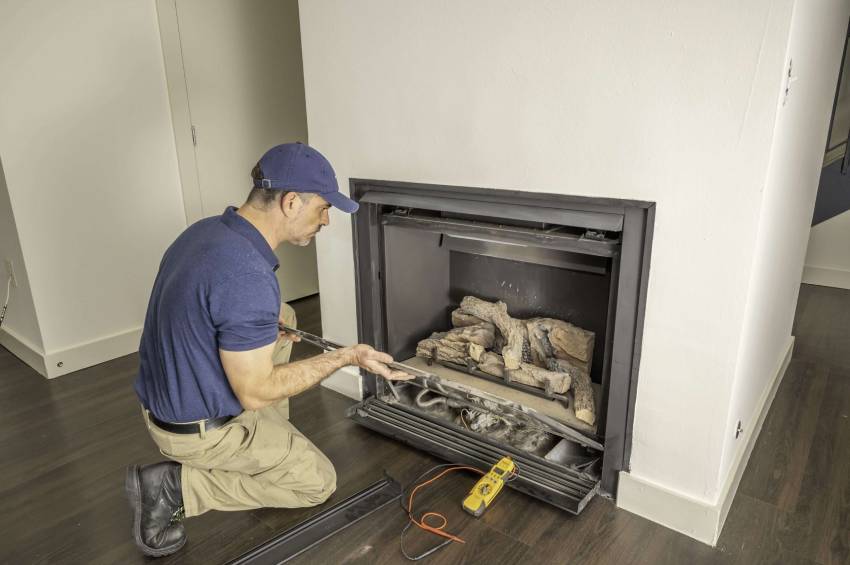
Annual professional service for gas fireplaces too. Gas fireplaces should be inspected annually by a qualified technician — they check for venting issues, gas-line integrity, and carbon monoxide risk. CO from a malfunctioning gas fireplace is colorless and odorless, which is why working CO detectors near the fireplace and bedrooms are essential.
How to clean fireplace glass doors
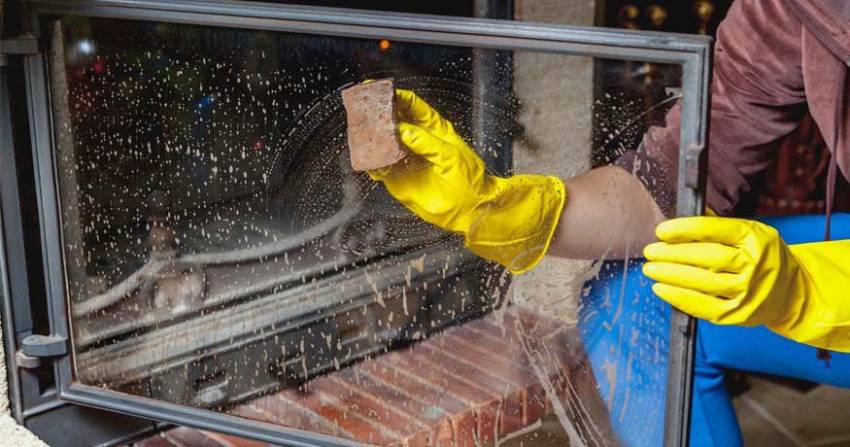
Fireplace glass develops a milky film from creosote and combustion byproducts that won’t lift with normal glass cleaner — don’t use ammonia-based cleaners (like Windex) on warm fireplace glass; they can damage the glass and leave streaks. Two methods that work:
- Dedicated fireplace glass cleaner (Rutland, Stove Bright, and similar) is formulated for this and is the easiest reliable option.
- The newspaper-and-ash method (traditional, free, and effective): make sure the glass is completely cool, dampen a wad of newspaper, dip it in cool ash from the firebox, and rub the glass in circles. The ash is mildly abrasive and contains carbonate compounds that lift the film. Wipe clean with a fresh damp newspaper, then dry with a clean cloth.
Always work on cool glass — cleaning hot glass can crack it.
Frequently asked questions
How often should I have my chimney cleaned?
The NFPA standard (NFPA 211) calls for chimneys, fireplaces, and venting systems to be inspected annually for soundness, deposits, and clearances, and cleaned as needed. For an active wood-burning fireplace, that usually means an annual sweep. The Chimney Safety Institute of America (CSIA) certifies professional chimney sweeps — search csia.org to find one in your area. DIY chimney cleaning isn’t really recommended — the right brushes need to match your flue size, containment matters to keep soot out of the house, and the inspection part (looking for cracks in the flue liner, animal nests, structural issues, and glazed creosote) requires expertise. The cost of an annual sweep is far less than chimney-fire repair.
How much does professional fireplace cleaning cost?
A basic chimney sweep and inspection typically falls in the $$ range; more involved work (glazed creosote removal, repairs, or full Level 2 inspections after a chimney fire or property sale) costs more. Get quotes from a few CSIA-certified sweeps and ask what’s included.
Can I use the fireplace right after cleaning?
For a wood-burning fireplace, yes — once any cleaning solution has fully dried (a few hours). For a gas fireplace, run it briefly first to check the flame pattern and make sure everything is reassembled correctly. After a professional chimney sweep, your sweep will let you know if anything needs to dry or settle before lighting.
What if I don’t use my fireplace often?
Even infrequently-used fireplaces benefit from annual inspection — birds nest in flues, masonry deteriorates, gaskets fail. If the fireplace hasn’t been used in a year or more, definitely have it inspected before relighting.