
How To Use Bleach Safely to Disinfect Your Home
To disinfect with household bleach, clean the surface with soap and water first, then apply a fresh mix of regular unscented bleach and room-temperature water. The CDC ratio, if the bottle has no directions, is 5 tablespoons (1/3 cup) of bleach per gallon of water, or 4 teaspoons per quart. Keep the surface visibly wet for at least one minute, then rinse food-contact areas and let them air dry. Never mix bleach with ammonia, vinegar, hydrogen peroxide, or other cleaners. Ventilate, wear gloves, and mix a new batch each day.
Safety first
- Never mix bleach with anything but water (a laundry load that already has detergent is the usual exception on the bottle). Bleach plus ammonia makes chloramine gas. Bleach plus vinegar or other acids can release chlorine gas. Bleach plus hydrogen peroxide is a different reactive mix you do not want in a bucket. If you already used another product, rinse the surface with water and wait before bleach.
- Ventilate. Open a window or run a fan. Do not lean over a bucket of concentrate.
- Gloves, and eye protection if you are pouring. Straight bleach irritates skin, lungs, and eyes. Rinse splashes with water and read the label for first aid.
- Kids, pets, food. Store the bottle up high, closed. Do not disinfect cutting boards that still have food on them. Rinse anything that will touch food, baby items, or pet bowls after the contact time.
- Use the right bleach. Regular, unscented household bleach with 5% to 9% sodium hypochlorite. Splashless, scented, and color-safe (oxygen) bleaches are not this job. If the label does not list a hypochlorite percentage in that range, do not use it as a disinfectant.
What bleach can and cannot do
Bleach is a disinfectant for hard, non-porous surfaces after they are already clean. Soap and scrubbing remove dirt. Dilute hypochlorite then kills many germs on what is left. It is not a degreaser, not a mold-in-the-wall fixer, and not a substitute for throwing out a spongy cutting board.
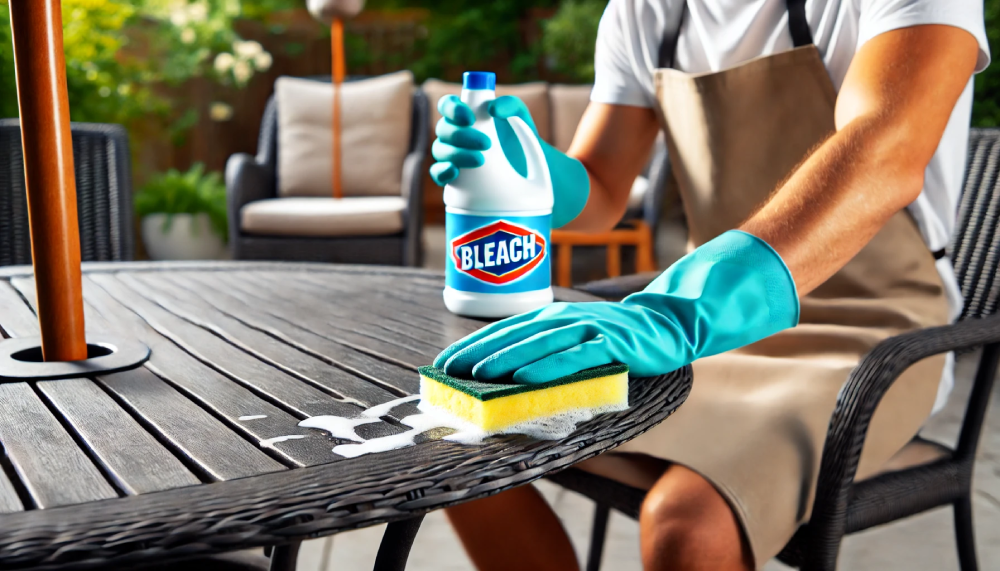
Typical indoor uses, if the material is bleach-safe: sealed countertops that are not stone, tile that is not natural stone, porcelain sinks, trash cans, some vinyl floors, laundry marked bleach-safe. Outdoors: some plastic furniture and sealed concrete, with runoff kept off plants.
Do not put bleach on:
- Natural stone, marble, limestone, or granite (it etches and dulls)
- Stainless steel (it pits and rusts)
- Unfinished or painted wood
- Aluminum, some grout, and many colored fabrics
- Wool, silk, leather, spandex, cashmere
- Phones, tablets, screens, and other electronics
- Anything still holding food
How to mix it
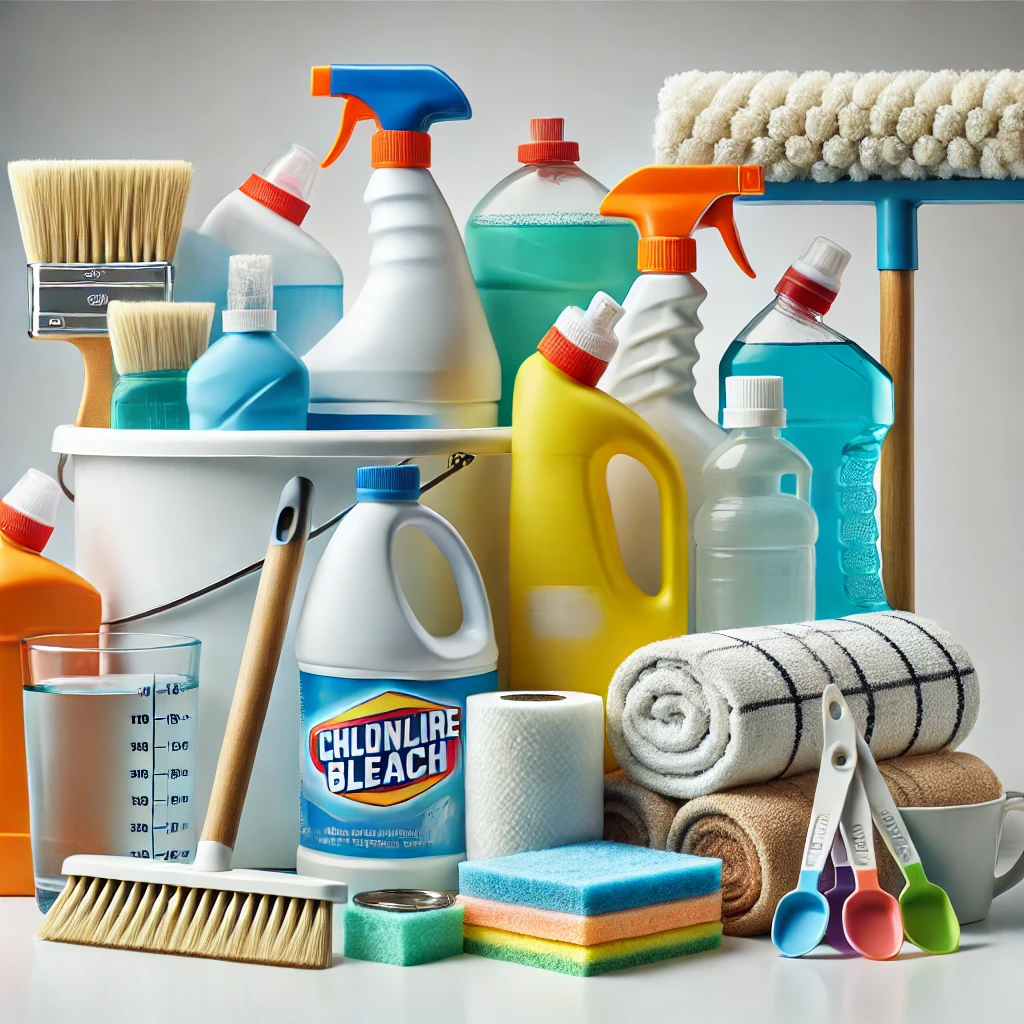
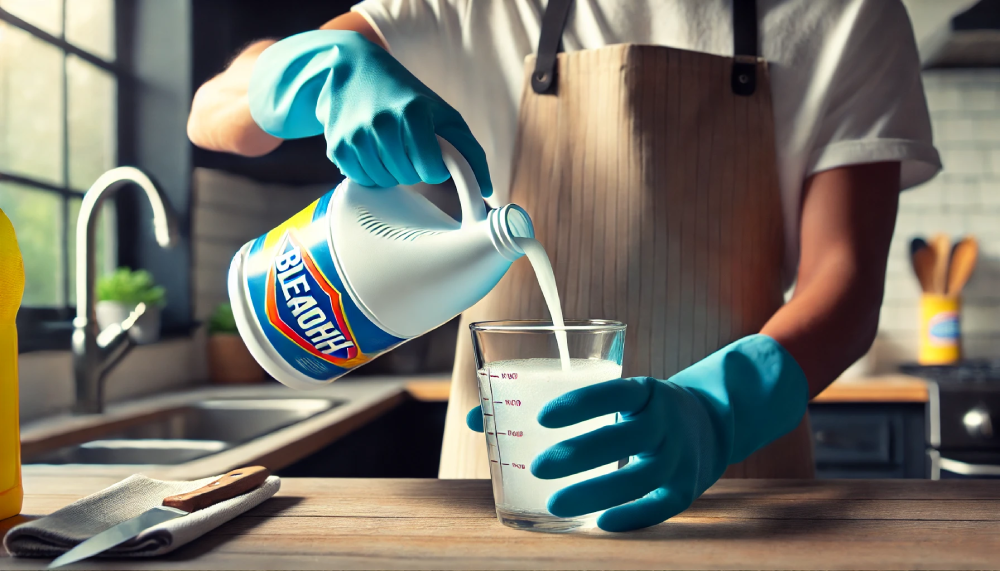
Read the bottle first. If it gives a disinfection recipe, use that. If it does not, the CDC household mix is:
- 5 tablespoons (1/3 cup) bleach per 1 gallon of room-temperature water, or
- 4 teaspoons bleach per 1 quart of room-temperature water
That is weaker than the old “half cup per gallon” recipe many blogs still copy. Stronger is not better: it is harder on surfaces, harder on lungs, and not what the CDC lists for home disinfection. Use cool or room-temperature water. Hot water can break hypochlorite down faster.
Make only what you will use. Diluted bleach loses disinfecting strength after about 24 hours. Label the bottle if you pour it into a spray container, keep it out of reach, and dump yesterday’s mix down the drain with plenty of water, not into a bucket of other chemicals.
How to disinfect a hard surface
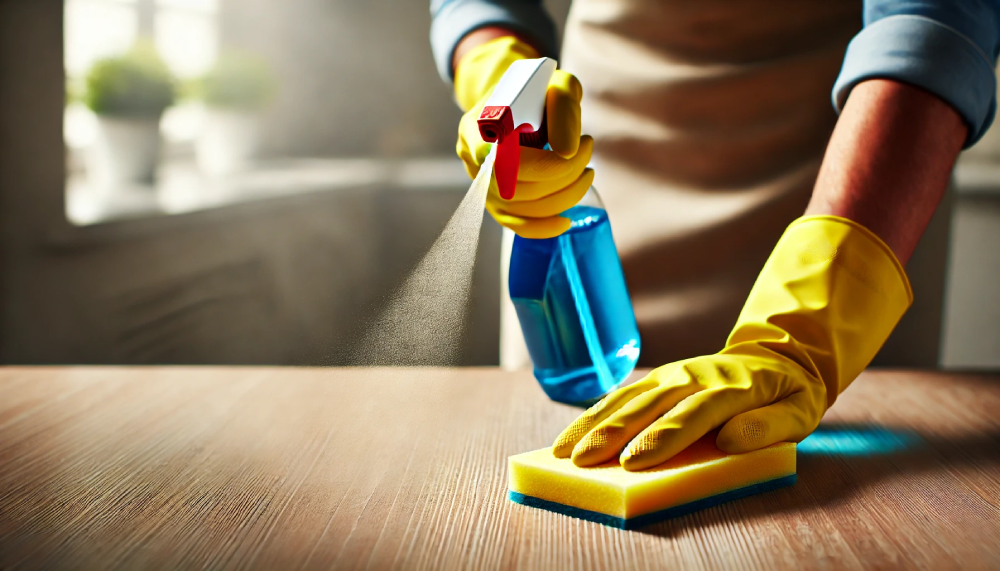
- Wash with soap and water. Wipe up the dirt. Bleach does not work well through grease or soil.
- Apply the dilute solution so the surface stays visibly wet.
- Wait at least 1 minute (the CDC contact time when the label is silent). Some labels ask for longer. Stay wet the whole time. Re-wipe if it dries.
- Rinse food-prep areas, high chairs, and anything a child or pet may mouth. Other hard surfaces can air dry unless the label says to rinse.
- Wash your hands.
Laundry
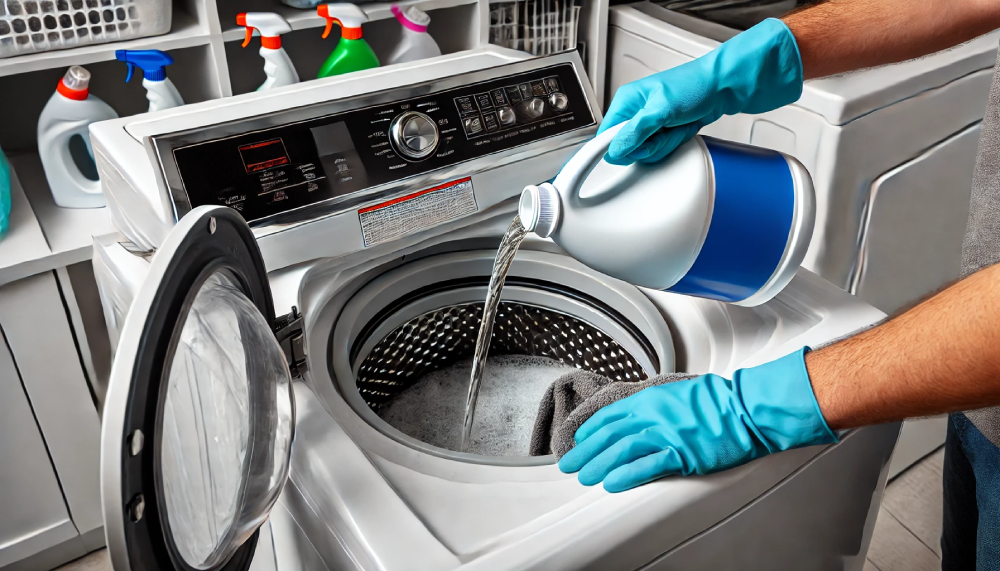
Only if the garment says bleach-safe. Spot-test a hidden seam. Add bleach to the wash water as the machine directs, usually after the tub has water and detergent in it, not poured on dry fabric. A common load amount is about 1/2 cup for a standard top-load wash of whites, but the bottle wins. Color-safe bleach is oxygen bleach. It is not a stand-in for this disinfection recipe.
What not to use bleach on, in practice
A bathroom already treated with an ammonia glass cleaner or a vinegar shower spray is not ready for bleach. Rinse, wait, then decide on one product. Toilet bowl cleaners are often acid; do not add bleach to the bowl on top of them. Stainless sinks and granite counters look hard and still do not want hypochlorite.
For a sick-day wipe-down of knobs, switches, and the bathroom, diluted bleach is one option among EPA-registered disinfectants. If you would rather not handle it, deep cleaning from Pro Housekeepers covers high-touch rooms without you mixing a bucket.
FAQ
Can I use straight bleach?
No. Always dilute for household disinfection unless a label says otherwise for a specific tool or washer cycle.
Do I have to rinse?
Yes on anything that touches food, mouths, or skin for a long time. Elsewhere, follow the label. Residue is still bleach.
Can I store leftover mix?
Not for disinfection. Mix fresh each day.
Does scented bleach disinfect?
Only if it is still 5% to 9% sodium hypochlorite and the label says it disinfects. Many scented and splashless products are the wrong strength. Read the small print.
Is bleach the only way to disinfect?
No. EPA-registered products, 70% isopropyl alcohol on small hard items, and heat where it belongs (dishwasher sanitize cycles, laundry hot water when the fabric allows) all exist. Bleach is cheap and well studied. It is not required for a normal weekly clean.