
How To Remove Pet Odor from Carpet and Rugs
To remove pet odor from carpet, blot a fresh accident while it is wet (press, do not rub), rinse with a little cold water and blot again, then soak the area with an enzymatic cleaner and give it the dwell time on the label.
Enzymes break down uric acid that baking soda and perfume cannot. Finish with dry baking soda and a vacuum after the carpet has dried.
Safety first
- Do not steam these spots. Heat can bind proteins to the fiber.
- Do not use ammonia. It can send a dog or cat back to the same place.
- Keep pets off the wet area until it is dry so they do not re-wet it or lick residue.
- Spot-test peroxide. It can lighten some carpets. Test in a closet.
Why the smell comes back
Pet accidents break down into ammonia-smelling compounds. Uric acid crystals stay in the fiber and in the cushion. Humidity wakes them up, which is why a spot you already cleaned can smell again on a damp day.
What you need
- White cloths or plain paper towels
- Cold water
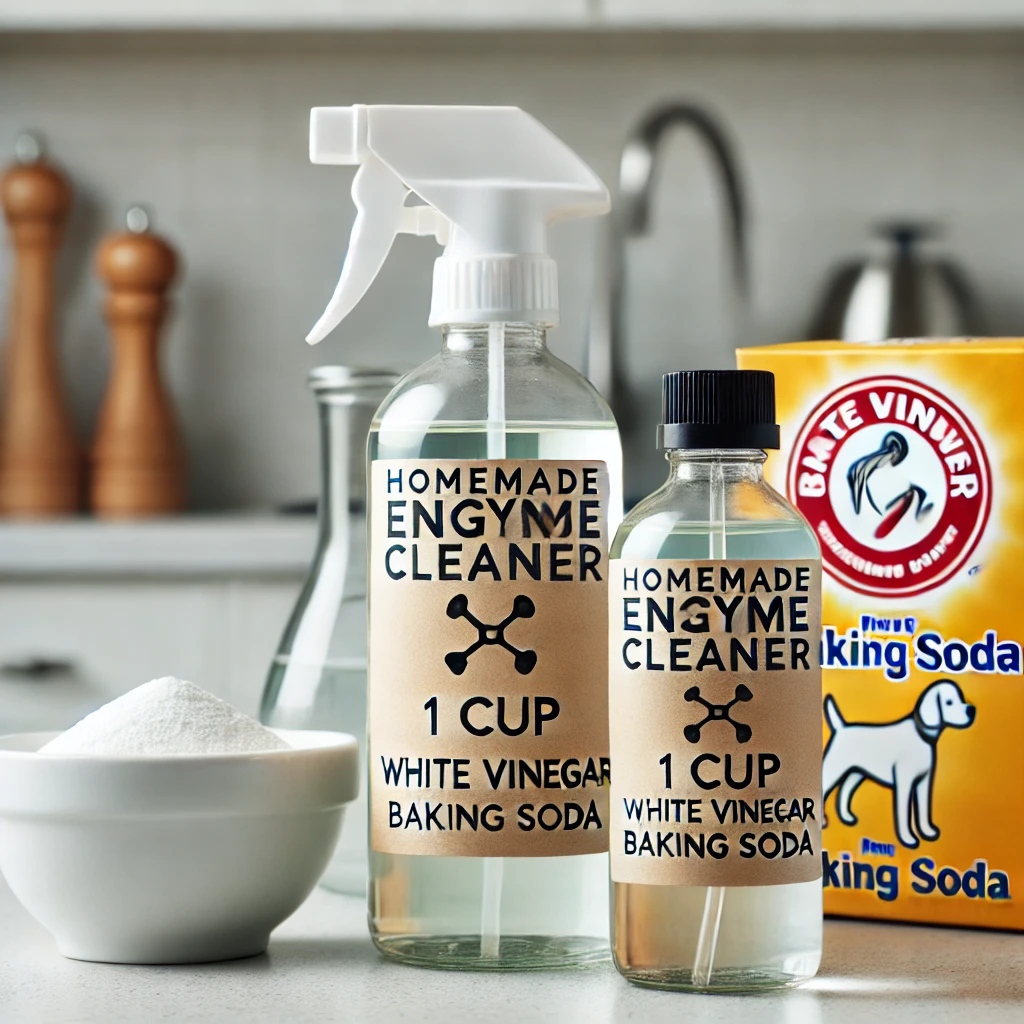
- An enzymatic cleaner labeled for pet accidents (look for enzymes, not just perfume)
- Baking soda
- Vacuum
- Optional: a UV flashlight to find old spots in a dark room
Fresh accident on carpet
- Blot. Press with a dry cloth. Do not scrub. On an area rug, put a towel under the rug so the floor does not take the liquid.
- Rinse with a small amount of cold water and blot again until the cloth comes up mostly clean.
- Apply an enzymatic cleaner until the area is damp to the depth of the spill, not a surface mist. Follow the dwell time on the label. Many need to stay wet 10 to 15 minutes or longer. Do not rush to rinse.
- Blot up extra liquid. Let the carpet dry with air moving. A fan helps. Do not use a hot steamer.
- When fully dry, sprinkle baking soda, wait a few hours or overnight, and vacuum.
Vinegar and water (equal parts) can help a fresh smell if you have no enzyme product yet. It does not digest uric acid. Use it as a stopgap, let it dry, then follow with enzymes. Do not mix it into the enzyme bottle.
Set-in smell
Re-wet with cold water, then give the enzyme the same dwell time. Old spots often need two rounds.
A UV flashlight in a dark room shows many old marks as bright patches. Treat every patch you find.
If liquid reached the cushion, surface sprays will fail. Replacing the cushion or the rug is the real fix then.
Cats and dogs
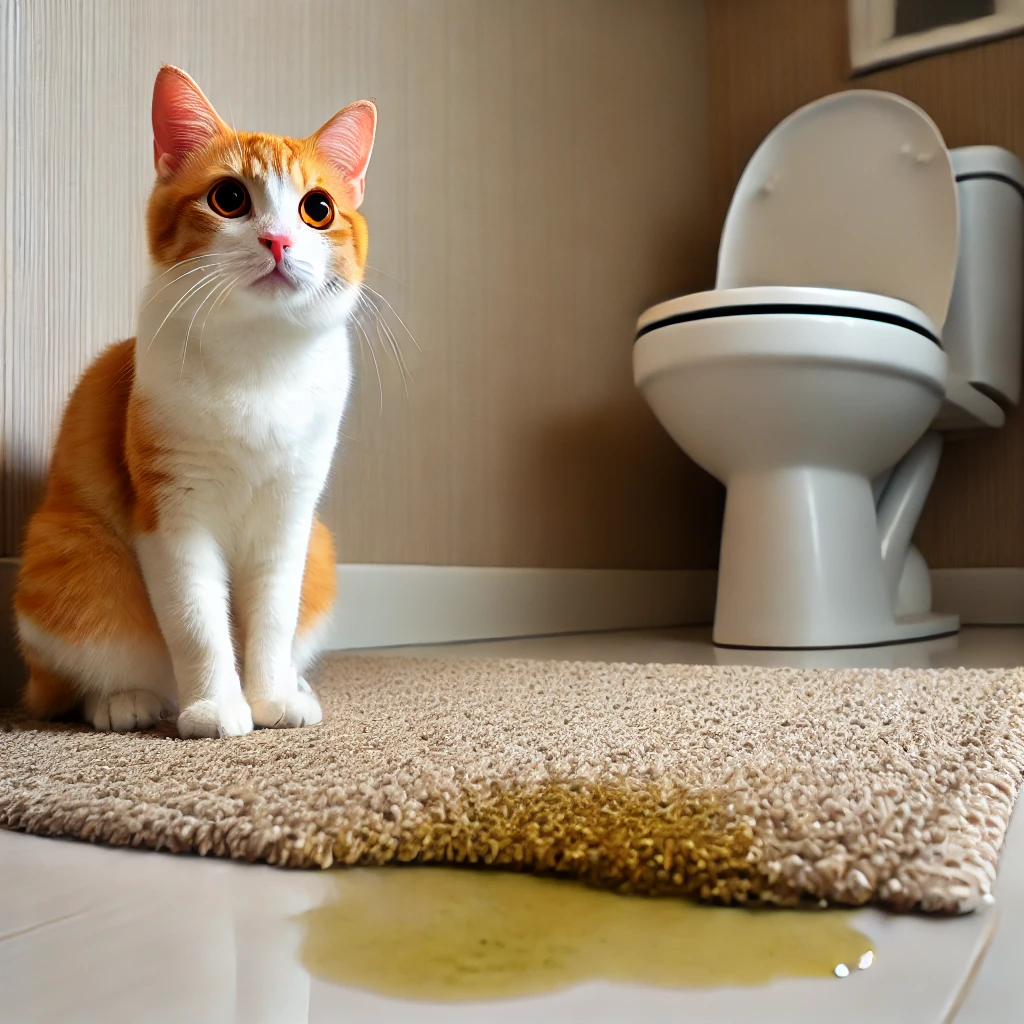
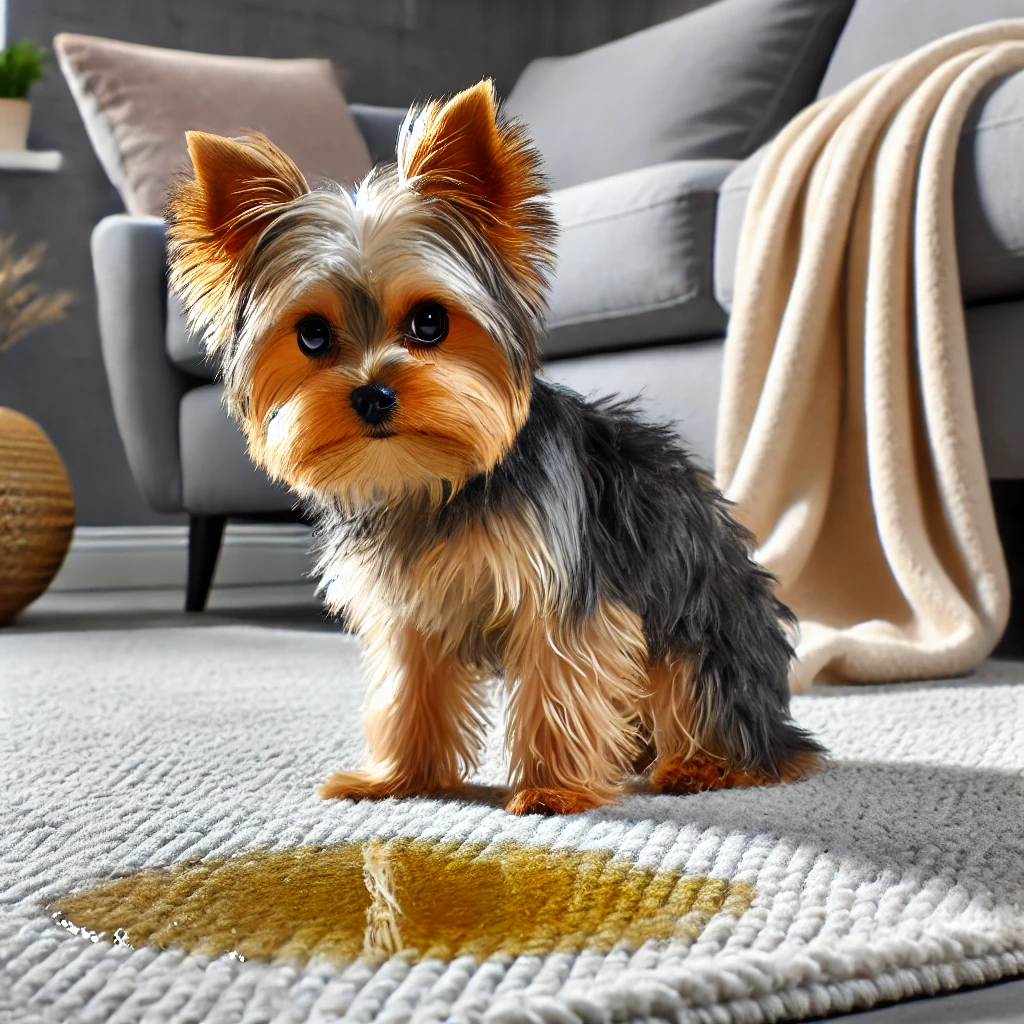
Cat marks are usually more concentrated and more likely to be a repeat. Same method, more patience, and a look at why the box is being avoided (dirty box, location, medical). Large dog marks on wall-to-wall may need a wet vacuum with an enzyme solution, still without heat.
We do not sell a brand of enzyme cleaner. A pet-specific product that lists enzymes beats a cheap perfume spray.
Area rugs
Treat both faces if liquid went through. Protect the floor under the rug while you work, then dry the rug fast so odor does not grow in the backing. Wool and silk: skip peroxide. Blot, use enzyme only if the label allows that fiber, and stop before you felt the wool.
Whole-house smell
Carpet treatment will not fix a dirty litter box, unwashed bedding, or HVAC filters packed with dander. Vacuum slowly, wash what can be washed, scoop daily, and change filters. Grooming and bathing the animal (when the vet says that is appropriate) matter as much as the floor.
Outdoor hardscape can take an enzyme hose-end product. Yellow lawn spots are nitrogen burn from repeat marking. Watering the area after helps the grass more than perfume will.
What not to do
- Steam, a hot water extractor on high heat, or an iron
- Ammonia glass cleaner as a deodorizer
- Following vinegar with bleach on the same damp carpet
- Masking sprays that leave the crystals in place
Regular vacuuming and a wipe of hard floors will not extract a soaked cushion, but they do keep dander from adding to the smell. Regular house cleaning from Pro Housekeepers covers floors and high-touch rooms. It is not a substitute for enzyme treatment of pet accidents, and it does not include professional carpet shampooing.
FAQ
What actually neutralizes the odor?
Enzymes that digest the uric acid. Baking soda helps after the carpet is dry. Vinegar is a partial help on a fresh spot.
Can I use a steam cleaner?
Not on these spots. Heat can set the odor.
What about vomit?
Lift solids first, blot, then the same enzyme method.
Will this fix subfloor smell?
No. If the cushion and wood took the liquid, you are in repair territory.