
How to Remove Stains From Any Carpet
Pro Housekeepers is a nationwide housekeeping company. This guide shows how to remove common carpet stains — pet accidents, wine, grease, blood, coffee, and more — with blot-first methods, material-safe products, and clear signs it is time to call professionals.
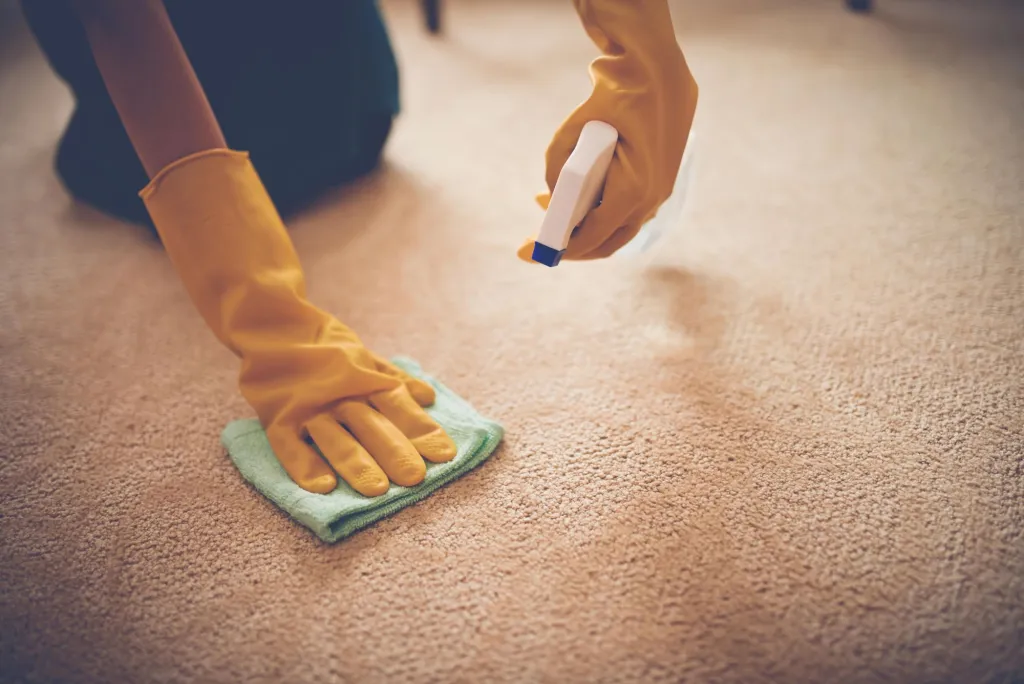
Act fast: most carpet stains set as they dry. Always blot; never scrub (scrubbing drives pigment deeper and frays fibers). Test any cleaner on a hidden corner first. Work from the outside of the stain toward the center so you do not spread a ring.
What can stain carpet?
- Food and drink: wine, coffee, juice, sauces, chocolate
- Oils and grease: cooking oil, butter, makeup, lotion
- Protein: blood, egg, dairy
- Pet urine, feces, and vomit (also odor in the padding)
- Ink, mud, and tracked-in dirt
Synthetic nylon and polyester often release stains more easily than natural wool. If your carpet is wool or silk-blend, skip harsh alkalis and call a pro for large or unknown spills.
Products and supplies
- Clean white cloths or paper towels (color can transfer)
- Mild dish soap, white vinegar, baking soda, club soda or cold water
- Enzyme cleaner for pet urine (follow label)
- Isopropyl alcohol for some ink stains (spot-test)
- Soft brush, vacuum, optional carpet spotter rated for your fiber
Safety: never mix bleach with ammonia or vinegar. Avoid undiluted bleach on colored carpet — it can strip dye permanently. Ventilate when using enzyme products or solvents.
The basic stain-removal process
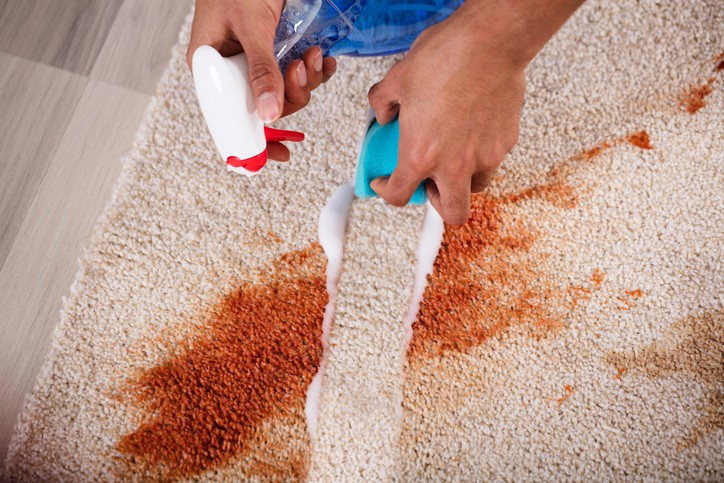
- Scoop or blot: lift solids with a spoon; blot liquids with a dry white cloth. Do not rub.
- Rinse lightly: dab with cold water (hot water can set protein stains like blood).
- Treat: apply a small amount of appropriate solution; dwell briefly per label or recipe below.
- Blot again: work outward-in; switch to clean cloth sections as pigment transfers.
- Rinse and dry: blot with clean water to remove residue (residue attracts dirt). Blot dry; air-dry or use a fan. Avoid walking on the spot until dry.
How to remove pet stains
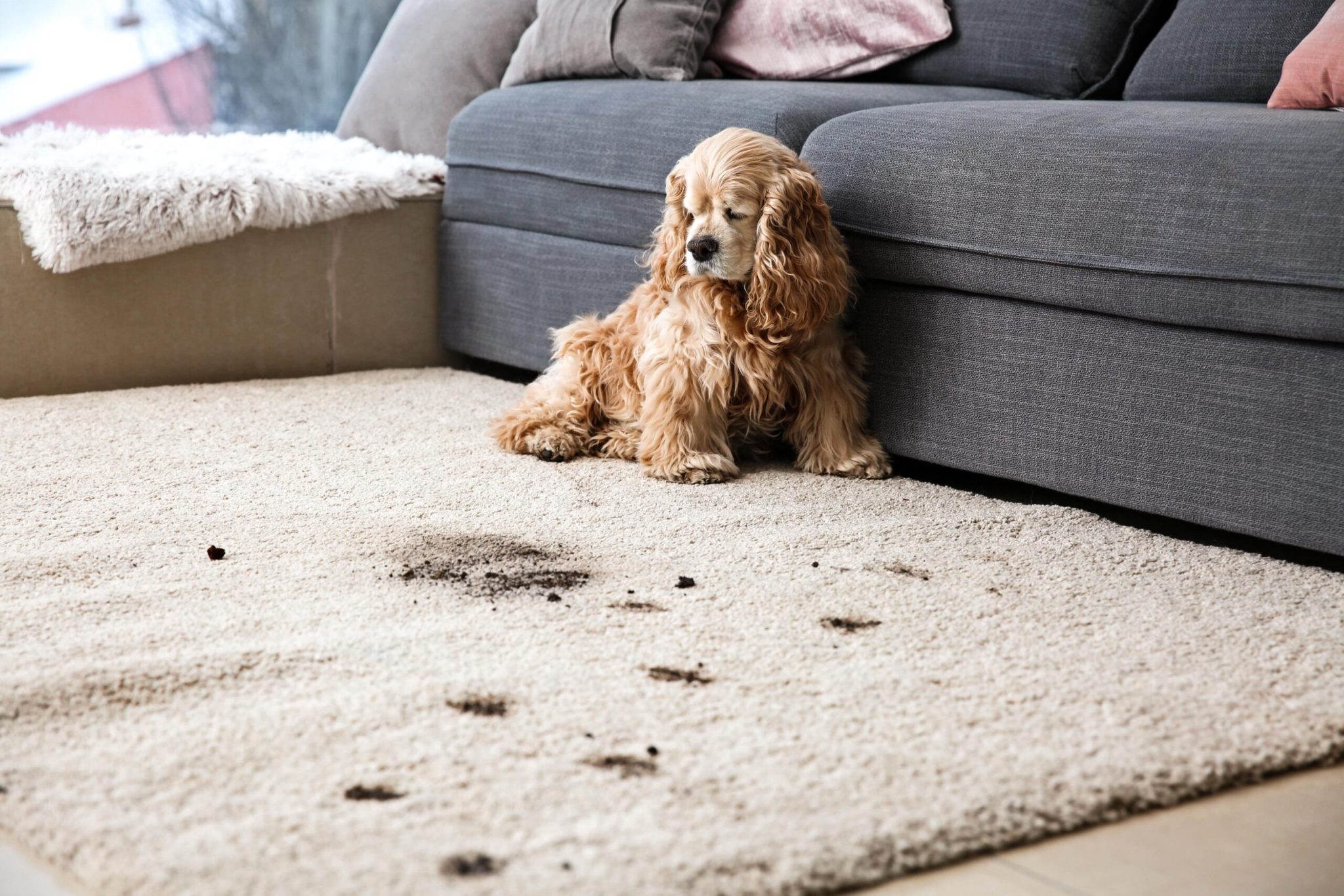
Blot urine thoroughly. Mix a mild solution of white vinegar and water (about 1:1) or use a pet enzyme cleaner designed for carpet. Saturate the area enough to reach padding if the accident soaked through — surface wiping alone leaves odor. Let enzyme products dwell as directed, then blot and rinse. Sprinkle baking soda after drying to help odor, vacuum when dry. For repeated accidents or smell that returns, the padding may need professional extraction or replacement.
How to remove blood stains
Use cold water only at first. Blot, then dab with a tiny amount of mild dish soap in cold water. Rinse by blotting with cold water. Avoid hot water and harsh bleach on colored carpet. Old dried blood may need repeated cold soaks or a specialty blood remover — stop if fibers look damaged.
Wine, coffee, and juice
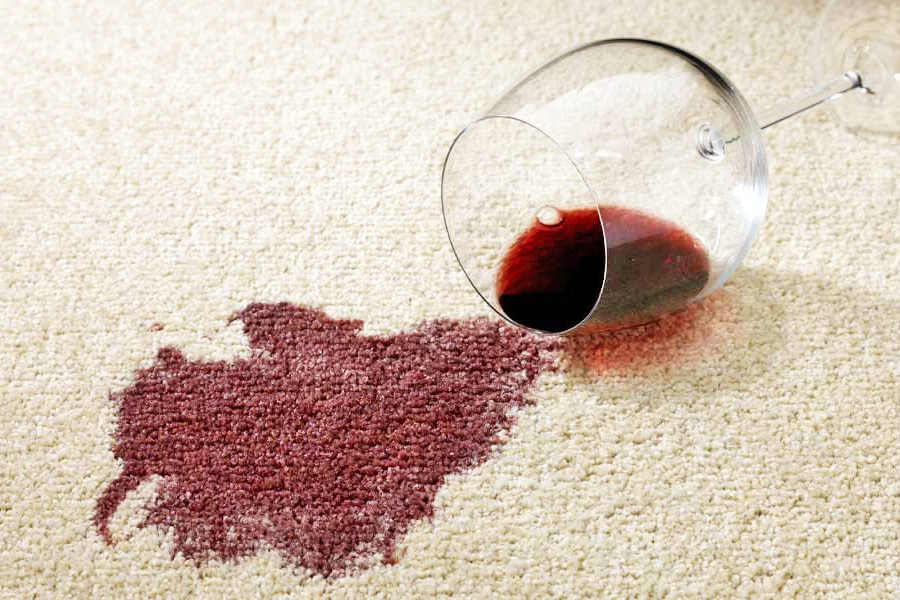
Blot immediately. Club soda or cold water often lifts fresh red wine and coffee. Follow with a mild dish-soap solution, then blot with a vinegar-water mix (test first), then rinse. For dried wine, dampen, blot, and repeat patiently rather than flooding the pad.
Grease, oil, and makeup
Blot excess. Sprinkle baking soda or cornstarch to absorb oil; vacuum after 15–30 minutes. Follow with a tiny drop of dish soap in warm water on a cloth — soap cuts grease. Rinse thoroughly so soap does not leave a sticky ring.
Carpet stain quick reference
- Mud: let dry, vacuum, then spot-clean remaining marks
- Ink: dab isopropyl alcohol on a cloth (not poured); blot; rinse
- Vomit: scoop solids, enzyme cleaner, rinse, odor treatment
- Unknown mystery stain: start with cold water + mild soap; escalate carefully
Common mistakes to avoid
- Rubbing instead of blotting
- Using too much water (pushes stain into padding)
- Skipping the rinse (cleaner residue becomes a dirt magnet)
- Mixing chemicals “just to be sure”
- Heat-setting protein stains with hot water or a hot iron
When to call professionals
Call pros for large pet urine saturation, sewage-related messes, smoke or flood damage, wool or specialty rugs, or stains that reappear after drying (wicking from the pad). A deep clean can refresh rooms around the spill; for stubborn carpet extraction, a carpet specialist may be needed alongside general housekeeping.
Frequently asked questions
Does vinegar damage carpet?
Diluted white vinegar is generally safe on many synthetics when rinsed, but always spot-test. Do not mix vinegar with bleach. Avoid heavy acid use on natural wool without guidance.
Why did the stain come back?
Residue or liquid left in the padding can wick up as the surface dries. Re-treat with less water and more blotting, or schedule extraction.
Can I use bleach?
Not on dyed carpet — it often lightens fibers permanently. Oxygen-based cleaners are usually safer when labeled for carpet; still spot-test.
How do I prevent future stains?
Treat spills immediately, use doormats, and schedule periodic professional cleaning. For move-outs and heavy soil, see our move-out cleaning checklist and book regular cleaning to keep soils from grinding in.