Best Practices for Indoor Air Quality Monitoring


    Indoor air quality monitoring means measuring the pollutants in the air inside a building — gases like carbon monoxide, radon, and VOCs, plus particulates, mold, and humidity — to catch problems that can cause headaches, fatigue, allergies, and respiratory illness. The practical approach: use an inexpensive indoor air quality monitor (around $100) for ongoing readings of CO2, particulates, VOCs, temperature, and humidity; install a carbon monoxide detector and test for radon (both are odorless and dangerous); and address any problem at its source while improving ventilation and HVAC filtration. Here’s a full guide to the pollutants, standards, and fixes.

    What is indoor air quality?

    Indoor air quality refers to the makeup of the air inside a building as it relates to health. Normal air is about 78% nitrogen and 21% oxygen, with only trace amounts of other gases; harmful gases like carbon monoxide normally exist in amounts too small to notice. Problems arise when those harmful gases or particulates build up — which happens easily in closed environments with sealed windows and recirculating HVAC, where even a small increase leads to prolonged exposure.

    Some settings have formal guidelines. The EPA sets air-quality guidance for schools because children’s lungs are still developing. Healthcare facilities monitor air closely year-round because of airborne-infection risk and immunocompromised patients. And since the COVID-19 pandemic, ventilation has been front of mind everywhere, since good airflow reduces the spread of airborne respiratory illness as well as pollutant buildup.


      Indoor air quality standards

      Who governs the standards? The EPA provides guidance on which contaminants are dangerous and at what levels — for homes, that means watching radon, mold, carbon monoxide, and allergens. For commercial buildings, ASHRAE (the heating/cooling engineers’ body) sets ventilation and airflow guidelines. OSHA doesn’t set a single indoor-air-quality standard but regulates ventilation and specific contaminants, and expects employers to test for hazards like radon and carbon monoxide, ensure ventilation, and protect workers from asbestos and dust.

      Importantly, you can be within EPA/OSHA tolerances and still have poor air quality, which is why ongoing monitoring is good practice — poor air hurts health, comfort, productivity, and morale.

      Common indoor air pollutants

      Pollutants enter the air many ways — combustion, construction byproducts, equipment, or from the ground — and some are odorless and invisible, which is exactly why monitoring helps. Here are the most common, their sources, and their effects:

      POLLUTANT
      SOURCE
      APPEARANCE
      EFFECT ON PEOPLE
      Carbon monoxide (CO)
      Fossil-fuel combustion — vehicle exhaust, space heaters, furnaces
      Odorless, invisible gas
      Fatigue, headaches, dizziness, nausea, confusion, and death
      Nitrogen dioxide (NO2)
      Fossil-fuel combustion
      Harsh odor; reddish-brown gas
      Eye/nose/throat irritation, bronchitis, pulmonary edema
      Radon
      Breakdown of radioactive material in the ground
      Odorless, invisible gas
      Increased risk of lung cancer
      Formaldehyde
      Composite woods, glues, paints, fabrics, paper products
      Colorless gas, strong odor
      Eye/nose/throat irritation, increased cancer risk
      Tobacco smoke
      Burning tobacco products
      Gray-white smoke, yellow residue
      Irritation, pneumonia, bronchitis, increased lung cancer risk
      Lead particles
      Breakdown of lead paint (used before 1978)
      Fine dust
      Damage to brain, nervous system, kidneys, blood
      Asbestos particles
      Breakdown of asbestos products (floor/ceiling tiles, textured ceilings)
      Fine or stringy white-gray dust
      Coughing, lung inflammation, mesothelioma, asbestosis, lung cancer
      Volatile organic compounds (VOCs)
      Paint, solvents, adhesives, cleaners, disinfectants
      Invisible gases, may or may not smell
      Irritation, headaches, kidney/nervous-system damage, fatigue
      Mold
      Fungal growth in damp areas
      Musty, green/gray/black blotches
      Allergy and asthma triggers, irritation, breathing difficulty
      Pesticides
      Chemicals used against infestations
      Gases, liquids, powders
      Irritation, nervous-system/liver/kidney damage, cancer risk

      Which pollutants matter depends on the building: lead and asbestos in older structures, mold where there’s a leak or condensation, radon from the ground beneath. Early signs of poor air are usually mild — runny eyes/nose, coughs, more asthma and allergy flare-ups — but prolonged exposure can cause chronic conditions, and high levels of CO or NO2 can be fatal.

      Causes of indoor air pollution

      There are five main sources to consider:

      Furnaces and heaters. Burning fossil fuels produces carbon monoxide and nitrogen dioxide — among the most immediately dangerous pollutants. Keep heating equipment properly installed and maintained, and if you do nothing else, install a carbon monoxide detector.

      Leaks and condensation. Moisture breeds mold. So-called “black mold” (Stachybotrys) grows on damp cellulose materials like drywall and wood. Despite its reputation, the idea that black mold is uniquely or dangerously “toxic” isn’t well supported by evidence — but it, like any mold, can trigger allergies and breathing problems, and the underlying moisture should always be fixed. Catch leaks early, watch condensation-prone corners, improve airflow, and treat affected surfaces.

      Construction materials. Asbestos was widely used in tiles and textured coatings and is still found in older buildings. It’s only harmful when inhaled, so intact, undisturbed material poses no known risk — but anything suspected to contain asbestos must be tested by a professional before any work, and removed by a licensed specialist if present. Never disturb it yourself. Modern materials bring other risks: formaldehyde off-gasses from composite wood, insulation, glues, and fabrics (ventilate well, especially in new or renovated spaces), and VOCs from paints, solvents, and cleaners — indoor concentrations can run several times higher than outdoors, so ventilation matters.

      Related: how to do a post-construction clean properly

      Human activity. Pesticides, bug sprays, and the like add pollutants — better to hire a pro who can apply treatments safely. Tobacco smoke and vehicle exhaust can also drift inside through doors and windows even in smoke-free buildings.

      The environment. Radon, from natural radioactive decay in the ground, is the prime example. The EPA advises that homes at or above 4 picocuries per liter (pCi/L) take action, and maps the country into risk zones — but levels vary house to house, so every property should be individually tested regardless of its zone.

      How to monitor and improve indoor air quality

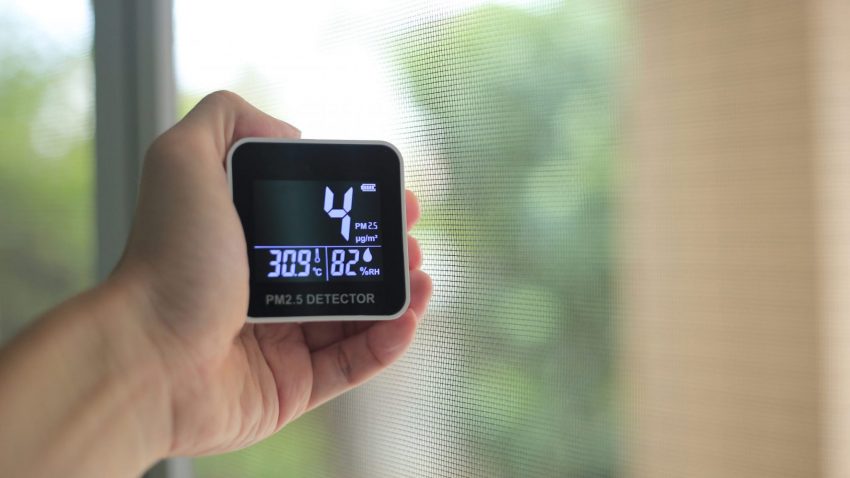
      Start by understanding your current air. An indoor air quality monitor (around $100) is a worthwhile investment. You can also check the EPA’s daily Air Quality Index (AQI), which rates outdoor air 0-500 across five major pollutants — useful context, since outdoor conditions affect indoor air.

      Pollutants the AQI measures

      • Ground-level ozone
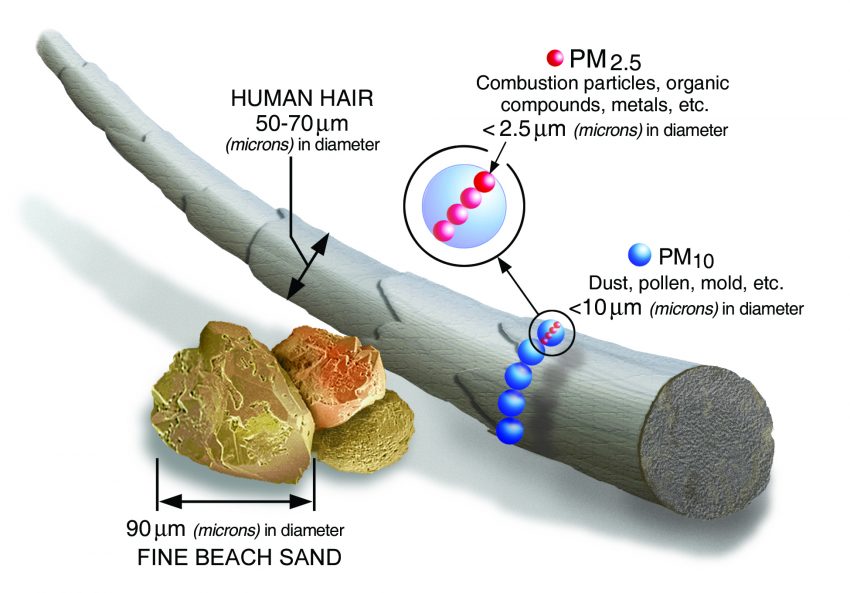
      • Particle pollution (PM2.5 and PM10)
      • Carbon monoxide
      • Sulfur dioxide
      • Nitrogen dioxide

      EPA AQI scale

      COLOR
      LEVEL OF CONCERN
      INDEX VALUE
      DESCRIPTION
      Green
      Good
      0-50
      Air poses little or no risk
      Yellow
      Moderate
      51-100
      Slight risk for those sensitive to pollution
      Orange
      Unhealthy for sensitive groups
      101-150
      Sensitive groups affected; general public usually not
      Red
      Unhealthy
      151-200
      General public affected; sensitive groups more seriously
      Purple
      Very unhealthy
      201-300
      Increased risk for everyone
      Maroon
      Hazardous
      301-500
      Emergency conditions; everyone affected

      How indoor air testing works

      Small monitors analyze the air for gases and particulates and report via a display or app. Consumer models commonly cover CO2, formaldehyde, particulate matter, VOCs, temperature, and humidity; pricier ones add radon and less common gases. They’re great for a quick overview and ongoing trends, but rarely sensitive enough to definitively measure every pollutant — for instance, they detect particulates but can’t confirm whether those are mold spores or harmless dust. For that you need a dedicated test (often a charcoal-absorption sample analyzed in a lab), and ATP meters for bacteria. If a monitor flags a problem, the targeted lab test is worth the extra cost to know exactly what you’re dealing with.

      Fixing air quality problems

      Treat the source. That might be as simple as ventilating after construction to let VOCs and formaldehyde escape, or as involved as remediating lead, asbestos, a leak, or radon. A portable monitor can help locate a source by showing where readings rise.

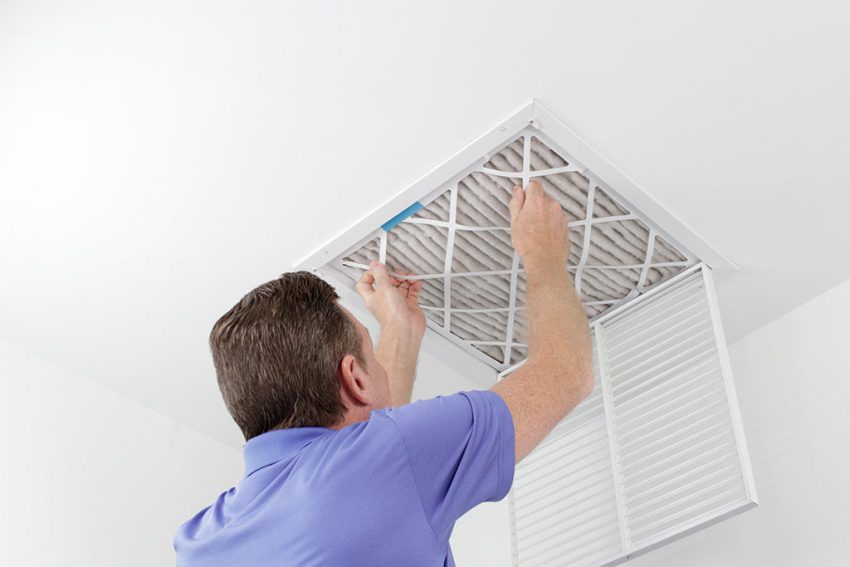
      For general poor air quality, start with HVAC maintenance:

      • Change HVAC filters regularly (upgrading to a higher-MERV or HEPA filter captures more particulates)
      • Improve airflow and bring in fresh outdoor air where possible
      • Control humidity to limit dust mites and mold
      • Some facilities add advanced filtration; technologies like in-duct UV have mixed evidence, so weigh them against proven steps like ventilation and filtration

      Other helpers: clean more thoroughly and frequently, reduce dust-collecting clutter, and add a few houseplants — they won’t transform your air, but they modestly reduce some VOCs and influence indoor microbial conditions.

      Related: all about commercial cleaning

      The benefits of good indoor air quality

      Fresh air doesn’t just feel better — it’s healthier, and in workplaces and schools it means higher productivity and less absenteeism. With most pollutants invisible and odorless, monitoring is the only reliable way to know what’s in your air, making a modest air quality monitor a smart investment for almost any building.