
How To Clean a Garbage Disposal Safely
To clean a garbage disposal, cut power at the wall switch and the breaker (or unplug it under the sink), then scrub the rubber splash guard — that is where the smell actually lives. With power still off, shine a flashlight in and pull out anything that is not food. Restore power, run a strong stream of cold water, and grind a tray of ice with a handful of coarse salt to scour the grinding chamber. Finish with citrus peels for scent if you want, not as a disinfectant. Never put a hand or a fork in the opening, never pour chemical drain cleaner, and skip bleach.
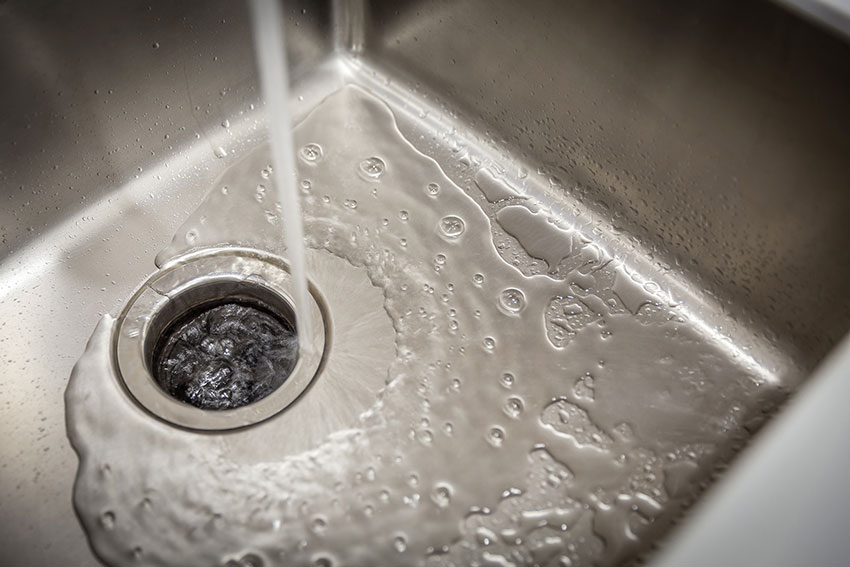
Safety first
- Never reach in. Disposals use spinning impellers (not kitchen-knife blades), but they will still crush a finger, and a jammed unit can start when the jam lets go. If you must look inside, kill power at the breaker or unplug the cord, then flip the wall switch to confirm it is dead.
- No drain opener. Lye and acid drain cleaners eat rubber seals and splash back when you turn the unit on. If it is clogged, use the hex-key socket on the bottom of the can, then a reset button — not a bottle of opener.
- No bleach as a “deep clean.” Bleach does not cut grease, can degrade the splash guard, and is a mixing hazard next to everyday kitchen products. If you already poured something else down the drain, do not add bleach.
- Keep water running. A dry grind overheats the motor. Use a strong cold flow while it runs, then 15–20 more seconds after it sounds empty so waste actually leaves the trap.
- Jams. Most units take a 1/4-inch Allen wrench in a socket under the sink. Work it back and forth with power off. Press the red reset on the bottom if the motor tripped. If it hums and will not turn, stop and call a plumber — do not keep hitting the switch.
What actually smells
The grinding chamber gets food film, but the worst odor is usually on the underside of the rubber splash guard (the flaps in the drain opening). They stay wet, catch puree, and never see the ice you dump in. Weekly cleaning means taking those flaps seriously, not just running lemon wedges and hoping.
What you need
- Flashlight
- Dish soap and an old toothbrush or bottle brush (for the splash guard, power off)
- Tongs or pliers — never fingers — if something is visibly stuck
- Ice and coarse salt (kosher or rock salt)
- White vinegar and baking soda, used as a follow-up on the guard and drain, not as a magic pair
- Optional: citrus peels for scent after the unit is already clean
How to clean it, step by step
- Flip the wall switch off. Unplug the disposal or switch off its breaker. Test the wall switch.
- Lift or peel back the splash guard. Scrub both sides and the sink flange with dish soap. If the guard is removable, take it to the sink, wash it, and seat it fully on the way back.
- Look in with a flashlight. Use tongs for bones, twist-ties, fruit stickers, or glass. If you cannot see past a mass of food, do not dig.
- Restore power. Run cold water at full flow. Drop in a tray of ice and about 1/2–1 cup of coarse salt. Let it grind until the noise drops, then keep water and motor on another 30–60 seconds. Ice scours the chamber; salt adds grit. It will be loud. That is normal.
- Optional scent pass: feed a few lemon or lime wedges one at a time under cold water. Rind is fibrous — small pieces, not a whole fruit.
- For a sour drain after that, pour 1/2 cup baking soda in the opening, then 1 cup white vinegar. Let it fizz 10 minutes, then flush with cold water and run the disposal briefly. Honest note: soda and vinegar neutralize each other. The fizz can loosen film on the guard and pipe walls. It is not a disinfectant, and it will not eat a grease clog.
- Usually fine in small amounts: most cooked leftovers, fruit (no pits or stickers), vegetable scraps that are not stringy, small amounts of cooked meat.
- Keep out: grease, oil, and pan drippings; coffee grounds (they settle in pipes); rice, pasta, and oatmeal (they swell); banana peels, celery, corn husks, onion skins, and artichoke leaves (they wrap the impellers); eggshell membranes; shellfish shells and fruit pits; large bones; anything that is not food (glass, rubber bands, twist ties, produce stickers, paper).
- Chemical drain cleaner
- Straight bleach, or bleach mixed with anything already in the sink
- Your hand, a knife, or a fork while the unit can still get power
- Boiling water as a habit on PVC drain parts — hot soapy rinse is enough
A once-a-week version is shorter: power-off guard scrub, then ice. That beats a monthly “project” after the kitchen already smells.
Hot soapy water vs cold water
Use cold water while grinding food. Cold keeps fats more solid so they chop and flush instead of coating the chamber and the pipes as liquid grease. After the grinding is done, a sink-full of hot, soapy water pulled through with the stopper out can rinse the splash guard and the upper chamber. Do not use that hot flush as a way to send bacon grease “down.” Grease belongs in the trash, not the disposal.
What can go down — and what should not
A disposal is a food-waste grinder for small, soft scraps, not a trash can. When in doubt, compost or trash it.
Manufacturer manuals sometimes allow small poultry bones. They do not “sharpen” the unit, and they do jam cheaper models. If your plumber has already fished corn husks out of your trap, believe the plumber.
What not to use
Keep it from getting foul
Run the disposal with a strong cold stream every time you send food, then 15–20 seconds more. Feed scraps in a thin stream, not a packed sink. Run it for a minute every few days even when the sink is empty so the unit does not sit wet and unused. Wipe the splash guard when you do the sink. If drain flies show up, the organic film on the guard and in the overflow is the breeding site — scrub that, don’t perfume it.
A kitchen that is already on a recurring clean gets the sink, faucet, and disposal flange wiped as part of the visit. If you want that on a schedule rather than a Saturday project, regular house cleaning from Pro Housekeepers covers the kitchen sink area with the rest of the room.
FAQ
Should I turn the power off before I clean it?
Yes, any time your hands, a brush, or tongs go near the opening. Wall switch plus breaker or the plug under the sink. Then test the switch.
Will ice and lemon kill drain flies?
No. Ice scours; lemon scents. Flies need the film gone. Scrub the splash guard and overflow, keep the sink dry between uses, and repeat daily until they stop. A microbial drain gel is a better follow-up than more citrus.
Can I use regular drain cleaner?
No. It damages the unit and is dangerous if the disposal starts. Hex key, reset button, or a plumber.
Why does it still smell after I grind lemon?
You scented the chamber and left the splash guard dirty. Power off, scrub the flaps, then ice.