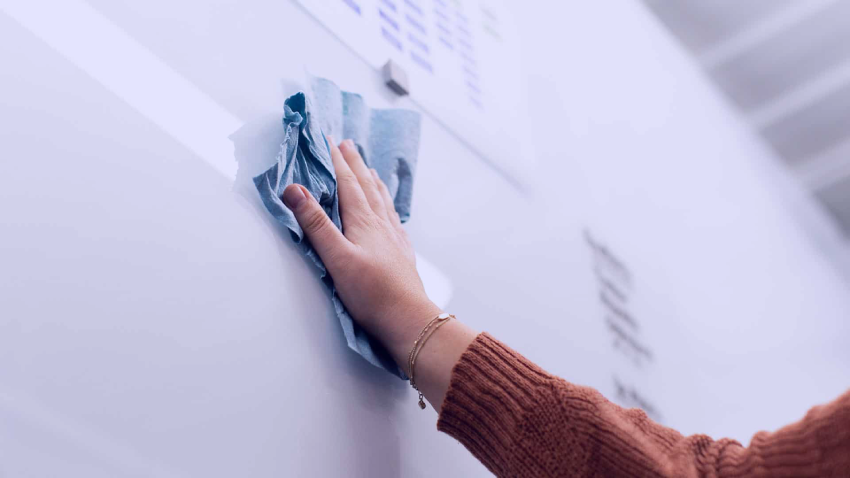
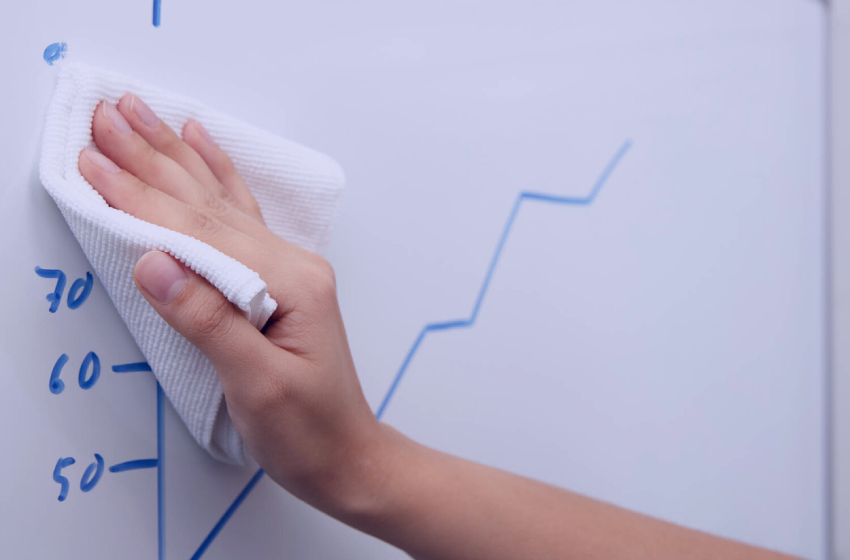
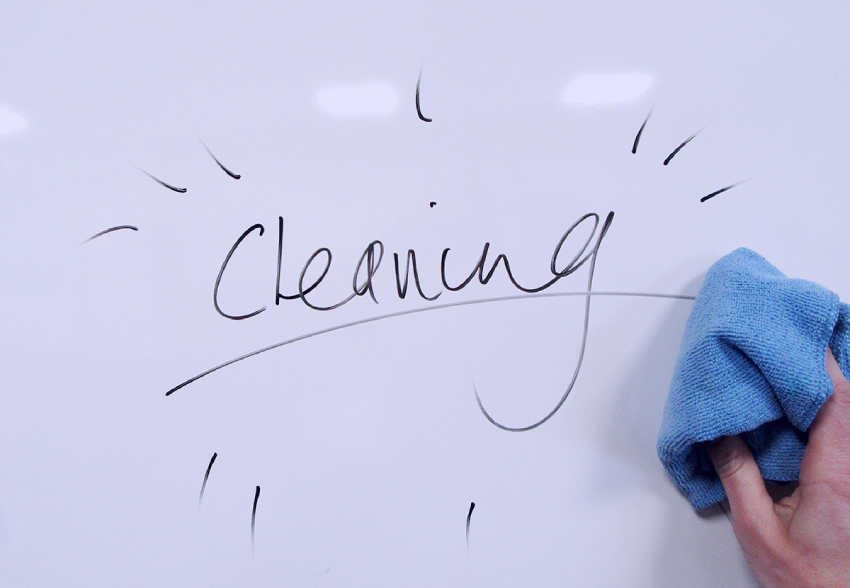
To clean a whiteboard without damaging it, wipe it with a dry microfiber cloth or felt eraser for everyday marks, then tackle ghosting and stains with a soft cloth dampened in a 50/50 mix of isopropyl alcohol and water (or equal parts vinegar and water). For stubborn spots, add a drop of dish soap, and always avoid abrasive scrubbers and harsh chemicals, which scratch the surface. The sooner you clean a mark, the easier it comes off.
A whiteboard is a great tool for capturing ideas at home or at work, but over time it picks up stains, marks, and ghosting. With the right materials and a regular routine, you can keep it looking as good as new — here’s how.
Identify what you’re dealing with
The first step is recognizing the type of marks on your board, which directs your cleaning approach.
Ghosting vs. stains
The most common issue is ghosting — faint traces left when dry-erase ink sits too long. A gentle wipe with an eraser or cloth usually handles it. Stains, often from using the wrong markers or from spills, embed more stubbornly and may need a specialized cleaner. Telling the two apart shapes your strategy.
Stain age matters
Fresh marks respond to light cleaning, while older ones need more intensive treatment — so acting promptly prevents stubborn stains that resist casual cleaning.
Everyday cleaning
A daily once-over with a microfiber cloth or eraser lifts dry-erase ink before it settles. Choosing “ghost-free” or “low-odor” markers also makes future cleaning easier.
Choose the right cloth and tools
The right tools protect the surface. Use a high-quality microfiber cloth, which traps and lifts ink without scratching. Felt whiteboard erasers are soft and often work without any cleaning agent. Melamine foam (a ‘magic eraser’) helps on tougher stains but should be used gently and sparingly, since it’s mildly abrasive. Avoid rough sponges, steel wool, or any abrasive scrubbing tools — they permanently scratch the board.
Homemade whiteboard cleaners
Often the best cleaner is one you mix yourself. A 50/50 mix of isopropyl alcohol and water works well for routine maintenance. For a natural option, equal parts vinegar and water is an excellent alternative, and a drop of dish soap added to it boosts cleaning power on tougher stains. Apply with a soft, lint-free cloth, and test any new method on a small corner first.
FAQ
How do I clean a whiteboard without leaving marks or stains?
Use a mix of water and vinegar (or a dedicated whiteboard cleaner), spray it on, and wipe clean with a soft cloth or whiteboard eraser.
Can I use household items to clean a whiteboard?
Yes — rubbing alcohol works well, and mild abrasives like baking soda or toothpaste can lift ghosting. Use the abrasive ones gently and spot-test first, since scrubbing too hard can dull the surface.
What should I avoid?
Avoid abrasive materials like rough sponges or steel wool, and harsh chemicals or cleaners not made for whiteboards — all can damage the surface.
How often should I clean my whiteboard?
For light use, once a week is enough. With heavy use, or when you notice stubborn marks, clean it as soon as you can.
Are there alternative methods?
Baby wipes, a magic eraser (used gently), or a damp cloth with a little dish soap all work. Test any of them on a small area first.
Can I use a regular eraser?
A regular eraser removes some residue, but a whiteboard eraser is more effective.
Can I restore an old whiteboard?
Often yes — try a whiteboard restorer or gently scrub with a water-and-baking-soda paste. Severe, set-in damage may need replacement.
Can I use glass cleaner on a whiteboard?
It’s best avoided, as it can damage some boards over time. Use a whiteboard cleaner or a water-and-vinegar mix instead.
How can I prevent stains and marks?
Use high-quality dry-erase markers, clean regularly, and don’t leave ink on the board for long stretches.