
To clean an electric stove top, turn it off and let it cool, then clear loose debris with a soft cloth. On a coil stove, lift out the burners and drip pans and soak them in warm soapy water while you clean the surface; for stubborn burnt-on spots, spread a baking soda paste, let it sit, then scrub gently and wipe clean. A 1:1 white vinegar and water solution cuts grease and finishes the job streak-free. The steps below cover removable-coil stoves — if you have a smooth glass or ceramic cooktop, see the note on that further down, since it’s cleaned a little differently.
May 29, 2026
How To Clean an Electric Stove Top The Right Way
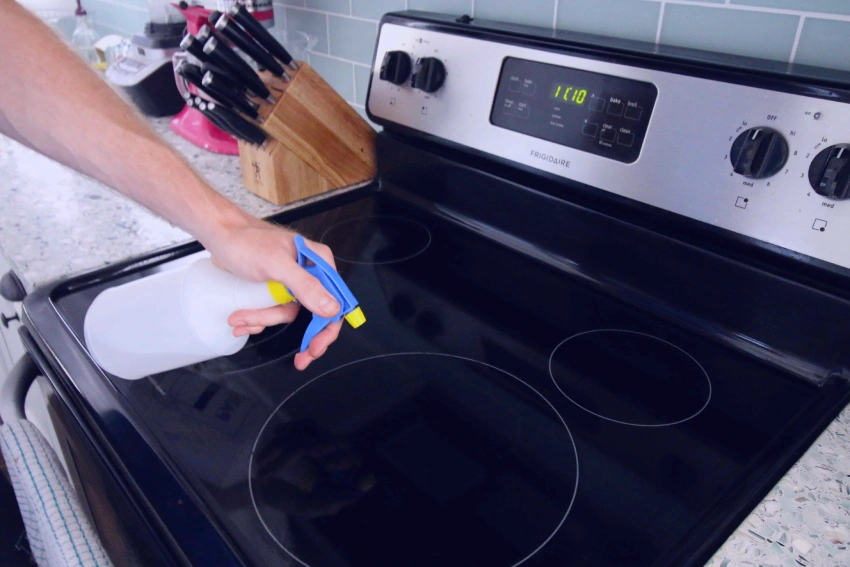
Supplies needed
Gather these before you start:
Soft cloths or sponges
Microfiber cloths remove dirt and grease without scratching; non-abrasive sponges add scrubbing power for tougher stains. Use a lint-free cloth for drying to avoid streaks.
Cleaning solutions
For everyday cleaning, gentle dish soap in warm water works well. For a deeper clean, use a non-toxic all-purpose cleaner made for stovetops; for stubborn or burnt-on food, a 1:1 mix of white vinegar and water is effective.
Baking soda
A versatile, mild abrasive that lifts stubborn burnt-on residue without scratching, and a natural deodorizer too. Baking soda scrubs off tough marks while neutralizing odors.
White vinegar
White vinegar cuts grease and grime and removes stains and mineral deposits, leaving the surface shiny — a safe alternative to harsh chemical cleaners.
Paper towels
Handy alongside cloths and sponges for wiping up grime with a mild cleaner or vinegar. Don’t use them on hot surfaces.
Scrub brush or toothbrush
Useful for tight spaces and stubborn grime — but on a glass/ceramic cooktop, use only a non-abrasive pad, never a stiff brush (see the note below).
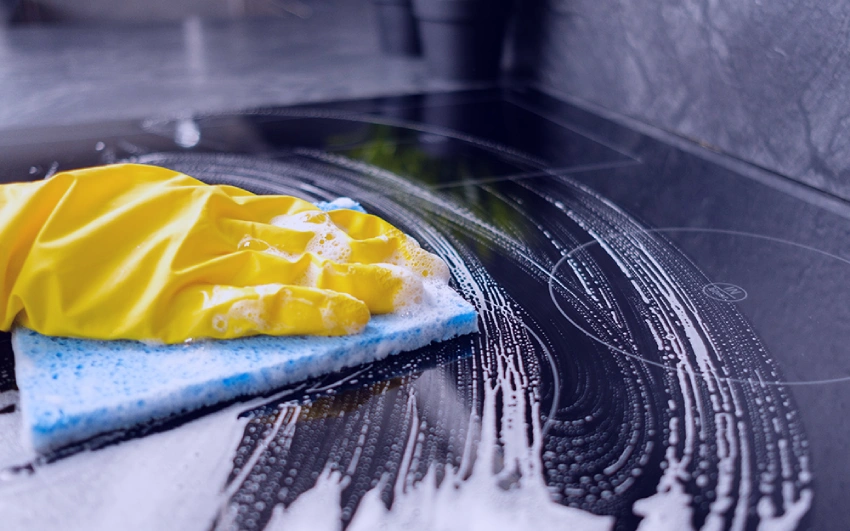
Step-by-step guide (coil stove top)
Step 1: Turn off the stove and let it cool completely — safety first.
Step 2: Remove the burners and drip pans and set them aside.
Step 3: Wipe down the surface with a soft cloth or sponge, using gentle circular motions to lift loose debris, grease, and spills from every area.
Step 4: Clean the burners and drip pans. Soak the burners in warm water with dish soap to loosen grease, then scrub gently with a sponge or brush. For the drip pans, wipe off loose debris and soak them in a vinegar-and-water mix for about 30 minutes before scrubbing off any remaining stains and rinsing. (Note: don’t submerge the electrical ends of the coil burners — wipe those clean instead.)
Step 5: Make a paste of equal parts baking soda and water, stirring to a thick, smooth consistency.
Step 6: Spread the paste over the stovetop with a spatula or your fingers so it adheres to grease and stains.
Step 7: Let it sit a few minutes to penetrate and loosen stubborn stains and grease buildup.
Step 8: Scrub with a brush or toothbrush, using circular motions and gentle pressure.
Step 9: Wipe away the paste with a damp cloth or sponge, cleaning into corners and crevices until the surface is smooth and residue-free.
Step 10: Clean the control knobs and buttons:
- Mix equal parts water and vinegar.
- Dampen a soft cloth or sponge with the solution.
- Gently wipe the knobs and buttons, taking care not to get liquid inside them.
- Use a toothbrush dipped in the solution for stubborn grime.
- Dry with a clean towel.
Step 11: Polish with a microfiber cloth to buff the surface to a shine, then reinstall the fully dry burners and drip pans.
If you have a glass or ceramic (smooth) cooktop
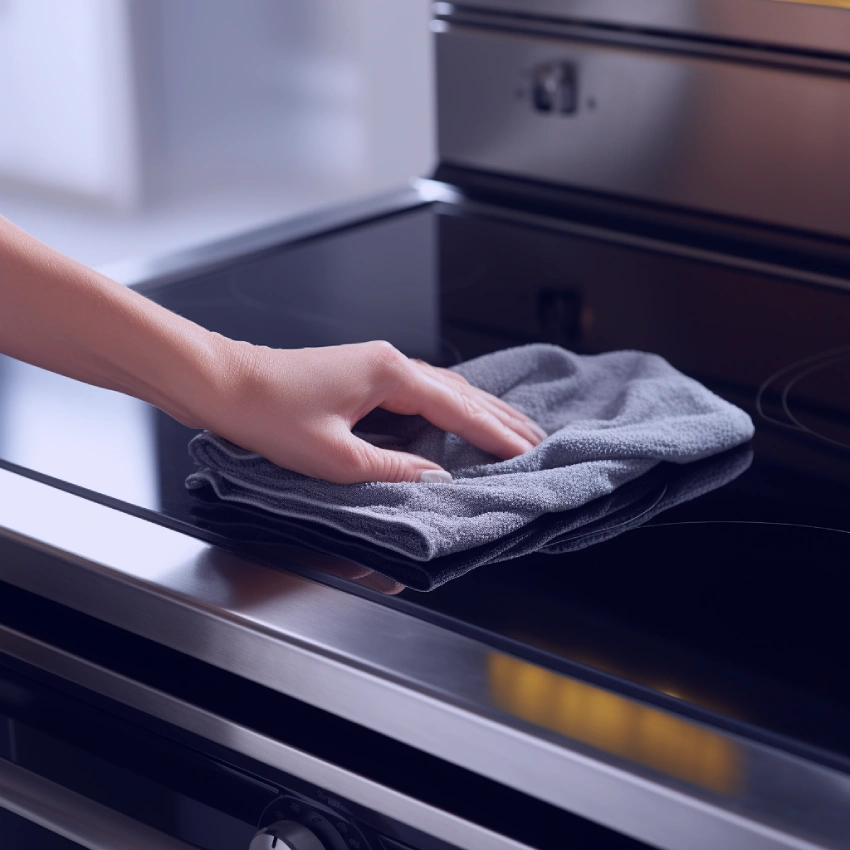
Smooth glass-ceramic cooktops have no removable burners or drip pans, and they scratch easily, so skip the stiff brush. Once the surface is cool, wipe it down, then apply a baking soda paste (or a cooktop-specific cream cleaner) and let it sit. Scrub only with a soft cloth or a non-abrasive pad — never steel wool or a hard brush. For baked-on spots, a cooktop razor scraper held nearly flat lifts residue without scratching. Wipe clean, then buff dry with a microfiber cloth. Avoid abrasive powders and harsh scrubbers, which leave permanent scratches on glass tops.
Frequently asked questions
Can I use baking soda to clean my electric stove top?
Yes — it’s a natural mild abrasive that breaks down grease and stains and neutralizes odors without harsh chemicals, and it won’t scratch when used as a paste.
How often should I clean my electric stove top?
At least once a week, and wipe up spills and splatters right after cooking to prevent stains and buildup.
Can I use vinegar to clean my electric stove top?
Yes — its acidity cuts grease and grime, leaving the surface clean and shiny.
Can I use abrasive cleaners?
No — abrasive cleaners and scourers scratch and damage the surface, especially glass-ceramic tops. Stick to gentle solutions and non-abrasive tools.
How long does cleaning take?
On average about 15-30 minutes, depending on the condition and how thorough you want to be.
Should I clean it after every use?
A full clean isn’t needed every time, but a quick wipe with a damp cloth after cooking prevents grease and spills from building up and becoming harder to remove.
To cut down on cleaning time, keep a consistent routine — a quick daily wipe plus a deeper weekly clean focused on tricky stains keeps your stovetop shining.