
How to Clean iPhone Speakers: Top and Bottom, Any Model
To clean iPhone speakers, turn the phone off, take off the case, and brush the bottom speaker grille and the top (ear) speaker with a clean, dry, soft-bristled brush. Brush across the holes, not into them. Lift any lint that’s left with a light dab of cleaning putty. Keep liquids, pins and compressed air out of the openings.
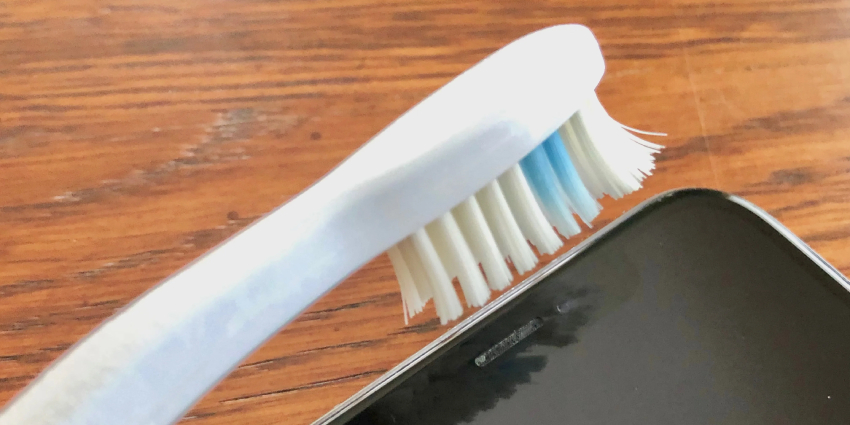
That’s close to what Apple tells you to do. Its sound troubleshooting page says to clean the speaker or receiver opening “with a small, soft-bristled brush” that is clean and dry (Apple Support, no sound or distorted sound). The steps work the same on any iPhone, from the new iPhone Duo and iPhone 18 Pro back through iPhone 13 and earlier. Below you’ll find both speakers, where they sit on each model (newest first), what to do with a wet phone, and what to try when the sound is still muffled.
What you need
- A soft-bristled brush, clean and dry. A new soft toothbrush, a small makeup brush or an anti-static electronics brush.
- A microfiber or lens cloth. Lint-free, so you don’t add fibers to the grille.
- Cleaning putty (optional). The kind sold for keyboards and electronics. Not Play-Doh or modeling clay, which crumble into the holes.
- A flashlight. Your other phone’s light is fine. You need to see what’s in the grille.
Skip toothpicks, pins, SIM tools, cotton swabs, compressed air and any spray. They push debris deeper or leave something in the opening that shouldn’t be there.
How to clean the iPhone bottom speaker
The bottom edge has a grille on each side of the charging port. On iPhone 18 Pro, iPhone 17, iPhone 17e and iPhone 16, Apple’s spec diagrams show the speaker on one side of the USB-C port and microphones on the other. Most older iPhones from iPhone 7 on split it the same way. iPhone Air is the exception. Apple’s diagram shows only microphones and the USB-C port on the bottom, with its single speaker at the top. Clean those bottom openings the same way either way. Clear mic holes help your calls too.
- Turn the phone off and unplug it. That’s where Apple’s cleaning page starts (Apple Support, How to clean your iPhone).
- Take off the case and check the bottom lip. Lint packs into the cutout and sits right over the grille. Shake it out or brush it clean.
- Hold the phone with the bottom edge pointing down so loose dust falls out instead of further in.
- Brush side to side across the grille with light pressure for 10 to 15 seconds. Tap the brush on the cloth now and then so you’re not pushing the same lint back in.
- Look with the flashlight. If lint is still packed in, press a small piece of cleaning putty lightly onto the grille and peel it straight off. Short touches only. Don’t knead or roll it into the holes.
- Wipe the edge with a dry or slightly water-damp lint-free cloth. Keep moisture away from the holes.
- Turn the phone on and test it. Open Settings, then Sounds and Haptics, and drag the Ringtone and Alerts slider. That’s the same test Apple uses.
The same soft toothbrush trick works on grout lines, the edges of a bathtub and between keyboard keys.
How to clean the iPhone top speaker (ear speaker)
The top speaker is the one you hold to your ear on calls. On iPhone 18 Pro, iPhone 17, iPhone 17e and iPhone 16, Apple labels it a stereo speaker, so it plays music and video too. On iPhone Air, it’s the only speaker. It sits against your face, so it picks up skin oil and makeup along with pocket lint, and it usually clogs faster than the bottom one.
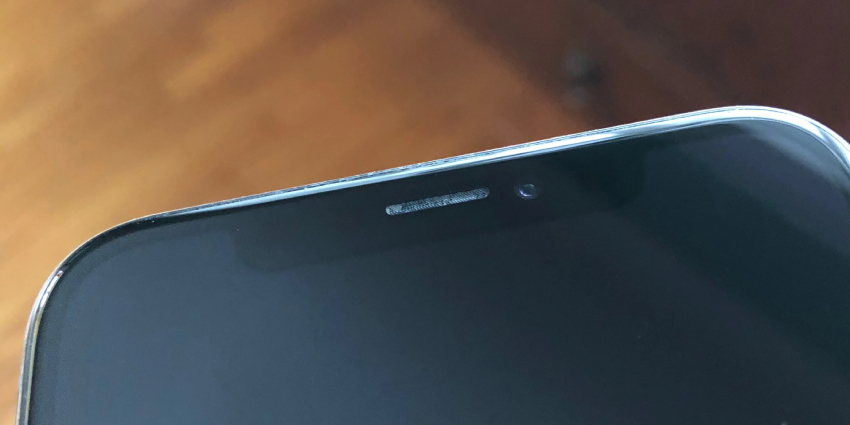
- Turn the phone off and remove any screen protector that covers the speaker. Grime often sits in the protector’s cutout, not in the speaker itself.
- Brush along the slit, end to end, with the dry brush. Keep pressure light.
- Mind the front camera and Face ID sensors next to it. Keep putty and fingertips off the lenses.
- Use putty only for stuck lint, pressing lightly and peeling straight up.
- Wipe the glass around it with a lens cloth. Wash the cloth afterward. Our guide to hand washing works for microfiber too.
Where the speakers are on each iPhone, newest models first
The cleaning method doesn’t change from model to model, Pro and Pro Max included. What changes is where the openings sit, and which port sits between the bottom grilles. Every iPhone in Apple’s current lineup uses USB-C.
- iPhone Duo: Apple’s new foldable. The diagram shows stereo speaker openings on both the top and bottom edges when it’s folded, with the USB-C port on the bottom. Apple says to make sure the hinge is clean before you open it. Clean the inner display the way Apple describes for textured matte glass, and keep putty off that screen.
- iPhone 18 Pro and iPhone 18 Pro Max: Apple’s spec diagram shows a stereo speaker at the top of the front and another on the bottom edge next to the USB-C port, with microphones on the other side of the port.
- iPhone Air: one speaker at the top of the front. The holes on the bottom edge are microphones next to the USB-C port. Brush them anyway. It helps calls and voice memos.
- iPhone 17, iPhone 17e and iPhone 16: same layout as iPhone 18 Pro on Apple’s diagrams. Stereo speaker at the top of the front, a second speaker on the bottom edge beside the USB-C port, and microphones on the other side.
- iPhone 15 models: the first iPhones with a USB-C port on the bottom. Brush across the grilles on each side of it, not into the port.
- iPhone 14 models: still Lightning, not USB-C. Clean the top speaker and the bottom grilles the same way, brushing across the grilles beside the Lightning port, not into it.
- iPhone 13, 13 mini, 13 Pro and 13 Pro Max: the ear speaker is usually a thin slit on the very top edge, where the screen meets the frame, above the notch. That narrow gap catches lint and skin oil quickly. Angle the toothbrush so the bristles run along the edge instead of pressing straight down onto the glass. The bottom speaker sits beside the Lightning port.
- iPhone 12 and earlier Face ID models: the ear speaker is typically a wider grille inside the notch, like the one in the photo above. The bottom grilles sit on either side of a Lightning port.
Not sure which model you have? Apple’s Identify your iPhone model page lists each one with photos and details.
Why not compressed air, alcohol or a pin?
- Compressed air: Apple’s cleaning page says plainly, “Don’t use compressed air.” A blast can drive lint deeper into the grille instead of clearing it.
- Alcohol and other liquids: Apple allows 70 percent isopropyl or 75 percent ethyl alcohol wipes on the outside of the phone, but says to keep moisture out of any openings. Wipe the glass and frame if you want to disinfect. Leave the speaker holes dry.
- Pins, needles and SIM tools: many of these openings have a fine mesh behind them. A sharp tip can tear that mesh, and then dust goes straight into the speaker.
Water resistance isn’t permanent either. Apple says it “might decrease as a result of normal wear” (Apple Support, splash, water and dust resistance), so an older phone is more at risk from anything wet near the openings.
How to get water out of iPhone speakers
Muffled sound right after a splash is usually water sitting in the grille. Apple says it can affect the speaker and microphone until the water evaporates completely.
- Wipe the phone with a soft, lint-free cloth.
- Tap it gently against your hand with the charging port facing down to shake out extra water.
- Lay it speaker side down on a lint-free cloth and let any water drip out.
- Leave it in a dry spot with some airflow. Apple says a fan blowing cool air at the port may help.
- Skip the hair dryer and other heat. Don’t put it in rice, and don’t push a cotton swab or paper towel into any opening.
- Wait at least 5 hours before charging with a cable. If you see a liquid-detected alert, drying can take up to 24 hours (Apple Support, liquid-detection alert). Wireless charging is fine once the back is dry.
There’s no water eject button built into iPhone. If the sound is still muffled after the phone has fully dried, brush the grille as above. Dried residue can hold onto lint.
Speaker still muffled? Check these first
- Silent mode and Do Not Disturb are off.
- Bluetooth isn’t still sending sound to earbuds or a car.
- Case, film or screen protector are off for the test.
- Ringtone and Alerts slider in Sounds and Haptics. If you hear nothing, or the slider is dimmed, Apple says the speaker might need service.
- Top speaker quiet only on calls? Turn the volume up during a call, then try speakerphone. If speakerphone sounds fine and the ear speaker doesn’t, or you hear crackling on every call, take it to Apple or an Apple Authorized Service Provider.
Other openings: charging port and AirPods
The charging port picks up the same pocket lint but needs a slightly different approach. Our guide to cleaning an iPhone charging port covers it. If your earbuds sound quiet too, see how to clean AirPods. For laptops, tablets, remotes and the rest, start with our guide to cleaning electronic devices.
iPhone speaker cleaning FAQ
A quick dry brush every few weeks keeps lint from packing into the grilles. Do it sooner if the sound turns muffled, if you carry the phone in a pocket with lint or sand, or if you wear makeup that rubs off on the top speaker during calls.
Electronics cleaning putty is fine for lifting lint off the surface if you press it lightly and peel it straight off. Apple’s own advice only mentions a clean, dry, soft brush, so brush first and use putty as a backup. Never use Play-Doh, Blu Tack or modeling clay, and check that no bits are left in the holes.
Not in the holes. Apple allows 70 percent isopropyl or 75 percent ethyl alcohol wipes on the outside surfaces of an iPhone but says to keep moisture out of any openings. Wipe the glass and frame around the grille if you want to disinfect. Leave the grille itself dry.
iPhone has no built-in water eject setting. Apps and Shortcuts that play a low tone to push water out are third-party tools, not part of Apple’s drying steps. They can’t remove lint or dust either. For a wet phone, Apple’s advice is to set it speaker side down on a lint-free cloth and let it dry.
No. The dry brush and light putty steps stay the same. Only the layout changes. iPhone 18 Pro, iPhone 17, iPhone 17e and iPhone 16 have a stereo speaker at the top of the front and another on the bottom edge beside the USB-C port. iPhone Air has one speaker at the top. The bottom holes are microphones. iPhone Duo has speaker openings on its top and bottom edges when folded. Apple says to make sure the hinge is clean before you open it.
The phone takes about five minutes. If the rest of the house keeps waiting, our regular cleaning service covers dusting, floors and mirrors. Book a cleaning online.