
How to Clean Sunglasses Properly
To clean sunglasses properly, rinse them first under cool or lukewarm water so grit cannot grind into the lenses, put a drop of mild dish soap on your fingertips, gently rub the lenses and frames, rinse again, and dry with a clean microfiber cloth. Never wipe them on paper towels, tissues, or your shirt, and skip Windex, ammonia, bleach, vinegar, toothpaste, baking soda, and car polish — those “buff out the scratches” hacks strip coatings instead of repairing them. The same rinse-soap-rinse-microfiber routine is safe for polarized lenses and for Oakley, Ray-Ban, and Maui Jim pairs.
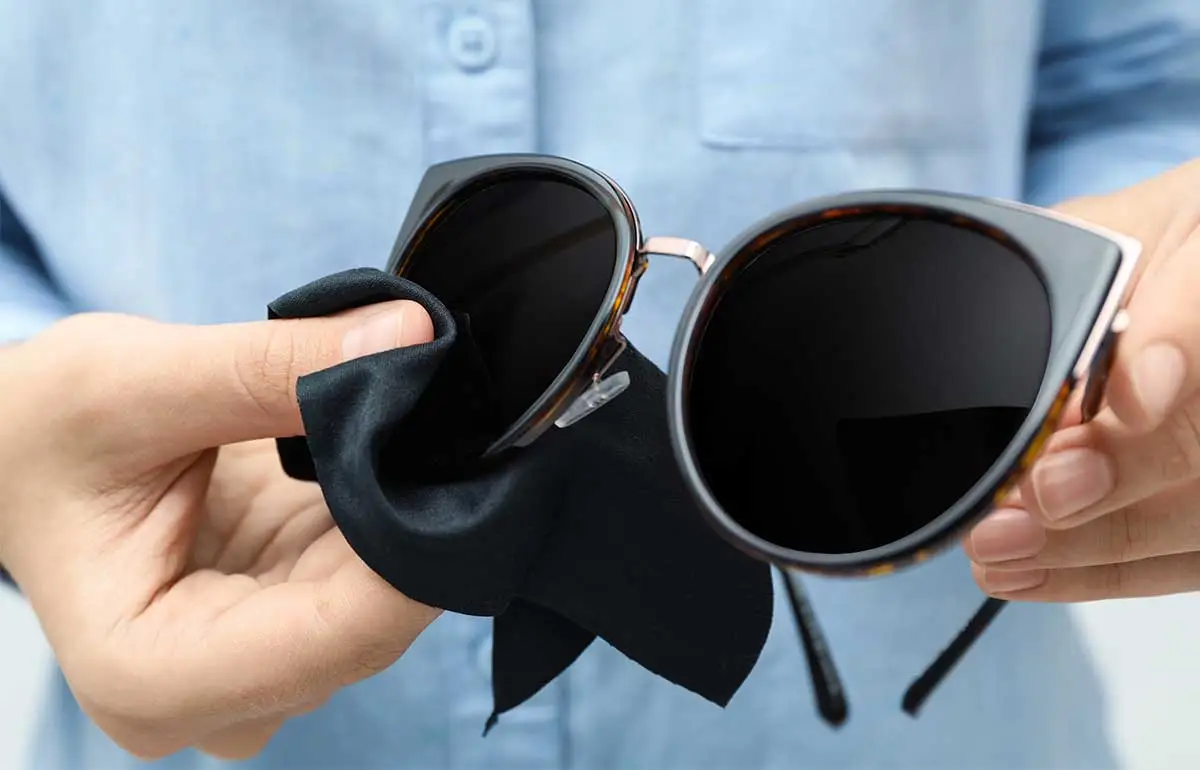
What you’ll need
- Cool or lukewarm water (not hot)
- Mild, lotion-free dish soap
- A clean microfiber cloth
- A hard-shell case for storage
How to clean sunglasses without scratching them
The danger is not soap. It is dragging sand, salt, or dust across a dry lens. Rinse first, then wash — the same rule as cleaning a camera lens. WikiHow’s sunglass routine and Wirecutter’s glasses guide land on the same order.
- Rinse first. Hold the sunglasses under a cool or lukewarm stream until loose grit is gone. Do not start with a dry cloth, even a microfiber one.
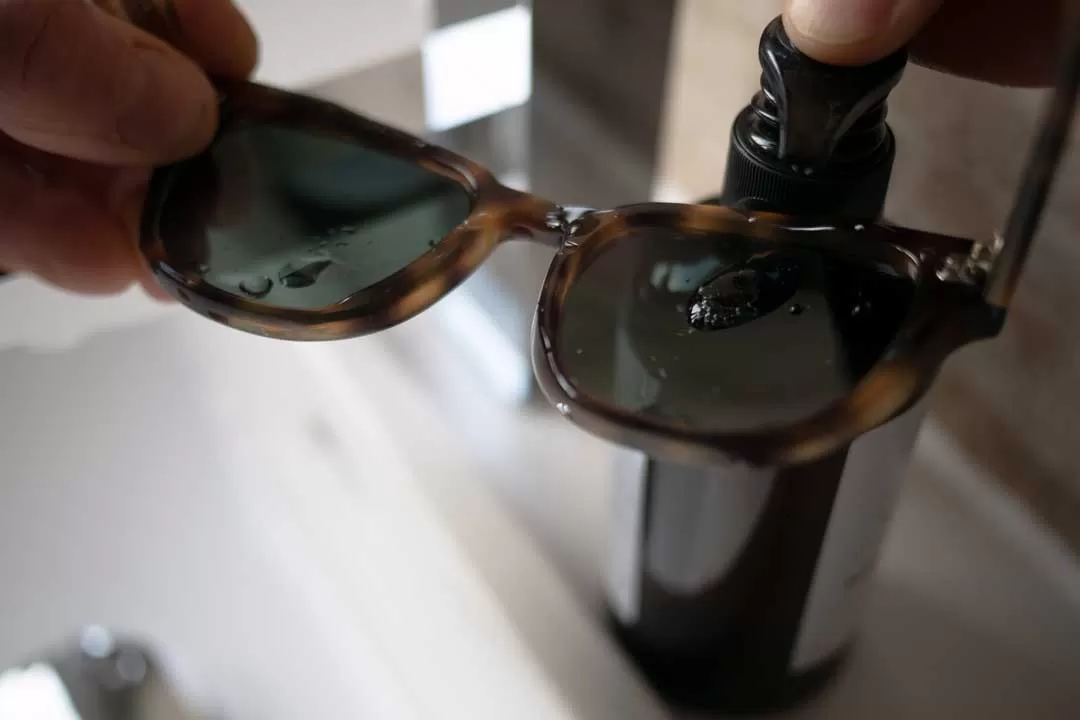
- Soap the lenses and frames. Put a drop of mild dish soap on your fingertips. Rub both sides of each lens, then the rims, nose pads, and temples. Skin oil, sunscreen, and fingerprint grease live on the frame as much as on the glass.
- Rinse thoroughly. Leftover soap film smears and attracts more dirt.
- Dry with clean microfiber. Shake off excess water, then pat and buff with a lint-free cloth. Wash that cloth regularly and skip fabric softener, which leaves residue that streaks lenses.
What never to use on sunglasses
- Paper towels, tissues, or your shirt. Wood pulp and fabric weave are abrasive enough to leave fine swirl marks, especially on plastic and coated lenses.
- Windex, ammonia, bleach, or vinegar. Household glass cleaner is mixed for windows, not eyewear. Ammonia and similar solvents strip anti-reflective, hydrophobic, and polarizing treatments.
- Toothpaste, baking soda, or car polish. These are abrasives. They do not fill scratches; they grind away the coating and add a haze of new ones.
- Hot water or a hair dryer. Heat can craze coatings and warp frames.
The Sun’s glasses-cleaning roundup makes the same point people keep missing: the shirt-hem wipe is the fastest way to ruin a pair.
Can you remove scratches at home?
Usually no. A scratch in a sunglass lens is a groove in plastic or in a factory coating. Buffing it with toothpaste or polish does not level the groove; it thins the coating around it. Honest options:
- Live with light marks and keep the lenses clean so they stay as clear as they can.
- Have the lenses replaced on quality or prescription frames — often cheaper than a new pair you actually like.
- Replace inexpensive sunglasses when the lenses are badly scored.
Prevention beats any of those. Store them in a hard case, never set them lens-down on a counter, and do not leave them on a car dash. Heat warps frames and can delaminate coatings. New York Magazine’s glasses-care roundup is useful if you need a case and cloth that will actually get used.
How to clean polarized sunglasses
Polarized lenses use a thin film that blocks horizontally reflected glare off water, pavement, and snow. That film is why the gentle method still applies — and why abrasives, heat, and ammonia are extra damaging. Use the same rinse, drop of soap, rinse, and microfiber dry. Do not soak them in hot water or park them in a hot car. Dirt and fingerprints reduce clarity and glare control; they do not “turn off” UV protection. Ultraviolet blocking lives in the lens material and coatings, not in the film of sunscreen on top.
Oakley, Ray-Ban, Maui Jim, and other coated lenses
Designer and sport brands use the same rinse-soap-rinse-microfiber method. Oakley, Ray-Ban, and Maui Jim (and most other coated pairs) hate household glass cleaner because hydrophobic and oleophobic coatings are designed to shed water and oil, not ammonia. Some brands sell their own spray; it is optional, not required, if you already have mild dish soap and a clean cloth. Follow the maker’s card if they warn against a specific solvent.
Frequently asked questions
Can I use alcohol wipes on sunglasses?
Skip them on coated plastic lenses unless the manufacturer says they are safe. Alcohol can haze coatings and make some plastics brittle. Metal or titanium frames can tolerate a tiny amount on the temples and nose pads, then rinse. Default remains soap and water on the lenses.
Can I use Windex on sunglasses?
No. Ammonia-based glass cleaner strips coatings, including the ones that make polarized and designer lenses worth owning. Use mild soap and water or a cleaner labeled for coated eyewear.
Do dirty sunglasses lose UV protection?
Not in the way viral posts claim. Grime reduces how clearly you see and how well polarization cuts glare. UV filtering is built into the lens and coating. Clean them so you can see; do not treat a dirty pair as if the UV layer has failed.
How often should I wash sunglasses?
If you wear them daily, a full rinse-and-soap wash once or twice a week (and after sunscreen, salt water, or dusty work) is plenty. Between washes, rinse grit off before any wipe.
Storage habits that actually prevent scratches
- Hard case when they are not on your face
- Never lens-down on a table, dashboard, or bathroom counter
- Never loose in a bag with keys
- Never on a hot car dash or in a closed windshield
Sunglasses are a five-minute DIY clean; kitchens, bathrooms, and dusty living rooms are not. Pro Housekeepers’ regular cleaning and deep cleaning cover the house while you keep the glasses in a case — and how to clean microfiber cloths plus how to clean a camera lens use the same rinse-first, no-paper-towel rule.