
How To Clean Camera Lens At Home
To clean a camera lens at home, blow loose grit off first with a rubber squeeze blower so you do not grind particles into the coatings. Follow with a soft lens brush. Only if fingerprints or smudges remain, put a drop of dedicated lens fluid on a microfiber cloth or lens tissue — never spray the glass — and wipe in light circles from the center out. Skip paper towels, facial tissues, shirt hems, Windex, ammonia, canned-air liquid dumps, and mouth-blowing. Clean only as needed.
Check the glass, not just the photo
Dark spots that show up in pictures at small apertures (f/16 or f/22) on a plain wall or sky are usually dust on the image sensor, not the front element. Tilt the lens in good light and look at the glass itself. Smudges and lint on the front (or rear) element are a home job. Specks that stay in the frame after you change lenses are often sensor dust — do not wet-clean the sensor yourself; send the body to a camera shop or manufacturer service.
- Fingerprints, haze, or grit you can see on the front glass: follow the steps below
- Dark circles in photos at small apertures that persist after a lens swap: sensor, not the lens
- Haze, fungus, or dust between elements: manufacturer repair, not a kitchen-table teardown
What you’ll need
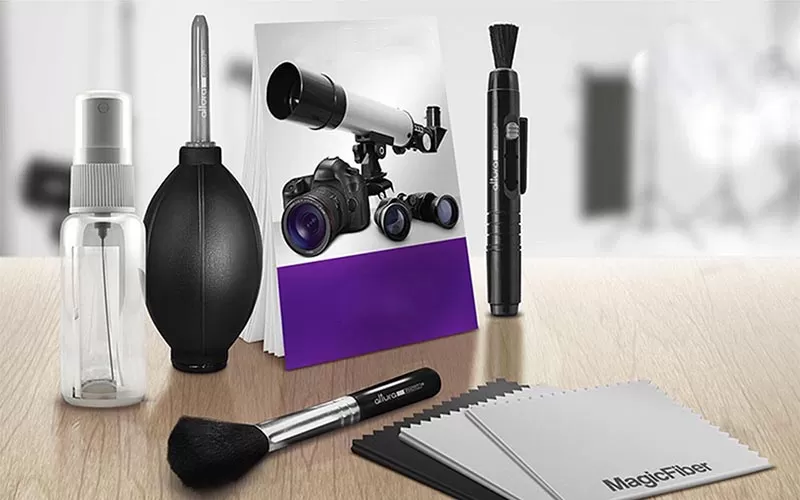
- A manual rubber squeeze blower (the homeowner default)
- A soft lens brush
- A clean microfiber cloth or lens tissues, stored in a pouch so they do not pick up grit
- Dedicated lens-cleaning fluid (safest on coatings)
- Front and rear lens caps; a padded bag
If you only have an aerosol “canned air” blower, keep the can upright so liquid propellant cannot spit onto the glass — that is the Nikon-style caution. A rubber bulb is still better at home: no propellant, no freeze, no surprise wet spray.
How to clean the front (and rear) element
- Work over a clean table. Point the glass slightly down so grit falls away, not into the barrel.
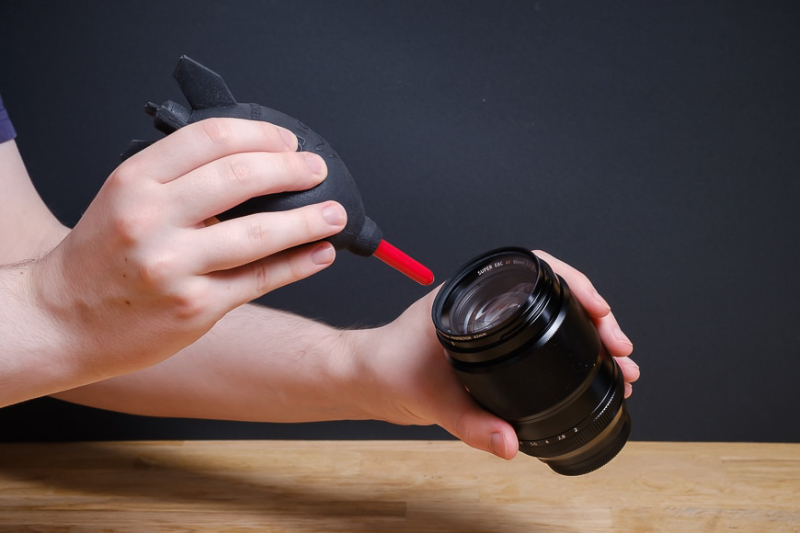
- Squeeze the rubber blower several times to lift sand and dust. Do not wipe grit — that is how coatings get scratched.
- Sweep remaining specks with the soft brush. Light strokes only.
- Stop if the glass looks clean. Recap. Over-cleaning is worse than a little unused dust on the rim.
- For fingerprints or oil, put one drop of dedicated lens fluid on the cloth, not on the glass. Too much liquid can creep into the barrel and electronics.
- Wipe in light circles from the center outward. Use a fresh patch of cloth as you go. No pressure contests — coatings do not need them.
- If a film remains, a dry pass with a clean corner of the cloth. Recap both ends when the lens is off the camera.
Canon, Nikon, Sony, and other DSLR or mirrorless glass all take this same sequence. Check the manual for any model note, but do not treat brand as an excuse to skip the blower.
Do not open the lens
A little dust on internal elements is common and almost never shows in pictures. Do not unscrew the barrel, pop elements, or “clean inside” at home. Disassembly misaligns optics, dumps more dust in, and voids warranties. If internal dust, fungus, or haze is actually in your images, send the lens to the manufacturer or a repair shop.
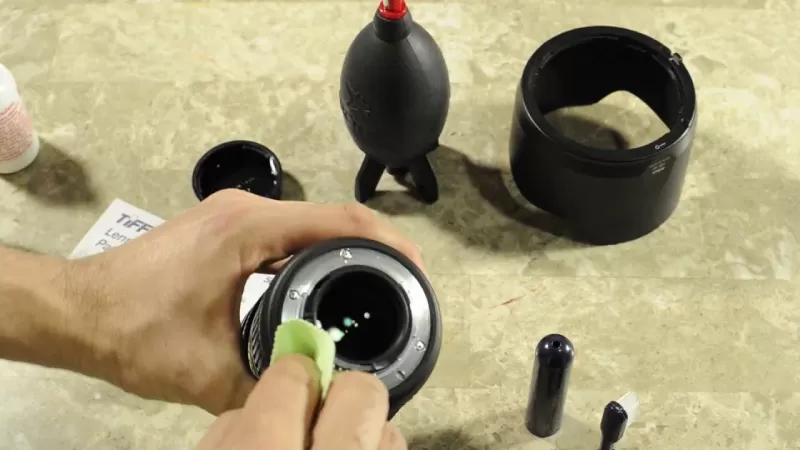
The rear element is still a home surface — blower, brush, then a careful cloth if needed — but it sits closer to the sensor. Cap it whenever the lens is off the body.
Homemade fluid (optional spare)
Dedicated lens fluid is the safer everyday choice for coatings. If you need a spare mix, combine equal parts 99% isopropyl alcohol and distilled water (tap water can leave mineral spots). Shake, then apply a drop to the cloth only — never spray the glass. Use it sparingly; repeated alcohol on some coatings is harsher than a formula made for optics.
Phone camera glass
Phone lenses are small coated windows, not kitchen glass. Blow or brush grit off first, then a gentle dry or barely damp microfiber wipe. Do not hit the camera bump with Windex, all-purpose spray, or a shirt hem. Same rule as interchangeable lenses: fluid on the cloth, not flooded onto the module.
What never to use
- Paper towels, tissues, or a shirt hem. They scratch coatings and shed fibers.
- Windex, ammonia, or household glass spray. They can strip coatings.
- Canned-air liquid dumps. Propellant that sprays out of a tilted can can stain or shock the glass. Prefer the rubber bulb.
- Mouth-blowing. You add saliva and moisture, then smear it.
- Spraying fluid on the lens. Liquid can run into the barrel.
- DIY sensor wet-cleans or lens teardowns. Those are pro jobs.
Keep it cleaner so you wipe less
- Caps on, front and rear, whenever the lens is idle
- A clear UV or protective filter is optional cheap sacrificial glass — useful, not required
- Do not touch the glass with fingers
- Store in a padded bag; keep microfiber cloths washed and grit-free
Frequently asked questions
Can I use glasses wipes on a camera lens?
Only if the packet is lint-free and the formula is ammonia-free. Some “glasses” wipes are too wet or too harsh for expensive coatings. Dedicated lens fluid plus a clean cloth is safer. The same gentle-optics idea applies to sunglasses.
How do I clean a lens with no lens cleaner?
Blower and brush handle most dust. A clean dry microfiber cloth can lift a light smudge. Do not fog the glass with your breath and do not grab a paper towel. Get dedicated fluid before the next greasy fingerprint.
Are dark spots in my photos a dirty lens?
Usually not, if they show at small apertures on a plain background. That pattern is classic sensor dust. Clean the front element if it is actually smudged; leave sensor wet-cleaning to a shop.
Should I use a UV filter?
Optional. It takes fingerprints and light hits instead of the front element. Cheap filters can add flare; a decent one is a spare pane, not a magic shield.
Can I clean dust inside the lens myself?
No. Leave the barrel sealed. Internal dust or fungus is manufacturer or repair-shop work.
Final cautions
- Blower first — never wipe grit into coatings
- Fluid on the cloth, never on the glass
- No paper, Windex, shirt hems, or mouth-blowing
- No DIY sensor wet-cleans or lens teardowns
Lens glass is a five-minute DIY; dusty shelves and smudged windows are a bigger job. Book Pro Housekeepers’ regular cleaning or deep cleaning when the house needs a reset, and keep optics cloths in shape with how to clean microfiber cloths.