
How to Wash Stuffed Animals
To wash stuffed animals without ruining them, start with the care label. If the toy is machine-safe, put it in a mesh bag or pillowcase, wash on a gentle cold cycle with mild detergent, skip bleach and fabric softener, then air dry flat until the stuffing is dry inside. Missing label, glued parts, batteries, sound boxes, sequins, or bean/bead filling? Hand wash or spot clean instead — and keep electronics dry. Freezing does not replace washing dirt and oils. Here is how to clean every common type safely.
What you’ll need
- Mild laundry detergent (or fragrance-free baby detergent)
- Mesh laundry bag or clean pillowcase
- Soft-bristled brush or clean cloth
- Basin or sink with cool water
- Clean towels for blotting and air drying
Check the label first
The care tag tells you whether the toy can go in the machine, needs hand washing, or should only be surface-cleaned. No label? Default to hand wash or spot clean. Vintage, antique, or irreplaceable keepsakes should stay spot-clean only — full immersion risks fading, seam failure, and lost fill.
How to machine-wash stuffed animals
- Brush off loose dust and lint.
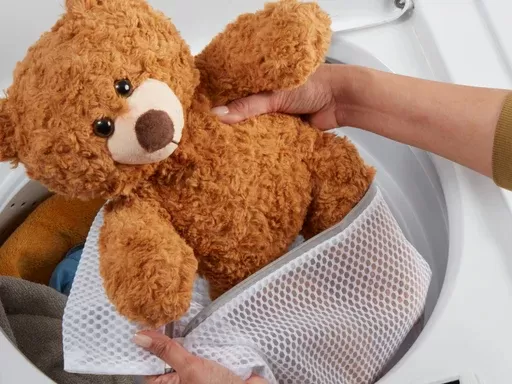
- Place the toy in a mesh bag or zippered pillowcase so seams and eyes do not snag.
- Wash alone or with a few similar soft items on a gentle or delicate cycle in cold water.
- Use a small amount of mild detergent. Skip bleach and fabric softener — softener leaves residue that can irritate skin.
- Remove promptly; blot excess water with a towel. Do not wring or twist.
- Air dry flat (see drying below).
Hand wash and spot clean (no machine)
Hand washing is the safest path when the label is missing or the toy looks delicate.
- Fill a basin with cool water and a little mild detergent.
- Submerge the toy and gently work the surface with a soft brush or cloth — focus on stained areas, do not scrub hard or twist limbs.
- Rinse until the water runs clear and soap is gone.
- Press (do not wring) in a towel to remove excess water, then air dry flat.
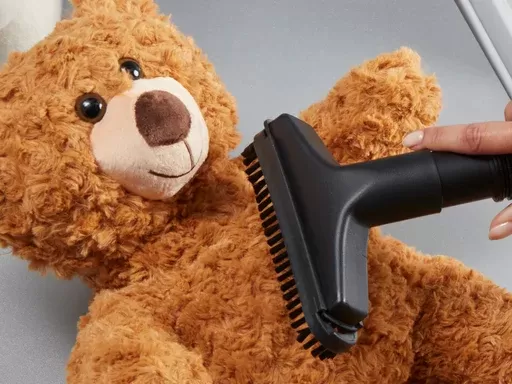
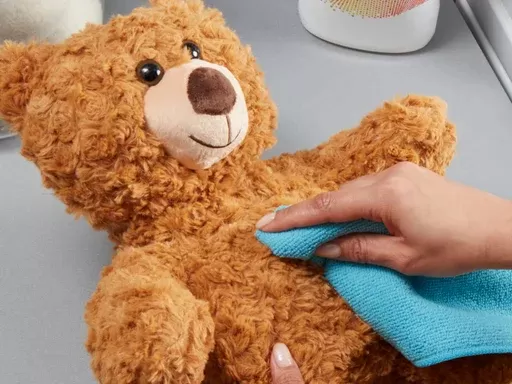
For a lighter refresh between washes: vacuum with a soft brush attachment, wipe stains with a damp soapy cloth then a clean damp cloth, or sprinkle baking soda, wait a few hours, and vacuum it off. A brief steam pass can freshen fabric after a spot test — keep heat off glued eyes, plastic parts, and electronics; steam is optional and not a substitute for washing soil and oils.
Do not unstuff by default
Most stuffed animals have no opening. Cutting a seam to “wash the inside” is an advanced repair project, not routine care. Only remove stuffing if the toy already has a zipper or you are prepared to resew the shell correctly. Otherwise, clean the exterior thoroughly and dry the toy completely so moisture does not sit in the fill.
How to wash big stuffed animals
Oversized plush follows the same rules at a larger scale. Spot-clean obvious stains first. If it fits the machine, use a large mesh bag, cold gentle cycle, and mild detergent. If it only fits a tub or shower, hand wash in cool soapy water, rinse well, and press out water with towels. Lay flat on dry towels and rotate so the core dries — trapped dampness invites mildew.
Can stuffed animals go in the dryer?
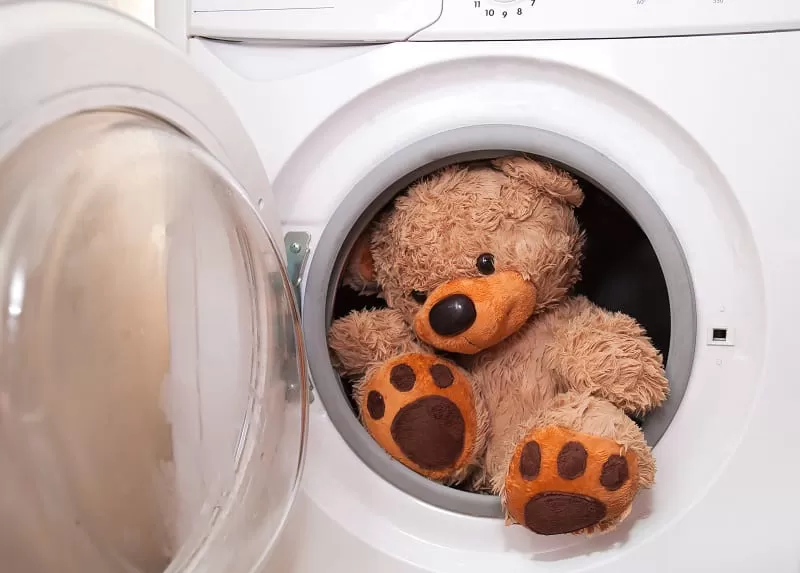
Air dry is the default. Use a dryer only when the care label allows it and the toy has no glue, electronics, sequins, beads, or foam-bead fill. Then choose low or no-heat (air fluff), still inside a mesh bag or pillowcase. Heat and tumbling can melt foam beads, loosen glued features, and warp plastic parts. If the label says “do not tumble dry,” air dry only.
How to dry stuffed animals
Lay the toy flat on a clean towel out of direct sun (sun fades fabric). Flip and reshape as it dries. When the surface feels dry, check seams and thick areas — the middle can stay wet longer. Do not give a damp toy back to a child; mildew can form inside. Once fully dry, fluff the pile gently with a soft brush.
Electronics, batteries, and sound boxes
Remove batteries before any cleaning. If the maker says not to wash, spot-clean only with a barely damp cloth and keep the sound module dry. If electronics sit in a removable pouch, take the pouch out and wash only the fabric shell. Never soak a sealed electronic core. Reinsert batteries only after the toy is completely dry.
Beans, pellets, and foam beads
Containment matters: wash in a tightly closed mesh bag or pillowcase so a small tear does not spill fill into the drum. Use cold gentle wash or hand wash. Air dry only — heat can melt foam beads and clump fill. Do not cut the toy open to empty beads unless you know how to restuff and resew securely.
How often to wash
Every few months is enough for toys that sit on a shelf. Favorites that travel, get hugged at meals, or sleep in the bed may need washing more often when they look or smell dirty. Spot cleaning between full washes keeps dust and oils from building up. For household dust around play areas, see how to get rid of dust.
Do’s and don’ts
- Do read the label; missing label means hand wash or spot clean
- Do use cold water, mild detergent, and a mesh bag for machine washes
- Do air dry until dry inside before play
- Don’t use bleach, fabric softener, hot water, or hard wringing
- Don’t treat freezing as a full clean — it does not remove dirt and oils
- Don’t cut open toys or unstuff them as a default step
- Don’t heat-dry electronics, glued parts, or bead-filled plush
Frequently asked questions
Can I wash stuffed animals with baby clothes?
Only if both are machine-safe, use the same gentle cold settings, and the toy is bagged. For newborn laundry rules, see how to wash baby clothes for new parents.
Does washing kill all germs on a stuffed animal?
No. A proper wash removes dirt, oils, and many everyday soils, but it is not medical disinfection. Focus on thorough cleaning and full drying rather than overclaiming sterilization.
What about vintage or sentimental plush?
Spot clean only. Immersion and machine agitation can destroy fragile fabric and stitching.
Is fabric softener OK?
No. It coats fibers and can bother sensitive skin. Rinse well with mild detergent instead.
Keep play spaces fresh
Clean plush helps, but floors, bedding, and kid zones need regular care too. Pro Housekeepers’ regular cleaning and deep cleaning services keep living areas ready for the toys you just washed.