
How to Clean Outdoor Cushions
To clean outdoor cushions, brush or vacuum off loose dirt, then wash the fabric with 1/4 cup mild soap per gallon of lukewarm water. Rinse thoroughly and air-dry completely so the fill does not stay damp. Spot-clean between washes. On Sunbrella outdoor upholstery, mold and mildew can be treated with 1 cup chlorine bleach plus 1/4 cup mild soap per gallon of water. On other outdoor fabrics, read the care label first and use oxygen bleach if chlorine is not allowed. Machine-wash removable covers only if the furniture maker says the casing comes off — close the zippers, wash cold on delicate, and never put the covers in the dryer.
Match the method to the fabric and the mess
Patio cushions are not one wash. A rain-soaked sewn-shut pad, a Sunbrella lounge cushion with pollen, and a zip-off cover with grill grease all take different amounts of water and chemistry. Check the care tag — or the furniture maker’s sheet — before you mix anything. If there is no tag, keep chlorine bleach off the fabric until you know it is bleach-safe, and default to mild soap plus a full air-dry.
- Dirt and pollen — lift it dry. Wet pollen turns into a yellow paste that you then grind into the weave. Vacuum or brush first, then soap.
- Rain-wet cushions — stand them on edge and dry them before you wash. Stacking wet pads is how mildew starts in the fill.
- Grass stains — dish soap or a borax mix, gentle brush, rinse.
- Food and drinks — blot, then mild soap. Grill splatters need dish soap as a degreaser, not more water.
- Pet hair and marks — vacuum, then a damp rubber-glove wipe to pick hair. Soap only the soiled spots.
Weekly wipe, not a monthly soak
The old habit of “deep cleaning every month” is too aggressive. A full wet wash wears the fabric and drives water into foam you cannot dry. A more honest cadence:
- Weekly: shake or vacuum, wipe with a damp cloth, stand the cushions on edge until they are dry.
- When you see a stain: spot-clean that area the same day instead of waiting for a big wash day.
- As needed or seasonally: a full soap wash, or a mildew treatment only if you actually see growth.
If the furniture collects a lot of dust and pollen, vacuum the covers while they are still dry. Keep the vacuum itself from dumping grit back onto the fabric — how to clean a vacuum covers that — and our guide on how to get rid of dust helps the rooms that share that pollen.
What you’ll need
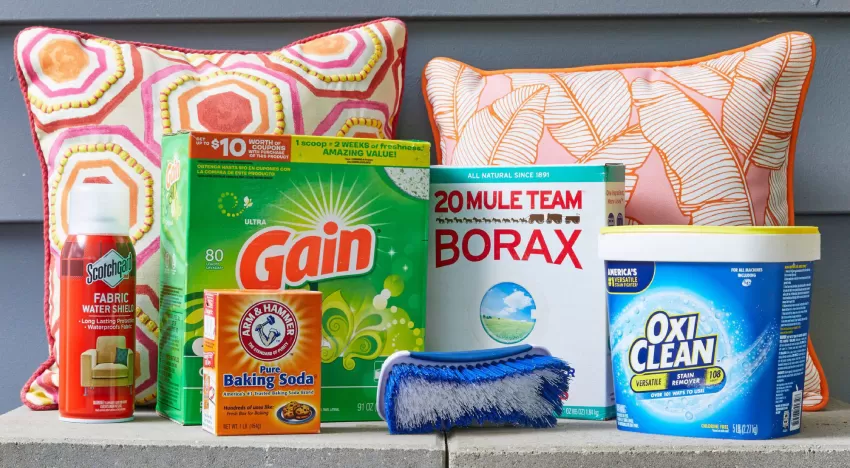
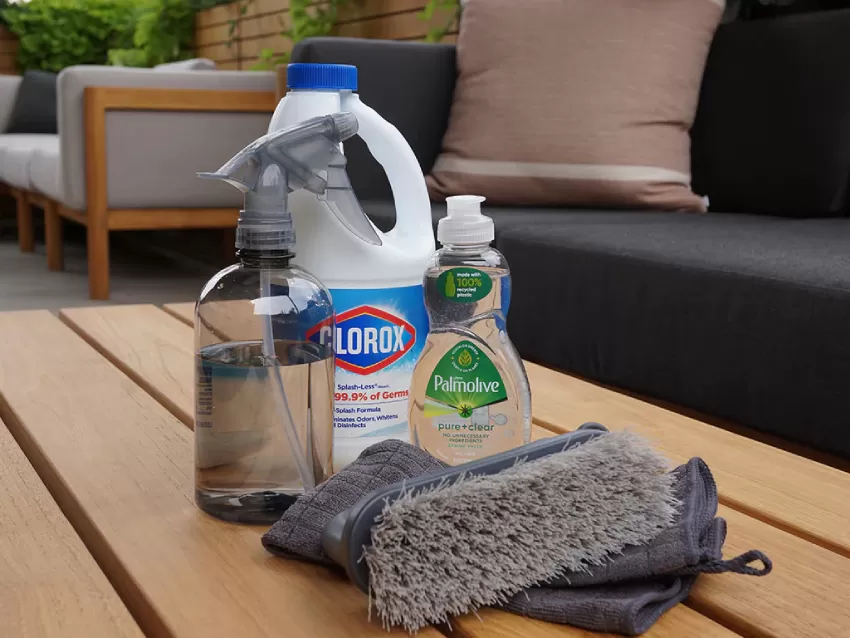
- Soft-bristle brush or sponge (not a stiff deck brush)
- Mild dish soap or laundry soap
- Bucket plus a hose or a second bucket of rinse water
- Vacuum with a brush attachment
- Oxygen bleach (OxiClean-type) for fabrics that cannot take chlorine
- Borax and Dawn for greasy food stains
- Baking soda for odor; white vinegar for odor only — never with bleach
- Chlorine bleach only on confirmed Sunbrella or another label that allows it
- Gloves and eye protection if you use bleach
- A breezy spot to air-dry — never a clothes dryer
Everyday wash for most outdoor fabric
Sunbrella’s outdoor-upholstery care is a solid default for solution-dyed acrylic: 1/4 cup mild soap per gallon of lukewarm water, sponge or a very soft brush, rinse until the soap is gone, air-dry. Work a panel seam to seam so you do not leave a water ring. That same mild mix is the right first wash on most patio fabric when the label does not name a special cleaner.
- Brush or vacuum loose grit while the cushion is dry.
- Mix the soap solution in a bucket. Work outdoors.
- If the cover zips off and the furniture maker allows it, take it off so you are not soaking the fill. If it does not come off, keep the cloth wrung out — do not hose the cushion into a soggy brick.
- Wash the soiled face, then rinse thoroughly. Soap left in the weave holds dirt.
- Stand covers and cushions on edge until they are dry all the way through.
Oxygen bleach when chlorine is not allowed
If the label forbids bleach, or you cannot confirm the fabric, use an oxygen bleach such as OxiClean instead of chlorine. That is the safer default on generic outdoor polyester, olefin, and many printed fabrics.
- Mix the oxygen bleach with warm water per the product label. For a stubborn stain, mix it a little stronger — still within the label.
- Apply with a cloth so the solution sits on the stain. Outdoor fabric is often water-resistant, so you do not need a dripping rag; you do need contact time.
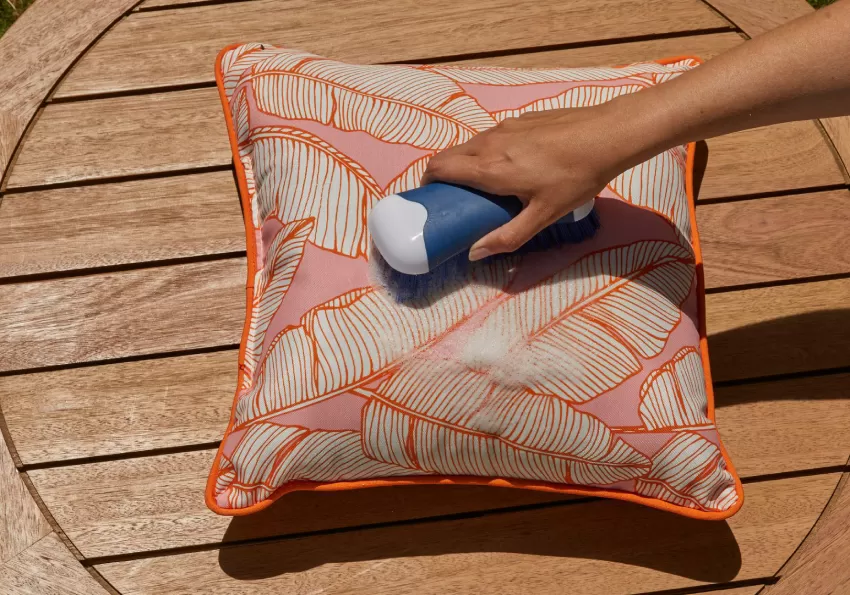
- Scrub gently with a soft brush. Hard scrubbing frays the yarns.
- For set stains, leave the mix on about 15–20 minutes, then rinse with clean water and air-dry in the sun or open air.
Borax and dish soap for grill and food stains
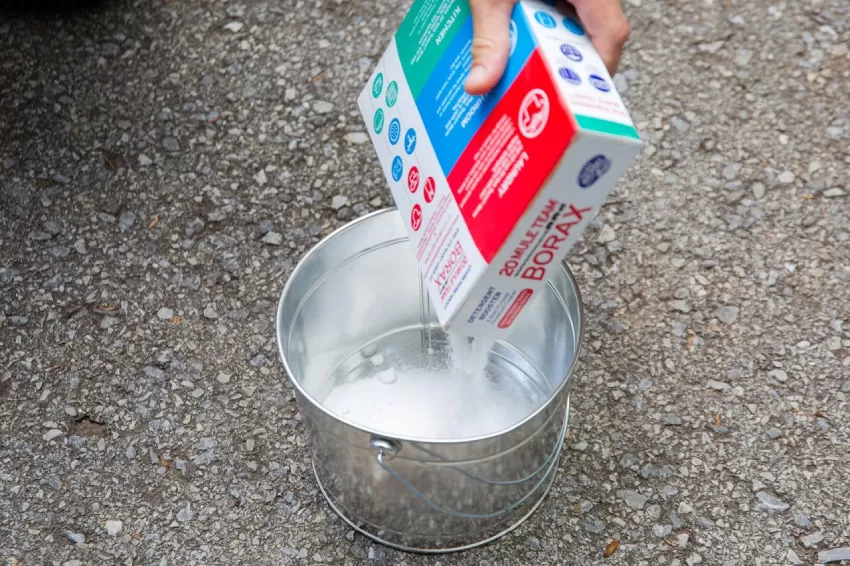
Borax plus Dawn is a good homemade deep-clean for greasy food on covers you can rinse well. It is not a substitute for the Sunbrella mildew mix below, and you still rinse until the residue is gone.
- Mix 4 cups water, 1 teaspoon Dawn (or similar dish soap), and 1 tablespoon borax.
- Shake out or vacuum the cover first.
- Apply a generous amount with a cloth, scrub gently while wet, and let it sit at least 15 minutes.
- Rinse with clean water. If the cover is off, you can soak and then air-dry; if it is still on the cushion, wipe the solution off with a fresh wet cloth so you are not flooding the fill.
Vinegar and baking soda for odor — never with bleach
Musty cushions often need odor control more than more soap. Distilled white vinegar in water (about 2 parts vinegar to 3 parts water) can be sprayed on, brushed, and air-dried. Baking soda works two ways: a few tablespoons dissolved in a quart of warm water as a wipe-down, or a paste on a specific stain or smell, left to dry, then brushed and rinsed.
Do not mix vinegar with bleach, ammonia, or a bleach leftover in the same bucket, sprayer, or rinse water. That combination makes toxic fumes. If you used a bleach mildew mix, rinse until the fabric smells clean, then wait until the cushion is fully dry before any vinegar odor pass.
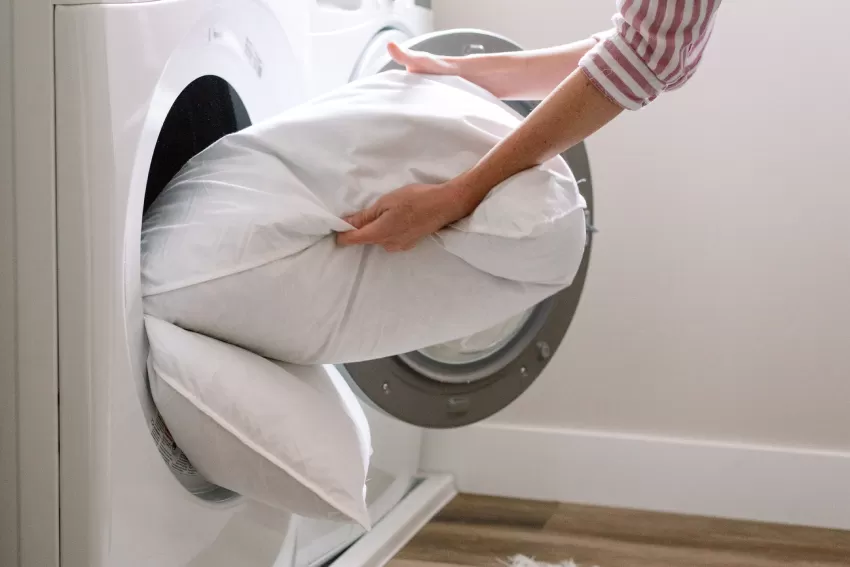
How to machine-wash outdoor cushion covers
Hand-washing is gentler. A machine is only for removable casings, and only if the furniture maker says the cover can come off — cushion construction varies, and yanking a casing can wreck the insert. Never put a whole cushion in the washer. That can ruin the machine and flatten the fill.
- Unzip and remove the covers. Close the zippers so they do not snag.
- Wash alone, cold water, delicate cycle, mild detergent.
- On Sunbrella covers with heavy mildew, the maker allows 1 cup of bleach in that wash. Skip bleach in the machine if the fabric is not Sunbrella or is not labeled bleach-safe.
- Air-dry only. A dryer can shrink the casing so it will not go back on. A clothesline is ideal; skip a dusty, windy day if grit will stick to the damp fabric.
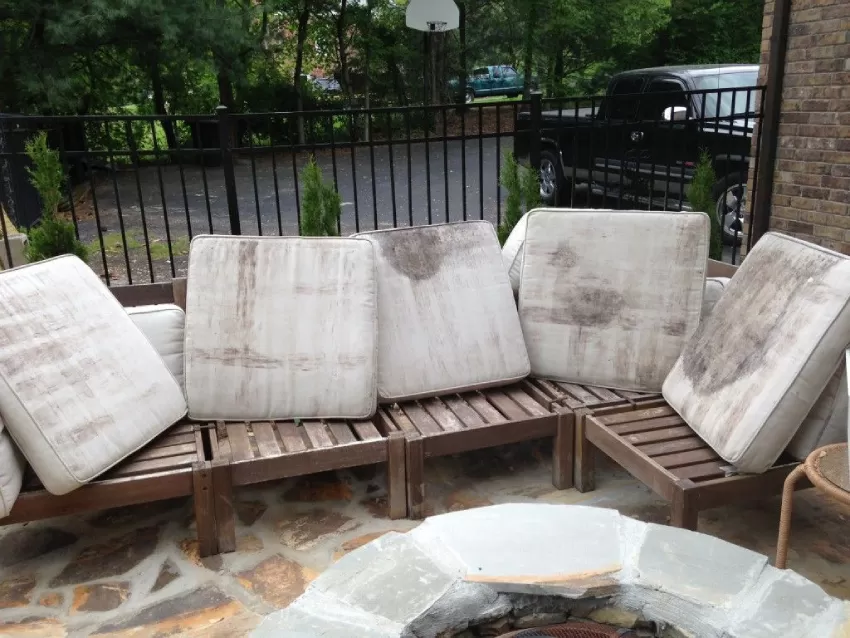
How to clean mildew on outdoor cushions
Mildew is the gray-black, musty film that shows up when furniture stays damp in warm weather, or when cushions sit in a garage all winter. Solution-dyed acrylic such as Sunbrella does not feed mildew, but dirt on the surface can. Treat the fabric you have — do not copy a bleach recipe onto a no-bleach label.
Sunbrella (official outdoor-upholstery mix). Sunbrella’s outdoor-upholstery care uses chlorine bleach on mildew: 1 cup bleach plus 1/4 cup mild soap per gallon of water, or their Renew mildew product. Spray the area, let it soak 15 minutes, agitate with a sponge, clean towel, or very soft brush, rinse thoroughly, and air-dry. Protect nearby non-Sunbrella fabrics, wood finishes, and plants. Wear gloves and eye protection, and work outdoors. Never mix this solution with vinegar or ammonia.
Non-Sunbrella outdoor fabric. Read the label. If bleach is not allowed, use oxygen bleach, a vinegar odor pass after a soap wash, or a dedicated outdoor-fabric mildew cleaner. If the label is silent, stay with oxygen bleach and a full dry rather than guessing with chlorine.
- Work outside. Wear gloves and eye protection if bleach is in the mix.
- Dry-brush loose growth first so you are not painting spores into a wet slurry.
- Apply the mix that matches the fabric. On Sunbrella, use the bleach-and-soap gallon above. On everything else, default to oxygen bleach unless the label says otherwise.
- Soft-brush, rinse until the runoff is clear, then dry the cushion completely — unzip if you can so the fill can breathe.
Cushions that do not unzip
Do not soak the fill. Water that reaches the foam or fiber is slow to leave, and that trapped damp is what mildews from the inside. Spot-clean the surface with a wrung-out cloth, rinse-wipe, then stand the cushion on edge in moving air until it is dry through the core. A fan helps. A plastic storage bag over a still-damp pad does not.
Frequently asked questions
Can I use chlorine bleach on Sunbrella outdoor cushions?
Yes, for mold and mildew, at Sunbrella’s outdoor-upholstery ratio: 1 cup bleach and 1/4 cup mild soap per gallon of water. Rinse thoroughly and air-dry. Everyday dirt still starts with soap and water, not bleach.
Is bleach safe on every patio cushion?
No. Many polyester and printed outdoor fabrics fade or weaken with chlorine. If the label does not allow bleach, use oxygen bleach or a product made for that fabric.
Can I put the whole cushion in the washing machine?
No. Wash covers only, and only when the furniture maker says the casing comes off. Close zippers, cold delicate, air-dry — never the dryer.
How often should I deep-clean outdoor cushions?
Wipe weekly and spot-clean stains when they happen. A full wash is seasonal or when the fabric is actually dirty — not a monthly default.
What if the cushions still smell after washing?
Dry them longer. Damp fill smells like mildew even when the cover looks clean. Once they are fully dry, a baking-soda paste or a vinegar-and-water spray can help odor. Do not follow a bleach wash with vinegar until the fabric has been rinsed and dried.
Final cautions
- Label first; Sunbrella mildew care is not a blanket rule for every outdoor fabric
- Never mix bleach with vinegar or ammonia
- Do not soak non-removable fill
- No dryer heat on covers
- Dry completely before you stack, bag, or cover the furniture
Patio cushions are a straightforward DIY clean; the rooms that lead out to the deck still collect pollen, grit, and food mess. Pro Housekeepers’ regular cleaning and deep cleaning keep those interiors in shape between outdoor reset days.