
How To Remove Wine Stains from Carpet, Fabric, and Walls
To remove a wine stain, blot — do not rub — while it is still wet, then treat by surface. On carpet, dilute with a little cold water, blot again, and lift with salt or a baking-soda paste; vacuum when dry. On washable fabric, salt a wet spill or pretreat with a dish-soap and 3% hydrogen-peroxide mix after a hidden-spot test, then wash cold and air-dry. Heat (dryer, iron, steam) sets the pigment. Never mix hydrogen peroxide with bleach or vinegar. If the wine has already dried, re-wet the spot first — dry pigment does not lift.
Safety first
- Spot-test oxidizers. Three-percent hydrogen peroxide and oxygen bleach can fade dyes, especially on wool, silk, dark cotton, and carpet that was never meant to be bleached. Test a seam, hem, or closet cut.
- Never mix bleach with hydrogen peroxide, vinegar, or ammonia. Pick one chemistry, rinse, then switch if you must.
- Peroxide on walls and wood. It can dull paint and raw wood. A baking-soda paste is milder; do not scrub enamel off the wall.
- Upholstery and mattresses. Do not soak the cushion. Too much liquid drives wine into foam you cannot rinse.
Why red wine hangs on
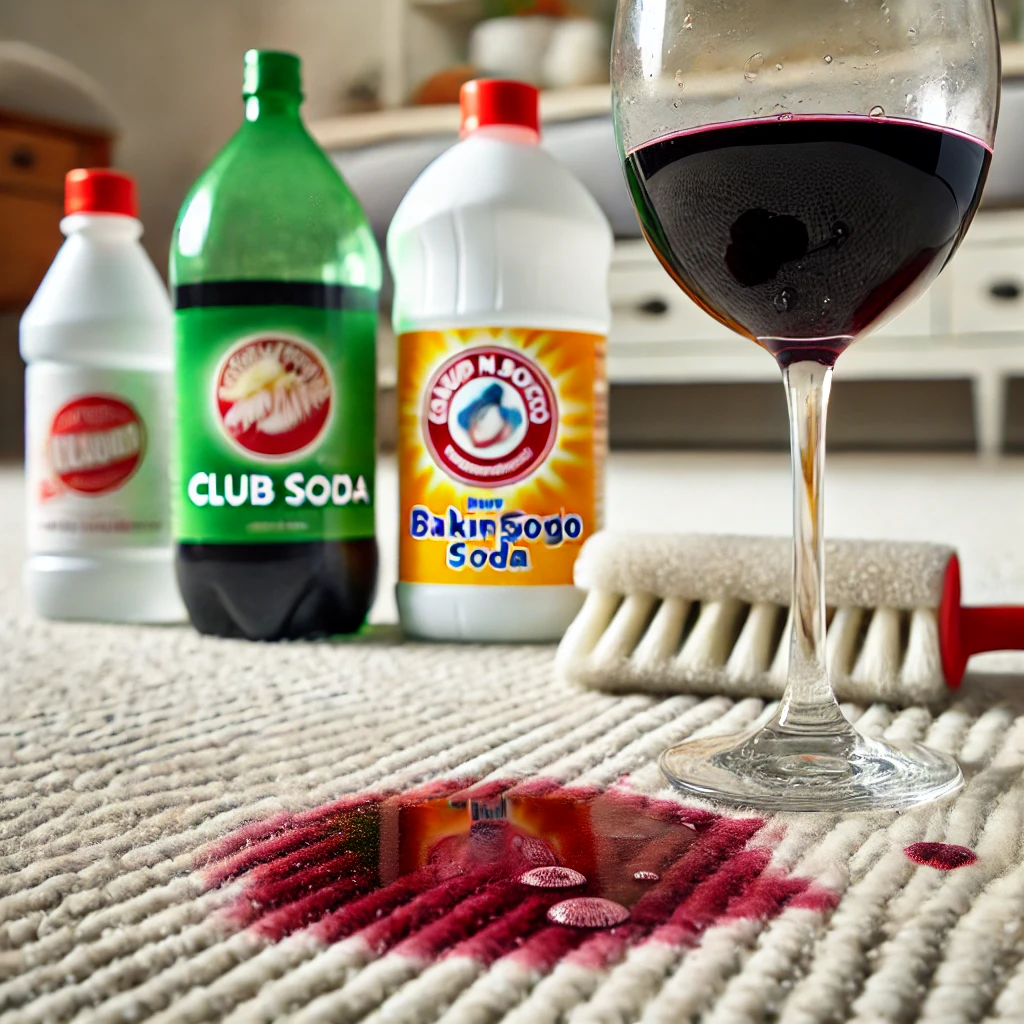
Red wine carries pigment (anthocyanins) plus tannins. On a wet fiber those pigments behave like a weak dye: they spread, then bind as the spill dries. White wine has far less color; treat it the same way, but expect an easier job. Speed matters more than the brand of club soda. Club soda is mostly cold water with fizz, useful as a blotter, not a solvent with magic bubbles.
What you need
- White cloths or plain paper towels (dye in a colored rag can transfer)
- Cold water
- Table salt or kosher salt
- Baking soda
- Mild dish soap
- Vacuum, for carpet
Wine on carpet or a rug
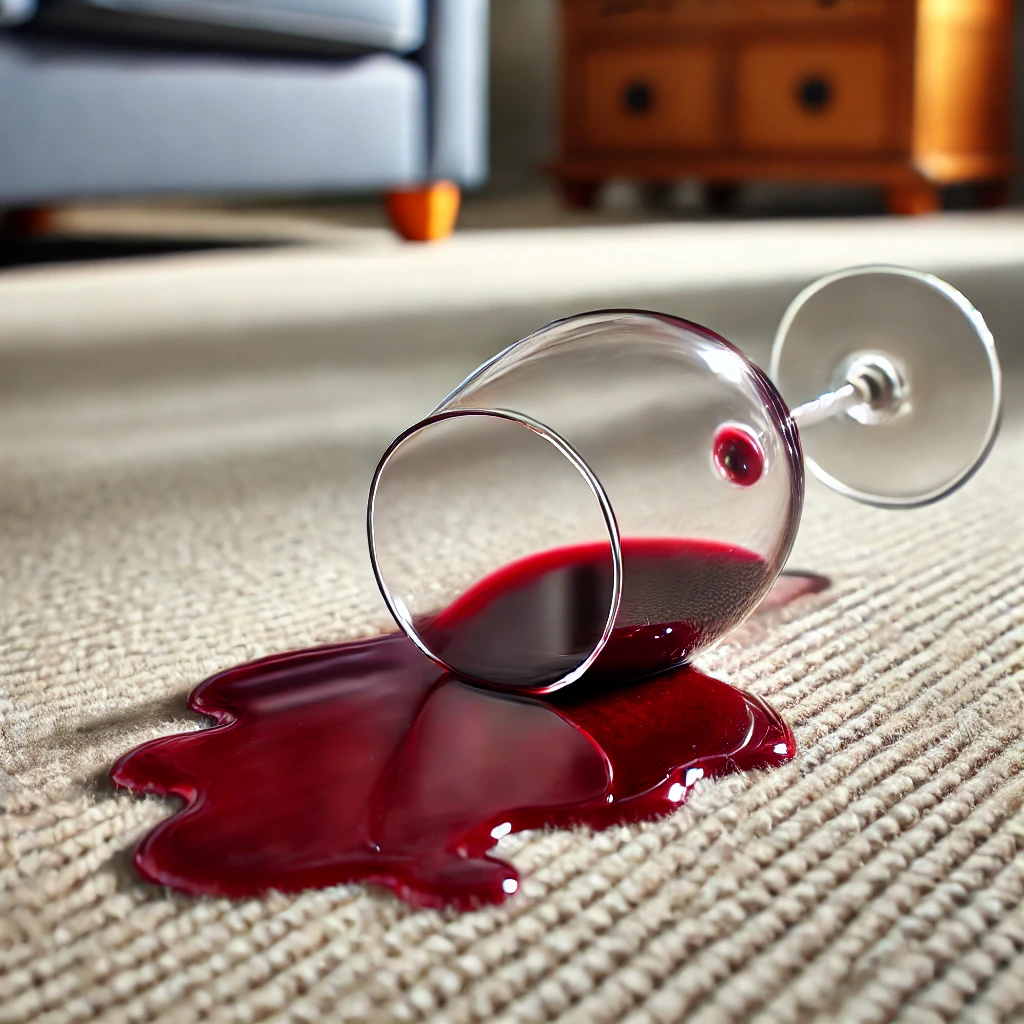
Blot from the outside of the ring toward the center so you do not grow the mark. Press. Do not scrub. Rubbing drives pigment down the pile.
Dampen with a little cold water and blot again. You are diluting, not flooding. On an area rug, put a towel under the stained spot so the spill does not soak the floor.
While it is still wet, cover with salt. Salt pulls liquid up. Let it sit until the salt looks pink or the area is dry, then vacuum.
If a shadow remains, mix a thick baking-soda paste (about three parts soda to one part water), press it on, let it dry fully, and vacuum. Repeat once rather than grinding the pile.
Skip steam and hot water until the color is gone. Heat sets what is left. If the spill went through to the backing and still shows after two dry treatments, soda on the surface will not finish the job.
Wine on clothing and washable fabric
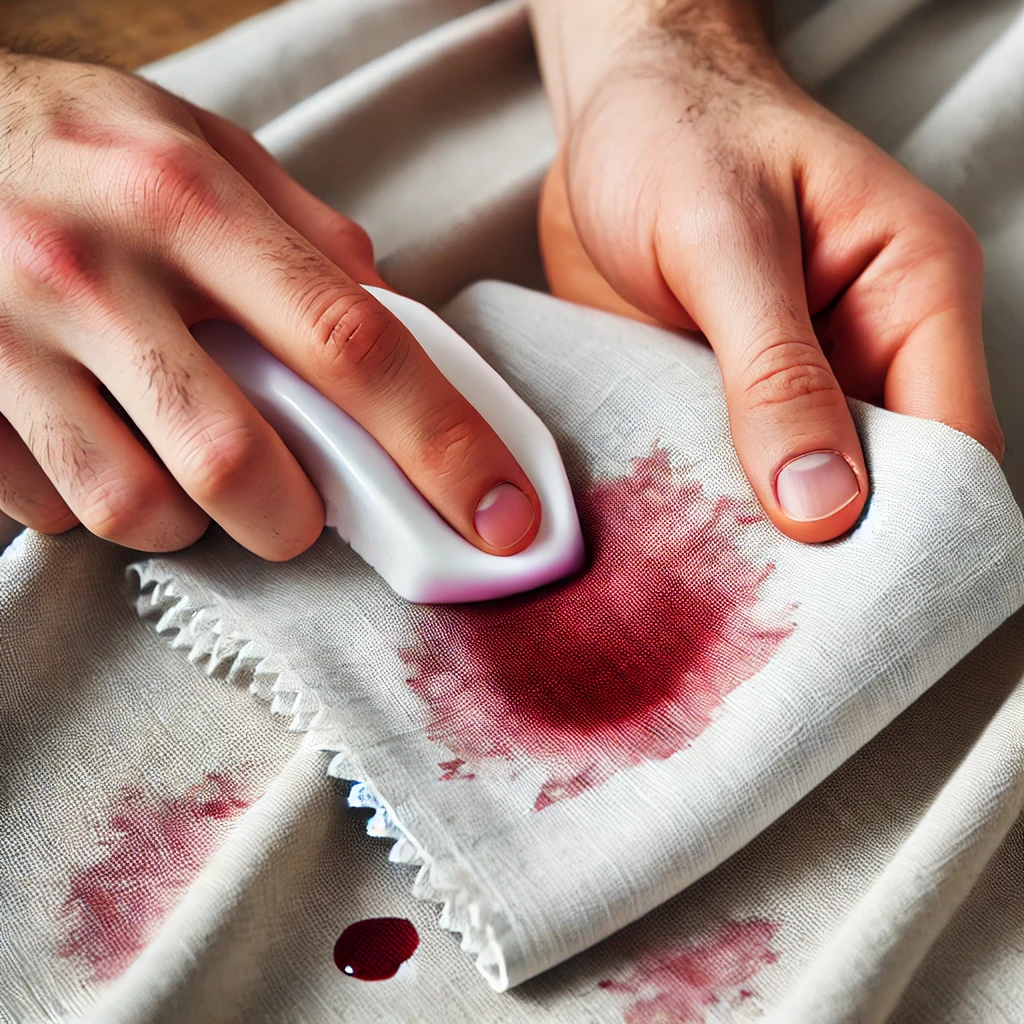
Keep the fabric taut. Blot. If it is dripping, cover the wet area with salt and let the salt cake, then shake it off. Hold the stain under cold running water from the back of the fabric so water pushes pigment out, not deeper in.
For whites and colorfast cottons you have spot-tested: mix equal parts dish soap and 3% hydrogen peroxide, dab, wait up to 30 minutes, rinse cold. Do not use this mix on silk, wool, or anything labeled dry-clean only.
Wash in cold water with your usual detergent. An oxygen-bleach pretreat (follow the box) is the right class of product for a machine-washable load, not chlorine bleach unless the garment is white and marked bleach-safe.
Air-dry. Check in daylight before the dryer. If a ghost remains, pretreat and wash again. One dryer cycle can lock it in. Dry-clean-only garments: blot, do not home-treat with peroxide, and take them to a cleaner the same day. Tell them it is wine.
Wine on upholstery
Same blot-and-dilute logic, less water. Work with a barely damp cloth. A drop of dish soap in cold water is enough for a fresh spill on synthetic fabric. Leather: wipe with a barely damp cloth, dry, then a leather cleaner meant for that finish, not salt, not peroxide. Peroxide can leave a pale patch on pigmented leather and wreck aniline.
Wine on painted walls
Wipe what you can with a damp white cloth. If a pink mark remains, a thin baking-soda paste, applied and lifted without scrubbing, is safer than peroxide. Peroxide paste can leave a dull or lighter patch on latex. Rinse the residue with a clean damp cloth. Put a towel at the baseboard. Wallpaper: skip both pastes. Blot and use the cleaner the paper manufacturer allows, or stop before you take the pattern off.
Dried or set stains
Re-wet with cold water, then run the same method. Old red wine on cotton sometimes still lifts with an oxygen-bleach soak. Old red wine on a pale wool rug often will not. Do not jump to chlorine bleach on a maybe-white carpet: it yellows nylon and strips dye you cannot put back.
What not to do
- Rub, steam, or iron to help it along
- Pour club soda from a height (you just spread it)
- Mix chlorine bleach with peroxide to be sure
- Put the garment in the dryer to check if it worked
- Use a colored party napkin as your only blotter
A spill at a dinner party is one mark. A house that needs the carpet, upholstery, and kitchen reset after guests is a different job. For a whole-home reset that is not a science experiment on one stain, deep cleaning from Pro Housekeepers covers rooms and hard surfaces (not professional carpet extraction).
FAQ
Does white wine remove red wine?
No. That leftover trick just adds more liquid. Cold water and blotting do the same job without extra sugar and acid.
Can I use vinegar?
A little white vinegar in cold water can help on some washable fabrics after you have already blotted. Do not mix it with bleach or peroxide. It is not the first tool on carpet.
Is the stain permanent?
It can be, especially after heat or after it has sat in the backing. Fresh and patient beats dry-and-set almost every time.
Will baking soda bleach the carpet?
No. Peroxide and chlorine bleach can. Baking soda is an absorbent and a mild abrasive. Vacuum it out when dry.