
Pet-Safe Cleaning Products: What to Use and Avoid
Pet-safe cleaning is less about a branded “natural” bottle and more about ingredients, ventilation, and dry-before-pets-return habits. “Natural” does not automatically mean safe — especially for cats — and many essential oils, phenols, and undiluted acids can harm pets. Prefer fragrance-free or lightly scented plant-based cleaners, enzymatic formulas for urine, and simple baking-soda methods; check ASPCA and EPA guidance, keep pets off wet surfaces, and store products out of reach.
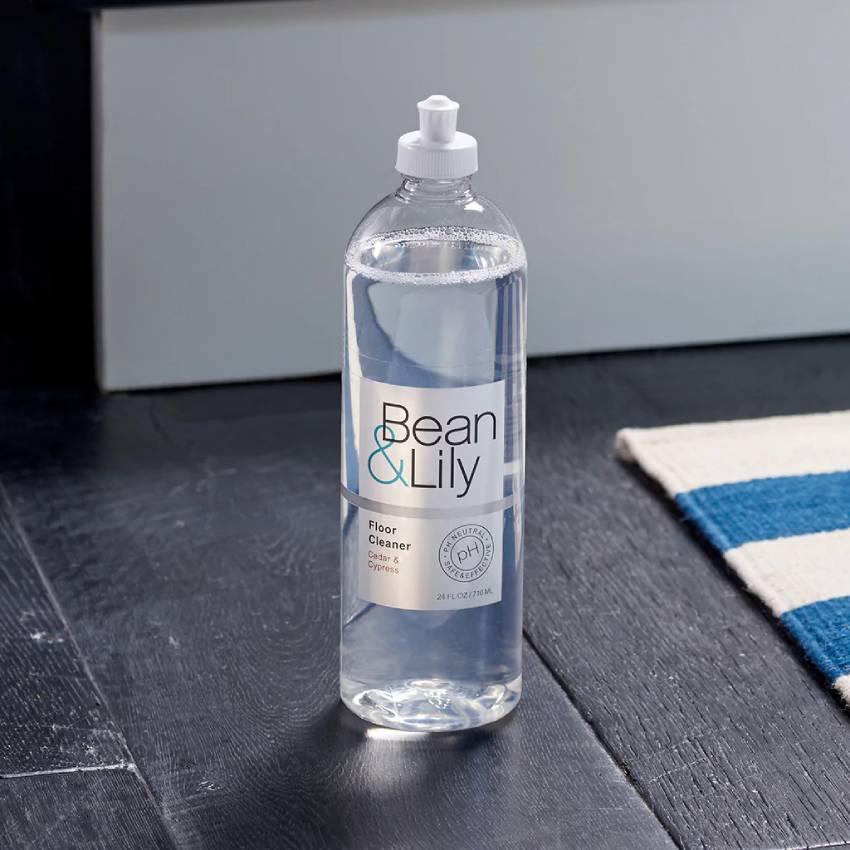
Natural is not the same as safe
Marketing language on cleaning bottles is not a toxicology report. Essential oils (tea tree, citrus, peppermint, eucalyptus, cinnamon, pine, wintergreen, and others) appear in many “green” cleaners and can be toxic to cats and dogs when licked, absorbed, or heavily diffused. Phenols in some pine and coal-tar disinfectants are especially dangerous to cats, which metabolize them poorly. The Humane Society and ASPCA both stress reading ingredient lists, ventilating, and keeping animals away until surfaces are dry.
If a pet ingests a cleaner, contact a veterinarian or the ASPCA Animal Poison Control Center (888-426-4435; fees may apply) right away — do not wait for “home remedies.”
Principles that actually protect pets
- Read the full ingredient list, not the front label.
- Ventilate while you clean; fumes matter as much as residue.
- Rinse food-contact and bowl areas after any cleaner.
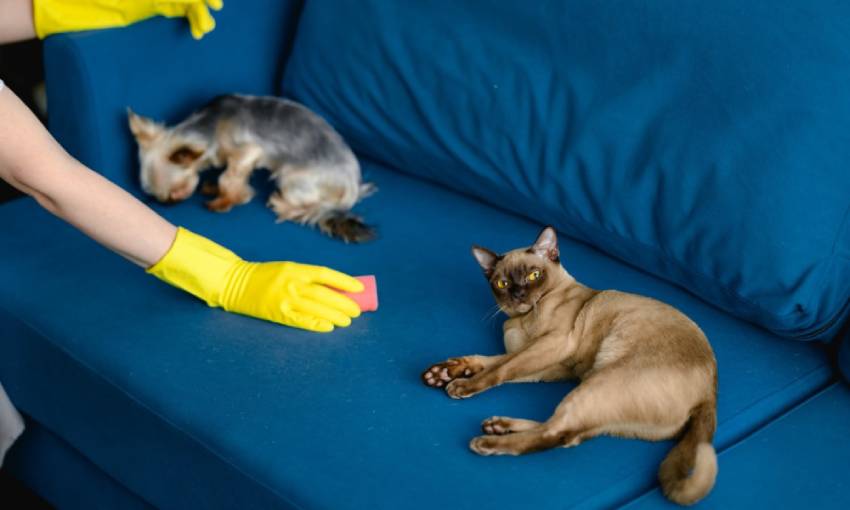
- Keep pets off floors and furniture until fully dry — “pet-safe once dry” is the honest standard for many disinfectants.
- Store bottles high and closed; curious pets chew caps.
- For urine and vomit, use enzymatic cleaners that break down proteins instead of perfume cover-ups.
What to use (categories, not a ranking contest)
We are not inventing a #1 product list. These are categories with known, practical roles:
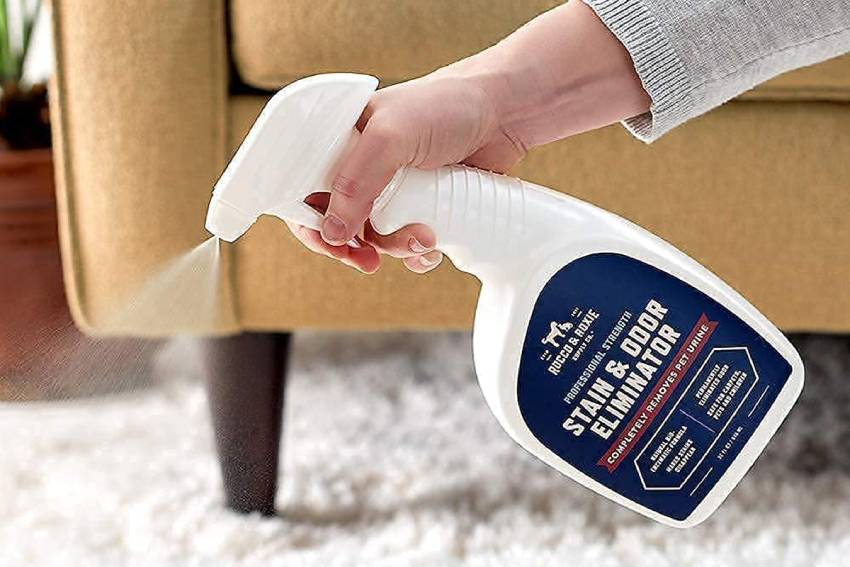
- Enzymatic stain/odor removers: Best for pet urine on carpet, rugs, and washable upholstery. Enzymes digest the organic mess so odor does not pull pets back to the same spot. Follow dwell time; blot, do not flood padding. Related reading: removing pet odor from carpet and rug.
- Unscented or free-and-clear laundry detergent: Wash pet beds, blankets, and soft toys. Fragrance and dye are common skin irritants.
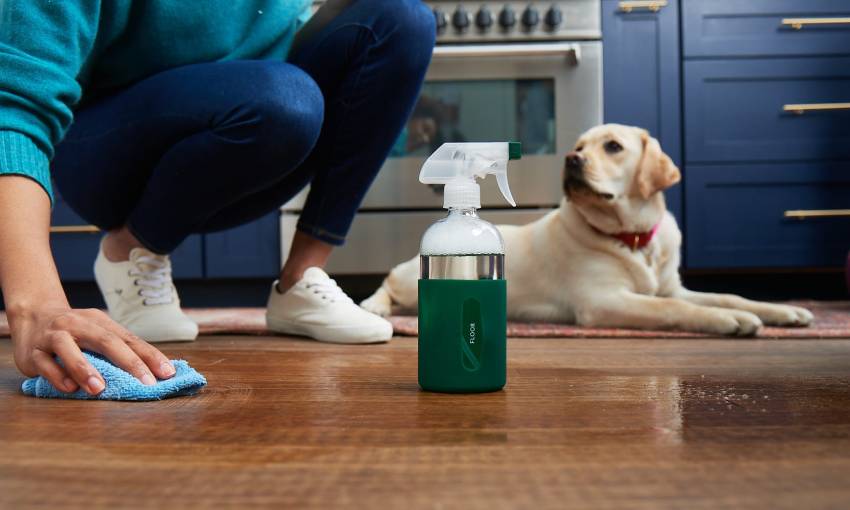
- Mild castile soap (unscented for cat homes): Dilute well for floors and general wipe-downs. Skip peppermint/eucalyptus/citrus scented versions around cats.
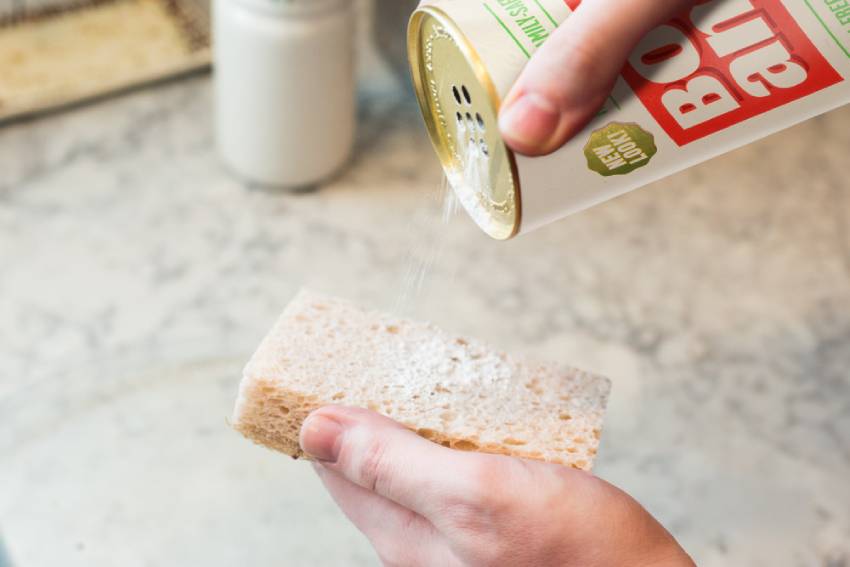
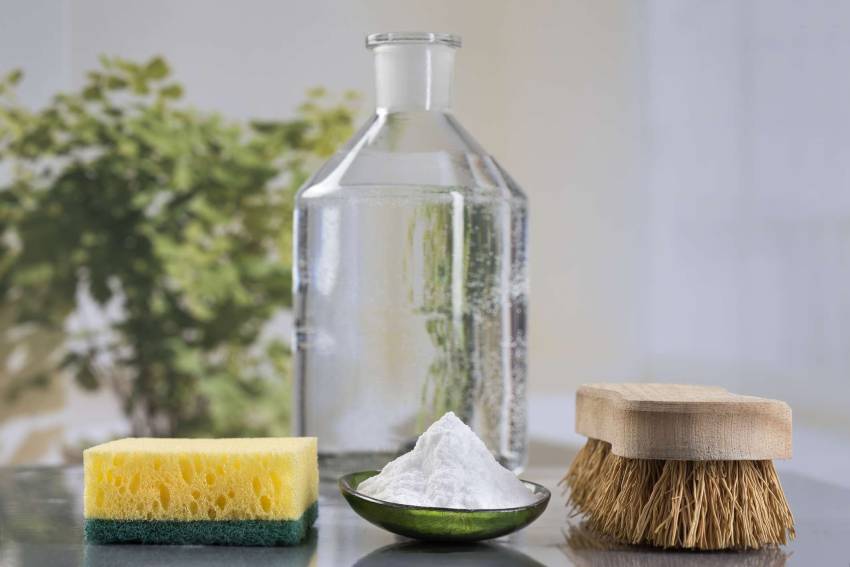
- Baking soda: Low-toxicity deodorizer for carpets and beds (sprinkle, wait, vacuum). Still do not let pets eat piles of it.
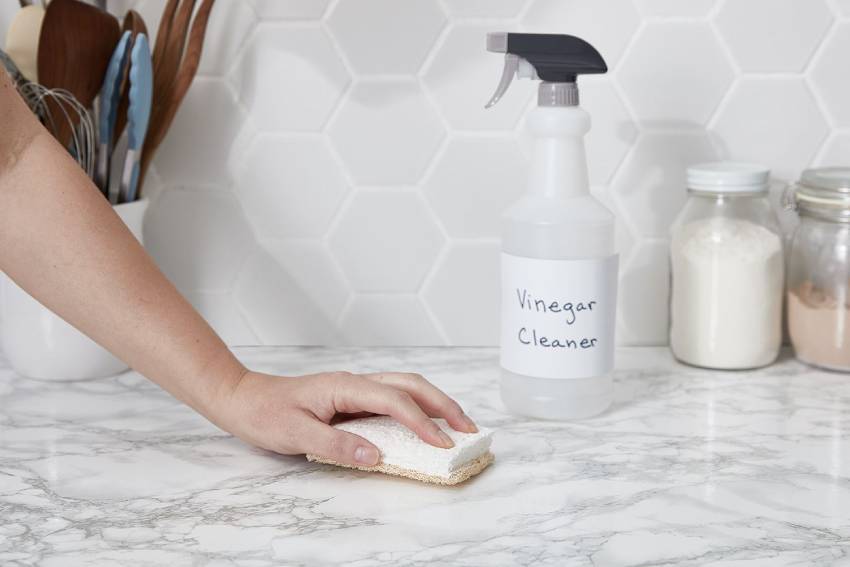
- Diluted white vinegar sprays: Useful deodorizer on many sealed floors — but see caveats below.
- Simple powder cleansers without chlorine or heavy fragrance: Fine for some kitchen scrubbing jobs when rinsed well; keep pets clear during use.
Vinegar, essential oils, and cats
Diluted vinegar is generally low-risk for dogs on sealed surfaces and is cheap for everyday wipe-downs. Honest limits:
- Vinegar cleans and deodorizes; it is not an EPA-registered disinfectant by itself for pathogen kill claims. After illness, use a labeled disinfectant and keep pets off until dry.
- Never use vinegar on marble, limestone, travertine, or other acid-sensitive stone.
- Do not mix vinegar with bleach.
- Essential-oil “boosts” in DIY sprays are a common cat hazard — skip them.
What to avoid around pets
- Chlorine bleach fumes and wet residue — irritating; never mix with ammonia or acids.
- Ammonia-heavy glass cleaners — harsh airways; the smell can also resemble urine and encourage marking.
- Phenols / phenolic disinfectants — high risk for cats.
- Isopropyl alcohol cleaners on surfaces pets lick.
- Essential-oil concentrates and oil diffusers in small rooms with cats.
- Antifreeze, toilet bowl tablets, and mothballs anywhere pets can reach — classic poison risks called out by ASPCA-type guidance.
Disinfecting when you truly need it
Everyday pet-area cleaning rarely needs hospital-level disinfection. When you do (illness, raw-food spills, certain parasites per vet advice), pick an EPA-registered product with a clear use site, follow the listed contact time, ventilate, and keep animals off until dry. Rinse bowls and feeding mats. Do not assume “plant-based wipe” equals registered disinfectant.
Frequently asked questions
What cleaner is safest around dogs?
Unscented mild soaps, baking soda, diluted vinegar on compatible surfaces, and pet-labeled enzymatic cleaners for accidents — always dry-before-return. Ask your vet if your dog has respiratory or skin issues.
Is Mrs. Meyer’s (or similar scented “natural” brands) safe?
Many are plant-based but scented with essential oils. For cat households especially, prefer fragrance-free options and read the label rather than trusting the brand story.
Are disinfecting wipes pet-safe?
Some market themselves that way; many still leave residues you would rather keep off licking surfaces. A cloth plus a known cleaner you control is often better for bowls and crates.
Where can I verify product claims?
Check EPA Safer Choice or product registration language for disinfectants, and ASPCA toxic-substance resources for ingredient concerns — not influencer roundups.
Pet-safe cleaning is mostly boring discipline: fewer fragrances, better ventilation, enzymatic urine care, and dry floors before paws return. For broader product literacy see natural cleaning products and how to use bleach safely. When the whole house needs a reset, Pro Housekeepers’ regular cleaning and deep cleaning teams work room by room while you keep pet zones product-smart.