
How To Clean a Freezer
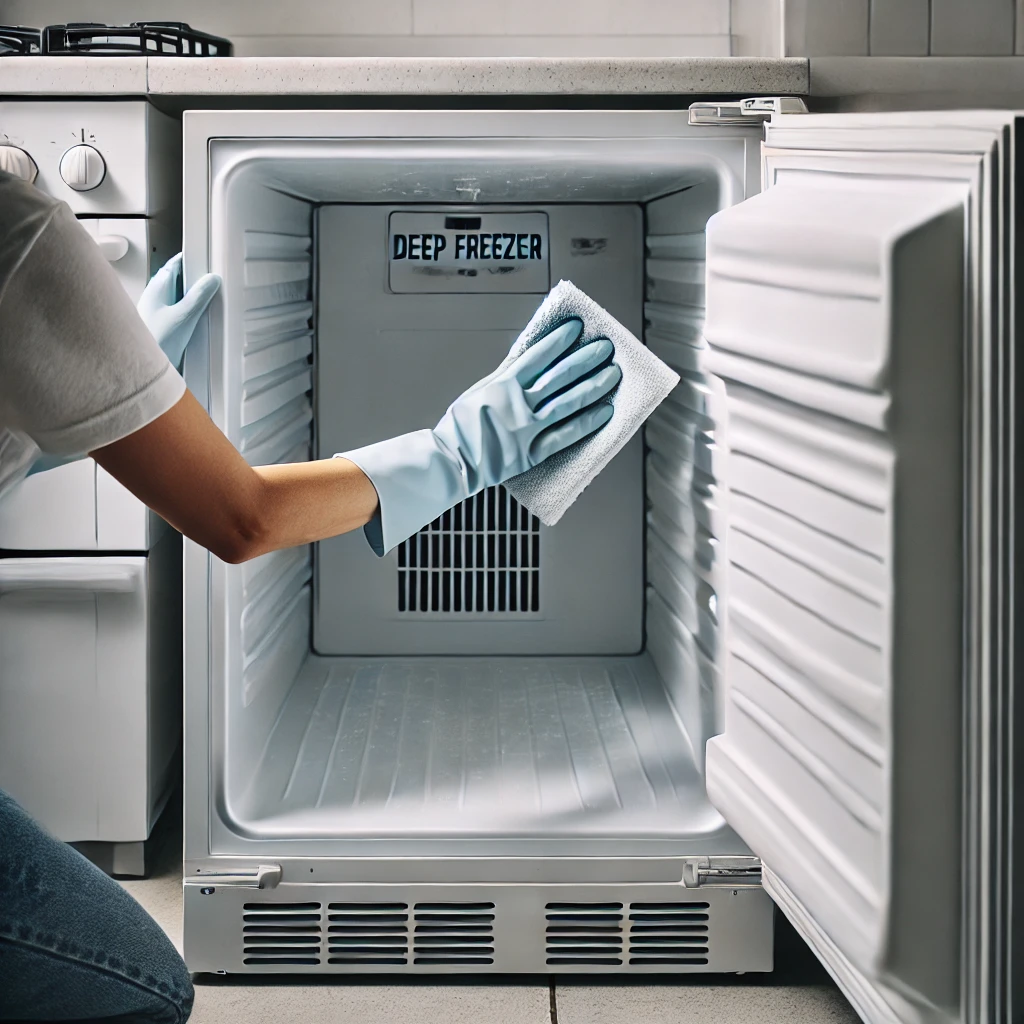
To clean a freezer, move the food into a cooler, then wipe every interior surface with equal parts white vinegar and warm water. Scrub stuck spots with a baking-soda paste, and dry the box completely with a clean cloth so leftover moisture does not freeze into a new crust. You only need a full defrost if ice is thick. If you defrost, unplug the unit first and let the ice melt. Never chip it with a knife. After a power outage, follow FoodSafety.gov time-and-temperature rules, not smell tests, and never mix vinegar with bleach if you disinfect a thawed, dirty box.
Safety first
- Unplug before you defrost or before you vacuum coils. Water and a live compressor are a bad pair. Keep towels between meltwater and the outlet.
- Do not pry ice off. A knife, screwdriver, or ice pick can puncture the liner and the refrigerant lines behind it. That is an appliance replacement, not a cleaning shortcut. A fan aimed at the open box speeds melting. Catch water in towels and a pan.
- Never mix vinegar and bleach. If you use diluted bleach after a long outage and visible mold, rinse the vinegar method out first, wait, then bleach, then rinse the bleach off because the interior touches food packaging.
- Food safety is not a sniff test. FoodSafety.gov: a full freezer stays cold about 48 hours if the door stays shut; a half-full freezer about 24 hours. Food that stayed at 40 F or below, or still has ice crystals, can usually be refrozen. When in doubt, throw it out. Do not taste it to check.
Why bother
Ice on the walls makes the compressor work harder. Spills and open boxes seed odor into everything else. The U.S. Department of Energy notes that cleaning and de-icing help the appliance run efficiently. You do not need a calendar lecture: if you cannot see labels on the back wall, or the box smells like leftover fish sticks, it is time.
What you need
- Cooler and ice packs for the food
- Towels and a shallow pan for meltwater
- White vinegar and warm water
- Baking soda and a soft brush or old toothbrush
- Microfiber cloths
- Optional: a box fan, an open box of baking soda to leave inside after
A normal clean (little or no ice)
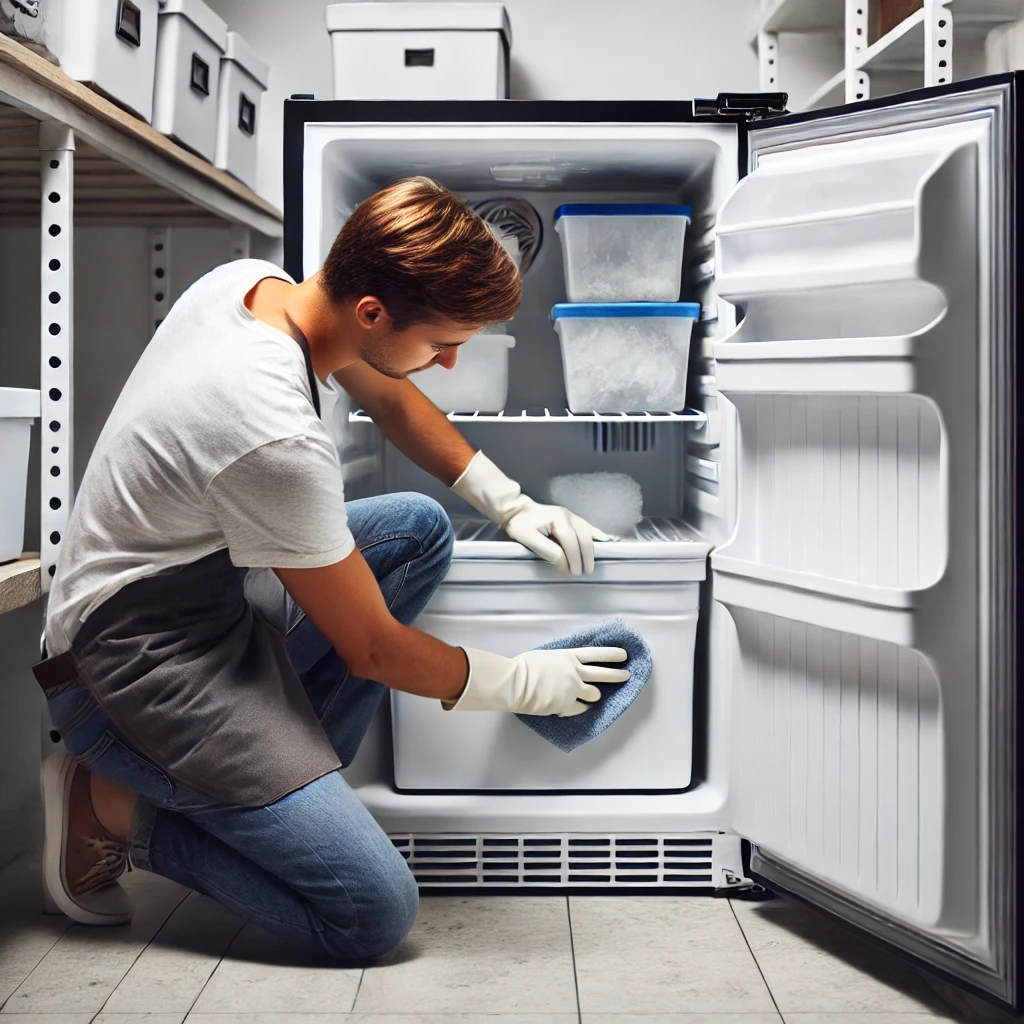
- Shift food to a cooler. Work quickly so the door is not open for an hour.
- Take out shelves, bins, and ice trays. Wash those in warm soapy water, rinse, and let them dry on a towel.
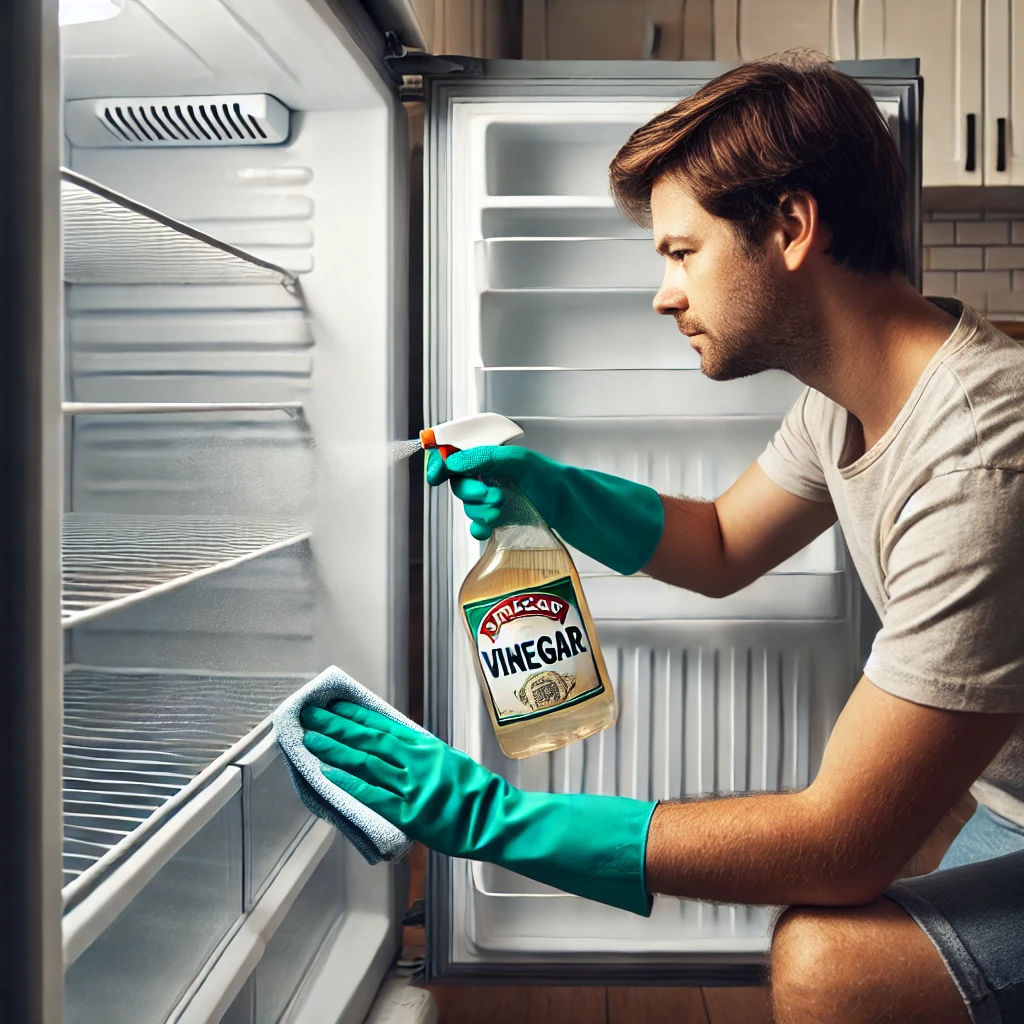
- Wipe walls, floor, and ceiling of the box with 1:1 white vinegar and warm water. Vinegar is food-safe at this dilution and cuts odor. Wipe, then dry. You do not need a long dwell.
- For sticky drips, make a paste of baking soda and a little water. Use it after the vinegar wipe has been dried off. The two cancel if you mix them. Scrub gently, wipe residue, dry.
- Dry every surface, including door gaskets. Moisture left behind becomes ice.
- Put dry shelves back. Return food. Toss anything freezer-burned beyond use or unlabeled food you will not eat.
When you must defrost
Frost-free uprights rarely need this. Chest freezers and older units do when ice is thick enough to steal space or wedge the lid. Unplug. Towels on the floor. Pan for meltwater. Open the door and aim a fan at the box. Scoop loose ice into a bucket as it lets go. Do not chip. When the walls are bare, run the vinegar-water wipe, dry hard, plug back in, and wait until the box is cold before food goes back. A cheap appliance thermometer should read 0 F.
Door gasket, drain, and coils
Wipe the gasket folds. Grit there breaks the seal and makes more frost. If your model has a defrost drain, make sure it is not packed with crumbs. On a freezer you can pull out safely, unplug and vacuum dust off the condenser coils (usually on the back or underneath). Dusty coils make the machine run hot. If you cannot move it without wrecking the floor, skip the coils or hire an appliance tech. This is not a Pro Housekeepers add-on.
After a power outage
Keep the door shut as long as you can. FoodSafety.gov: about 48 hours for a full freezer, about 24 hours if it is half full. Then check temperature, not odor. Still icy, or 40 F or below, can usually go back in. Soft, warm, or mystery meat gets bagged and tossed. A long thaw can leave mold. Vinegar-water handles most of that. If you step up to diluted bleach, rinse the box with water afterward so you are not storing food next to bleach residue. Do not combine that step with vinegar in the same wipe.
Leave the empty, unplugged freezer open with a fan if odor remains. An open box of baking soda inside after it is cold again is the boring method that works. Vanilla on a cotton ball is a scent cover, not a clean.
Move-out and move-in visits are when a neglected freezer usually gets emptied and wiped. Moving cleaning from Pro Housekeepers includes appliance interiors as part of that deeper reset.
FAQ
Do I have to defrost every time?
No. Only when ice is thick. A frost-free unit still needs a wipe and a dry-out.
Can I use soap inside?
Yes on removable parts. If you soap the walls, rinse so you are not leaving film on food packaging, then dry.
Is freezer burn unsafe?
It is a quality problem (dry, grayish spots from air). Food kept frozen is generally a safety question of time-and-temperature, not of freezer burn alone. Cut off the dry bits or toss food you will not eat.
How often?
A quick wipe when you have a spill. A real empty-and-wipe a few times a year, or whenever ice or odor shows up.