
How to Clean Hair Dye Off Skin Right Now
Pro Housekeepers is a Tampa-based nationwide housekeeping company (since 2015). This guide shows how to clean hair dye off skin safely — starting with soap and oil, escalating only as needed, protecting facial skin, and preventing stains next time with a Vaseline barrier and gloves.
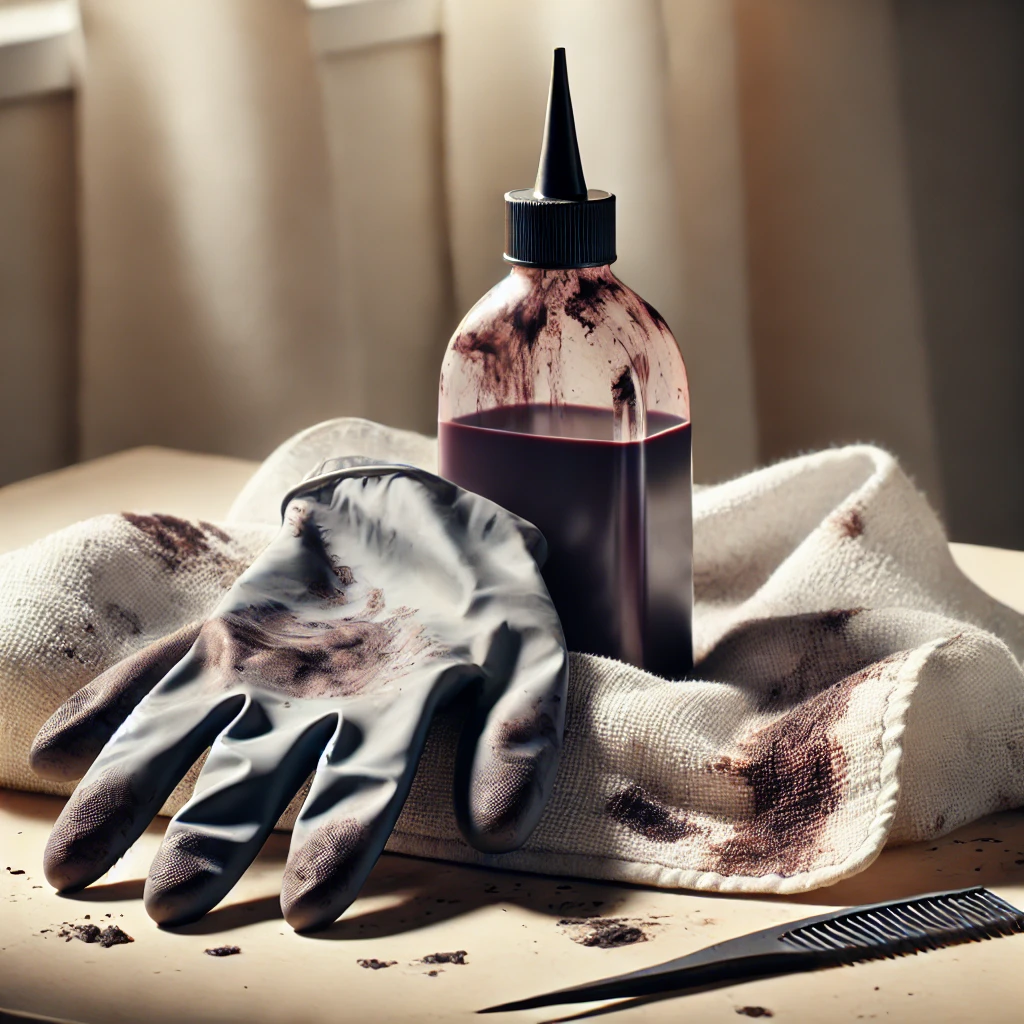
Hair dye is formulated to bond with keratin in hair. Skin’s outer layer also contains keratin, so stray color clings to the hairline, forehead, ears, neck, and hands. Those stains are almost always temporary. Start gentle: harsh scrubbing and nail-polish remover on the face cause more damage than leftover tint.
Why dye sticks to skin
During application, dye can drip or smear onto skin before it is rinsed. Permanent and demi-permanent colors penetrate more than temporary rinses, so they need a bit more contact time with oil or a mild abrasive paste. Nails stain easily too — treat hands separately from the face.
What to use (and what to skip on the face)
- Gentle facial cleanser or dish soap (hands)
- Olive oil, coconut oil, or petroleum jelly (Vaseline)
- Isopropyl rubbing alcohol on cotton (hands and sturdy skin only)
- Baking-soda paste (mild) or baking-soda toothpaste used very gently
- Cotton pads, soft cloths, gloves, plastic wrap or shower cap for overnight treatments
Safety: never use acetone nail-polish remover on the face or near eyes. Do not scrub until skin is raw. If you develop swelling, hives, or breathing trouble after dyeing, seek medical care — that is an allergy, not a stain problem. Always patch-test dye 48 hours before coloring.
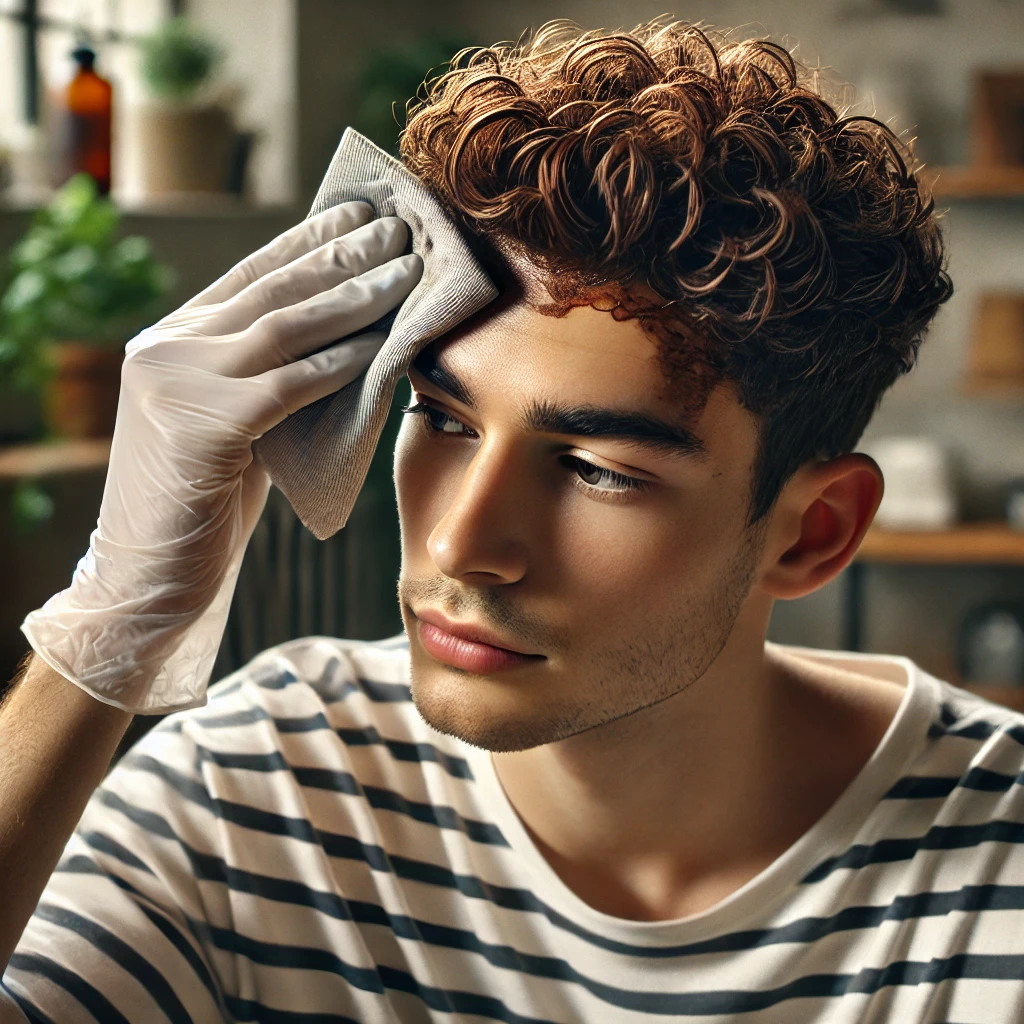
Forehead and hairline (gentle first)
- Wash with a gentle facial cleanser and warm water, rubbing softly in circles.
- If tint remains, dab a tiny amount of baking-soda toothpaste or a thin baking-soda-and-water paste on a cotton swab and massage very gently for 30–60 seconds.
- Rinse; stop if the skin stings or reddens.
- For stubborn spots, switch to the overnight oil method below instead of scrubbing harder.
Hands and nails
- Wash with dish soap and warm water — soap often lifts fresh dye.
- Wipe stains with a cotton ball dampened with rubbing alcohol; refresh the cotton as dye transfers.
- Make a 2:1 baking-soda-to-water paste, rub gently, wait five minutes, rinse.
- For nails, a little acetone on a cotton swab can help after you have protected cuticles with oil — keep acetone off facial skin.
Overnight oil or Vaseline method
- Wash and dry the stained area.
- Apply a thin layer of olive oil or Vaseline over the stain.
- Cover: shower cap for the hairline, gloves for hands, or a bandage/plastic wrap elsewhere so bedding stays clean.
- Leave about eight hours.
- Wipe off oil in the morning and wash with mild soap.
Prolonged oil contact loosens dye without abrasion — ideal for facial skin that cannot take scrubbing.
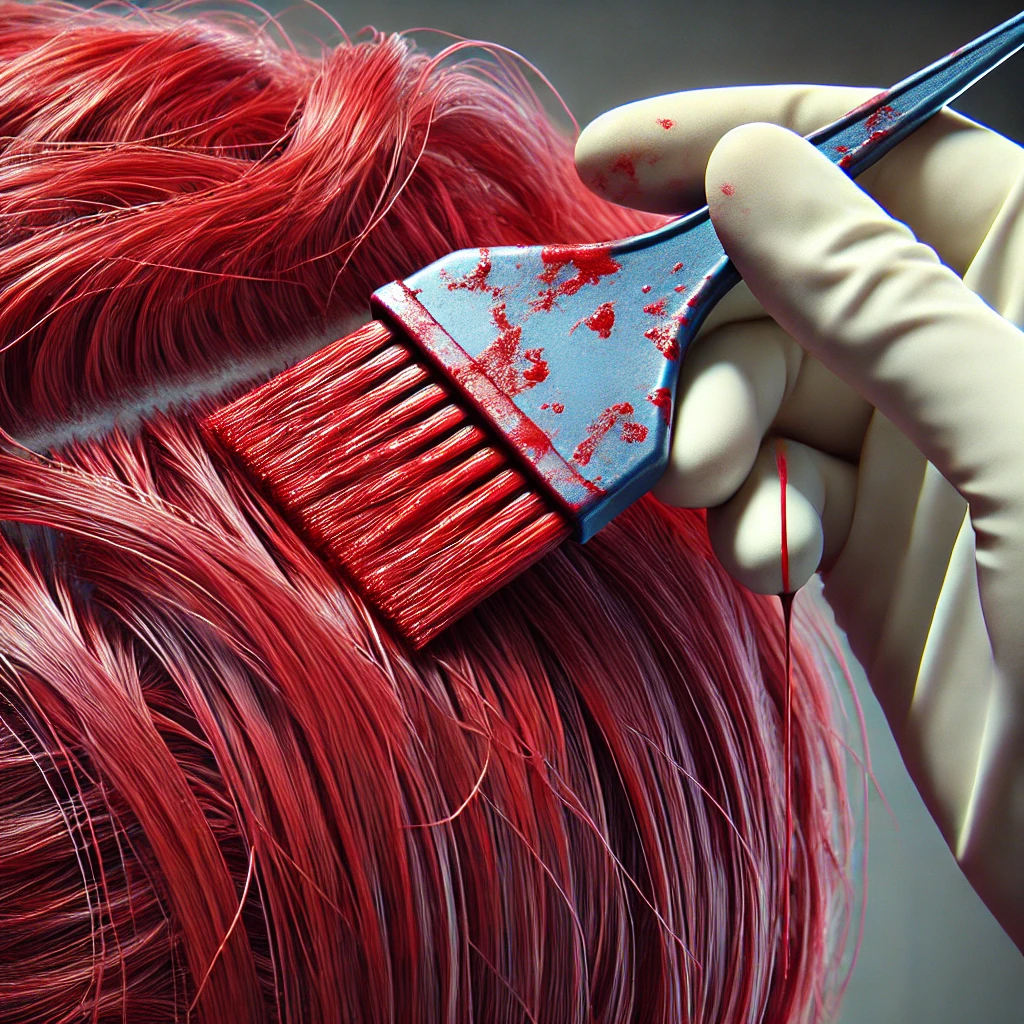
Prevention for the next color session
- Spread a thin ring of Vaseline along the hairline, ears, and neck before applying dye.
- Wear gloves; have a friend help with the back sections.
- Keep cleanup supplies ready: oil, cotton pads, and soap.
- Wipe drips immediately while the dye is still wet.
Allergy and irritation notes
Contact dermatitis is the most common reaction. Permanent dyes often contain PPD (para-phenylenediamine), a known allergen. Patch-test every box 48 hours ahead, follow timing on the instructions, and rinse thoroughly. Do not leave dye on skin longer than necessary.
Bathroom counters and sinks pick up dye drips too — wipe them before they set. Pro Housekeepers’ regular cleaning and deep cleaning keep baths ready between DIY beauty days. Related: how to clean hair brushes and cleaning with vinegar.
Frequently asked questions
Does vinegar remove dye from skin?
Diluted vinegar may help lift surface tint. Apply briefly, then rinse and moisturize. It also helps clean dye from brushes.
Does milk work?
Some people find whole milk on a cotton ball helps; follow with soap and water. Results vary.
Will dye absorb through stained skin?
Small amounts can be absorbed, which is why you should not leave dye on skin longer than needed and should never skip the patch test.
When should I see a salon or doctor?
Salon dye removers can help stubborn stains. See a doctor for swelling, severe rash, or breathing difficulty after dyeing.