
How to Get Nail Polish Out of Clothes Like a Pro
Pro Housekeepers is a Tampa-based nationwide housekeeping company (since 2015). This guide shows how to get nail polish out of clothes — blot and acetone methods for washable fabrics, gentler options for delicates, and the heat rule that keeps stains from setting forever.
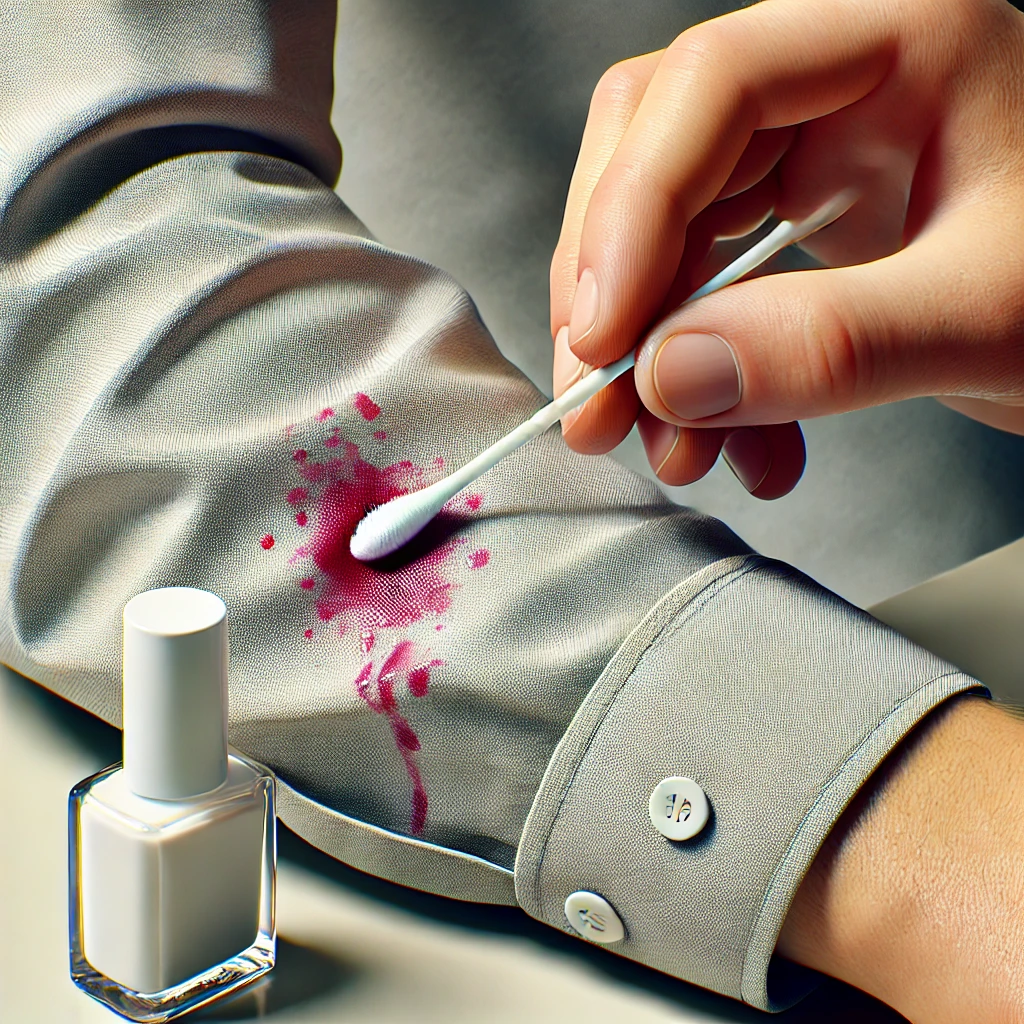
Nail polish is pigment plus resins and solvents designed to dry fast and stick. On fabric, that means the stain can migrate and harden within minutes. Act while the polish is still soft when you can: scrape excess, treat from the back, and never put the garment in the dryer until the color is gone.
Why nail polish binds to fabric
Plasticizers, resins, and pigments (including iron oxides and mica) soak into fibers and cure. Dark and glitter polishes are especially stubborn. The solvent that thins polish for application — often acetone — is also what lifts fresh stains, but acetone can damage acetate, triacetate, and some synthetics, so fabric ID and a spot test matter.
Supplies
- Acetone nail polish remover (plain, without heavy moisturizers) or pure acetone
- Rubbing alcohol for more delicate fabrics
- White paper towels or white cotton rags; cotton swabs; eyedropper
- Dull knife or old credit card to lift blobs
- Laundry detergent; cold water
Safety: work in a ventilated area — acetone fumes are strong and flammable. Keep away from open flame. Spot-test remover on a hidden seam. Protect your work surface; acetone can finish wood and melt some plastics. Wear gloves if your skin is sensitive.
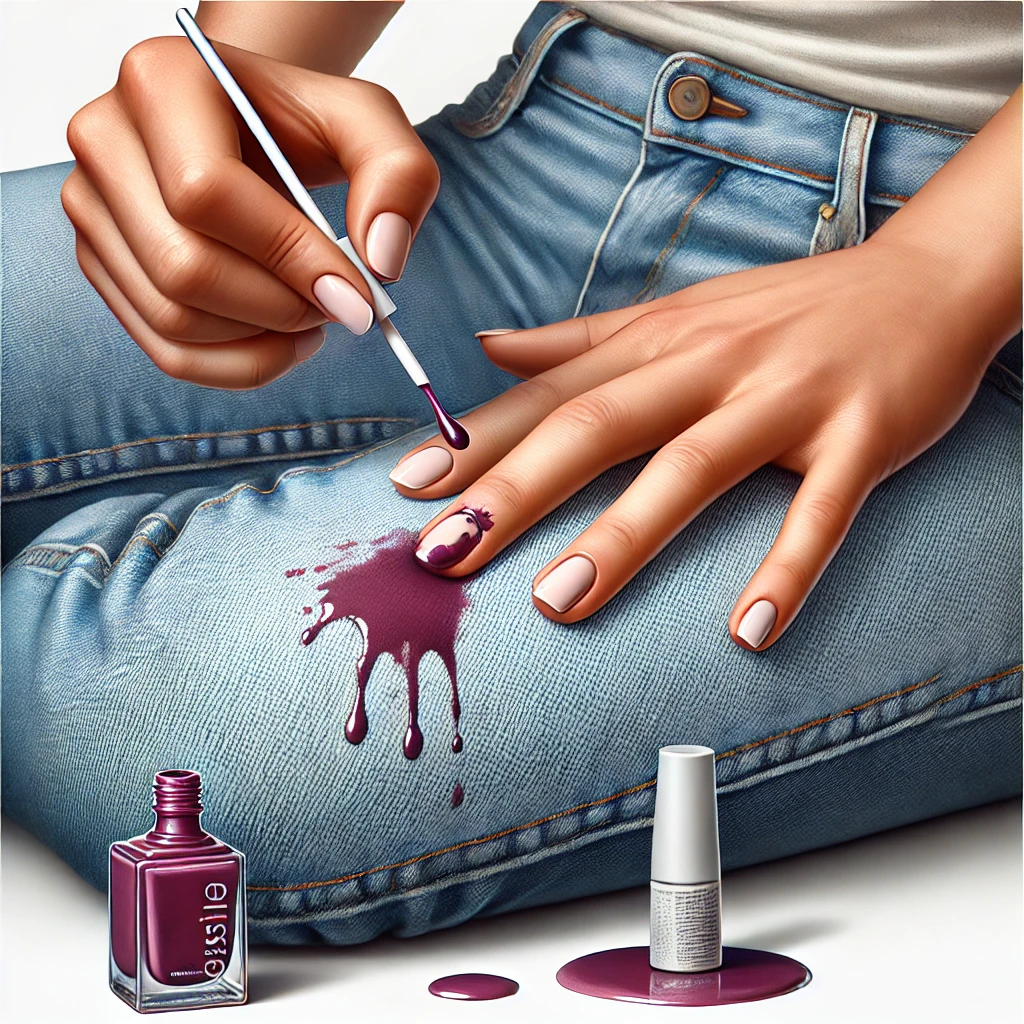
Step-by-step for cotton, denim, and most washables
- Scrape off wet or gummy polish with a dull edge. Blot — do not rub — excess with a dry paper towel.
- Place the stain face-down on a stack of white paper towels so color pushes out of the fabric, not deeper in.
- Dip a cotton swab in acetone remover. Dab from the outside of the stain toward the center so you do not spread a ring.
- Change towels and swabs as they pick up color. Keep dabbing until transfer slows.
- Flush with cold water. Pretreat with laundry detergent, then wash on the hottest cycle safe for the fabric.
- Air-dry and inspect. Repeat treatment if needed. Only use the dryer when the stain is fully gone — heat sets remaining pigment.

Delicate fabrics (silk, wool, acetate)
- Skip straight acetone on acetate/triacetate and unknown vintage pieces — it can dissolve fibers.
- Try rubbing alcohol on a swab with the same face-down blotting method after a spot test.
- For silk or wool, consider a professional dry cleaner and point out the stain and product used so far.
Dried polish
- Gently break up the film with a dull edge without shredding the weave.
- Place face-down on towels; apply acetone in tiny amounts, giving it time to soften the film.
- Blot patiently — dried stains may need several rounds before a wash.
What usually does not work well alone
- Hot water first (can set some dyes)
- Putting the item straight in the dryer “to see”
- Pouring a puddle of remover in the middle of the stain (spreads it)
- Colored towels that can transfer dye while you blot
Hairspray tricks are outdated and inconsistent with modern formulas; solvent + blotting is more reliable.
Everyday laundry mishaps are easier when closets and laundry rooms stay organized. Pro Housekeepers’ regular cleaning and deep cleaning keep floors and soft surfaces ready for life’s spills. For other fabric headaches, see armpit stain removal when that post is next on your list, or our hard water stain guide for mineral marks on dark clothes.
Frequently asked questions
Does non-acetone remover work?
Sometimes on fresh polish, but acetone is usually faster on cured stains. Always spot-test.
Can I use pure acetone from the hardware store?
Yes on sturdy cotton/denim after a test — it is stronger; use less and ventilate.
Will this remove polish from carpet?
Similar blotting from the edges helps; protect padding underneath and test dye stability. Large carpet jobs may need a pro.
What if the color lightened but a shadow remains?
Repeat solvent blotting before any heat drying. Some neon or glitter pigments never fully clear.