
The best dehumidifier for a basement depends on your space’s size and humidity: as a rule of thumb, a 20-30 pint unit suits a small, mildly damp basement, 35-50 pints handles a medium or fairly humid one, and 50+ pints (or a commercial unit) is for large or very damp spaces over about 1,200 square feet. Look for Energy Star certification if it’ll run often, a tank big enough that you’re not emptying it constantly (or one with a drain hose), and a built-in humidistat. Aim to keep basement humidity between 30% and 50% to discourage mold. Below, how dehumidifiers work, how to size one, and our current picks.
June 3, 2026
The Best Dehumidifiers for Basements
Why you might need a basement dehumidifier
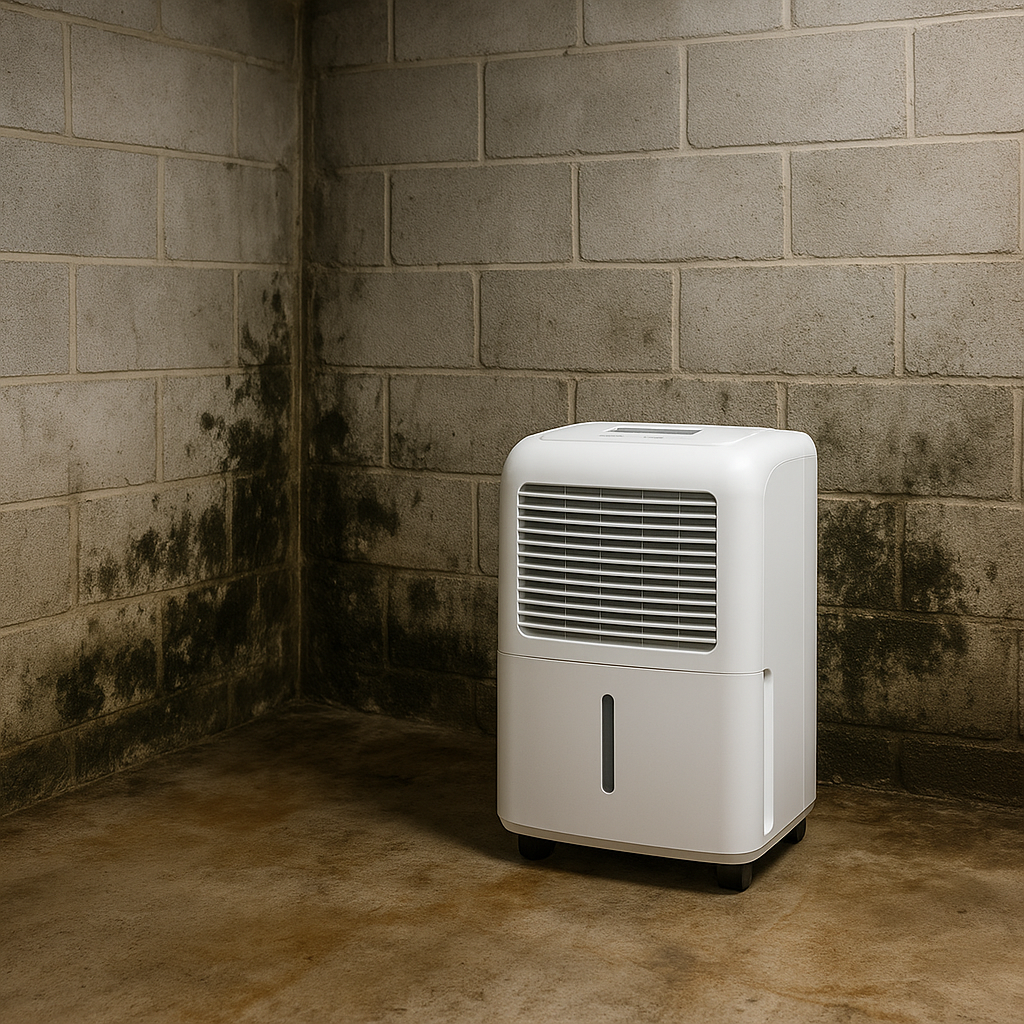
Basements trap dampness, which feeds mold and mildew — both of which can cause health problems and damage stored belongings. Mold is extremely common in homes, is linked to respiratory issues and asthma in susceptible people, and can be costly to remediate once it takes hold. A dehumidifier tackles the root cause — excess moisture — in a way an air purifier or air conditioner alone often can’t.
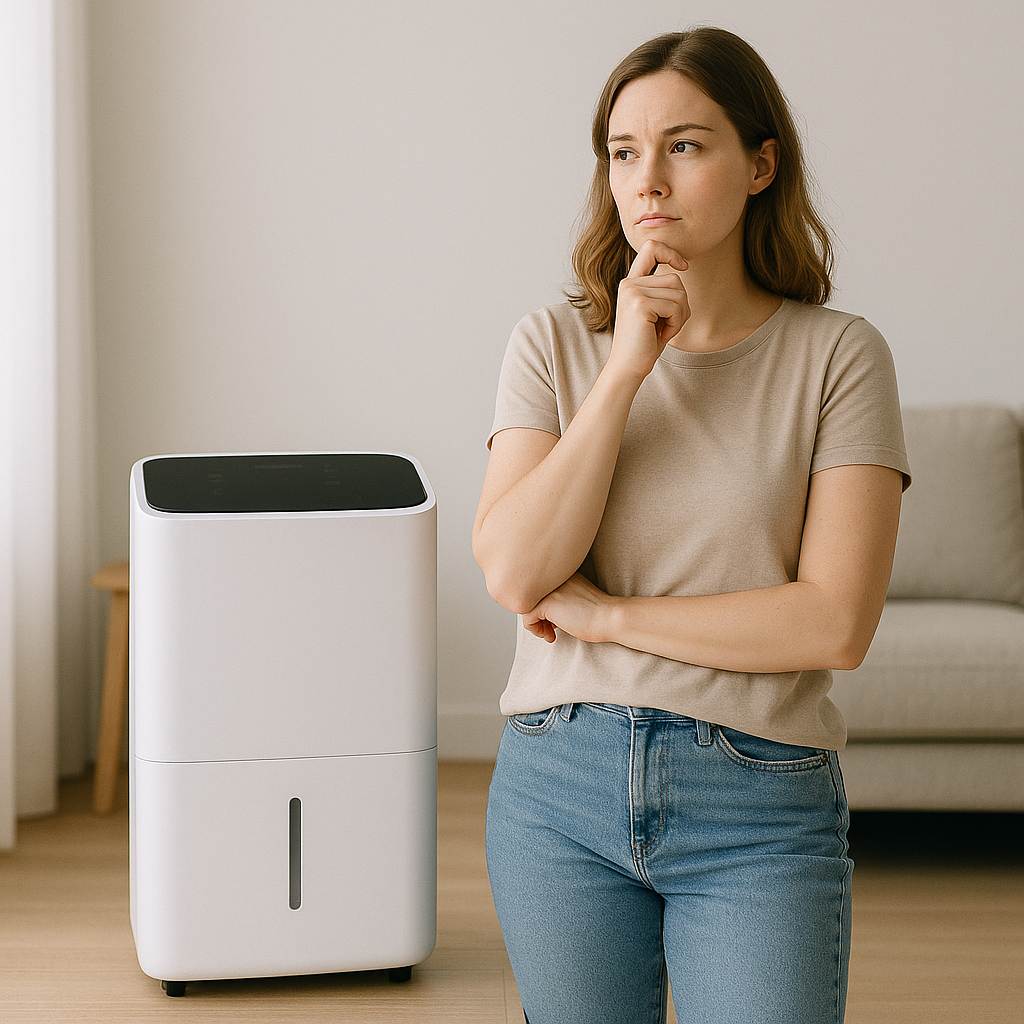
What dehumidifiers do
A dehumidifier simply pulls moisture from the air. Most have five basic parts: a fan, a compressor, cooling coils, a reservoir, and a reheater. Air is drawn in and cooled so moisture condenses out into the reservoir, then the air is reheated and returned to the room.
How to choose one
Ask yourself a few questions before shopping:
- How humid is the space to begin with? (How to measure it is below.)
- How large is the area?
- Will it run constantly, or occasionally?
- What’s my budget?
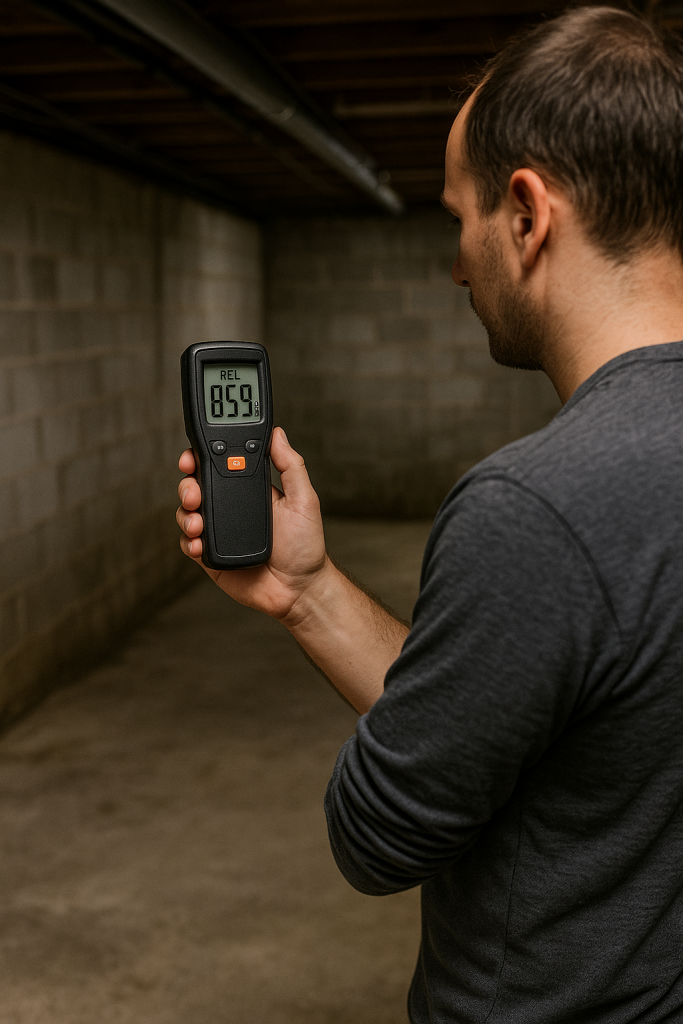
How to measure indoor humidity
The easiest way is a hygrometer from any hardware store, which reads humidity as a percentage. No hygrometer? You can estimate with two thermometers:
Step 1: Take two glass thermometers; wrap the bulb of one in a wet cloth.
Step 2: Place both in front of a fan for five minutes.
Step 3: Subtract the wet-bulb reading from the dry-bulb reading and check a wet-bulb humidity table to find your level.
The video below demonstrates the wet/dry bulb method.
Types of dehumidifiers
- Heat pump (refrigerant): the most common type — fan, compressor, and coils.
- Dehumidifying ventilator: a sensor and exhaust fan, suited to basements and crawl spaces.
- Desiccant: uses silica gel or similar to absorb moisture; works well in cooler spaces.
Heat pump |
Ventilator |
Desiccant |
|
Mechanism |
Fan / compressor / coils |
Sensor / exhaust fan |
Silica gel packets or cartridges |
Best for |
Warm climates |
Basements and crawl spaces |
Cooler spaces |
Cost |
Varies by size |
Varies by size |
Varies by size |
Steps to choose a dehumidifier
Step 1: Measure your basement’s humidity and square footage.
Step 2: Set a budget.
Step 3: Read reviews of any model you’re considering.
Step 4: Check energy efficiency — especially important if it’ll run around the clock.
Step 5: Buy and set it up.
Top-rated dehumidifiers for basements
Our current picks, for a range of space sizes and budgets:
Germaphobix 140-Pint Portable Commercial Dehumidifier (w/ Water Tank and Drainage Pipe)
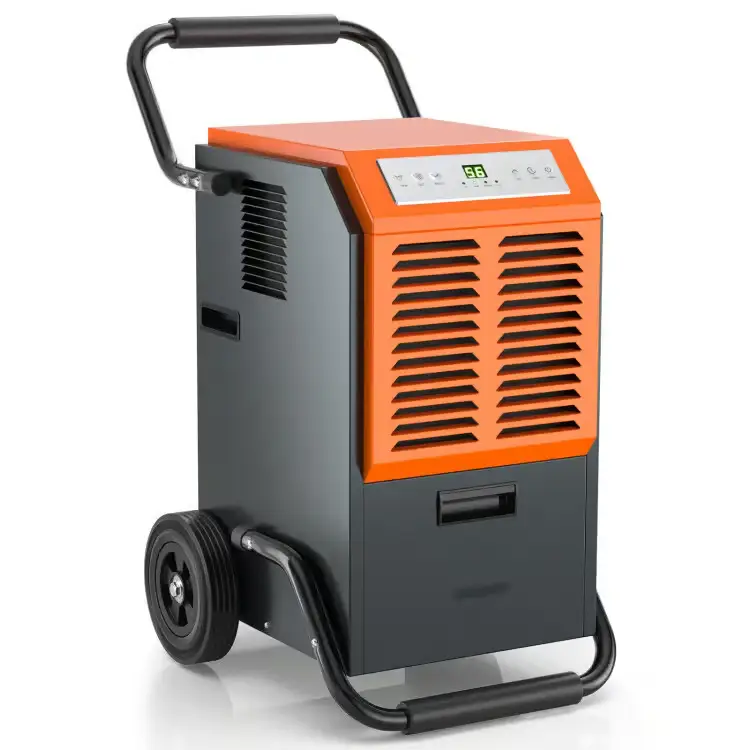
For a large basement or industrial space, the Germaphobix 140-Pint Portable Commercial Dehumidifier removes up to 140 pints of water a day from spaces up to 2,000 square feet, with overflow protection for all-day running. Reviewers praise its efficiency, durability, and customer service.
Midea 22-Pint Cube, 1,500 Sq. Ft., Energy Star Certified
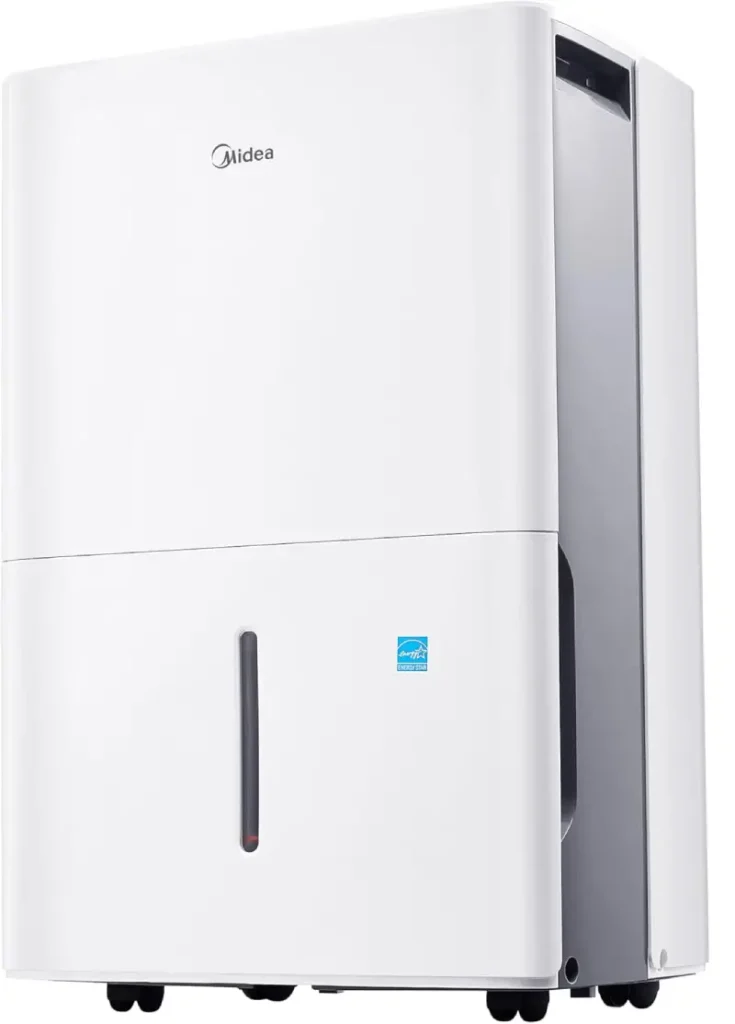
The Midea Cube is energy-efficient and effective, and was ranked #1 by the Dehumidifier Buyer’s Guide for how fast it dropped humidity from 90% to 40%. Reviewers love its quietness and efficiency; the main downside is the 22-pint tank, which may need emptying a few times a day (a drain hose helps).
Frigidaire 35-Pint Dehumidifier (FFAD5033W1)
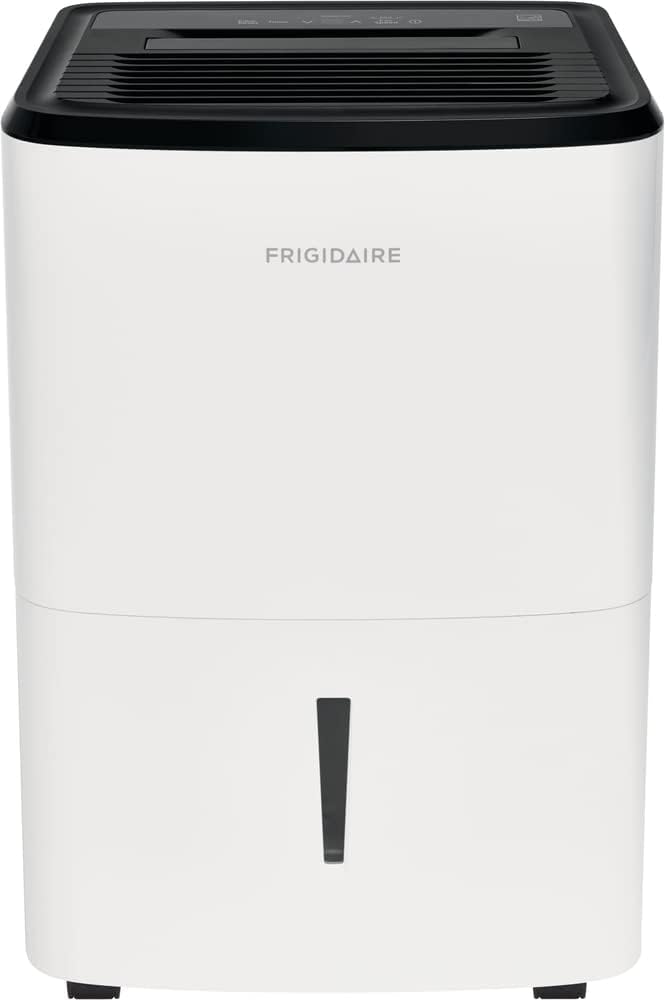
The Frigidaire FFAD5033W1 rates highly for speed and effectiveness, with a 35-pint capacity and adjustable humidity settings. Reviewers say it lowers humidity quickly and eases their respiratory symptoms; the main complaint is a somewhat noisy fan.
GoveeLife 50-Pint Dehumidifier
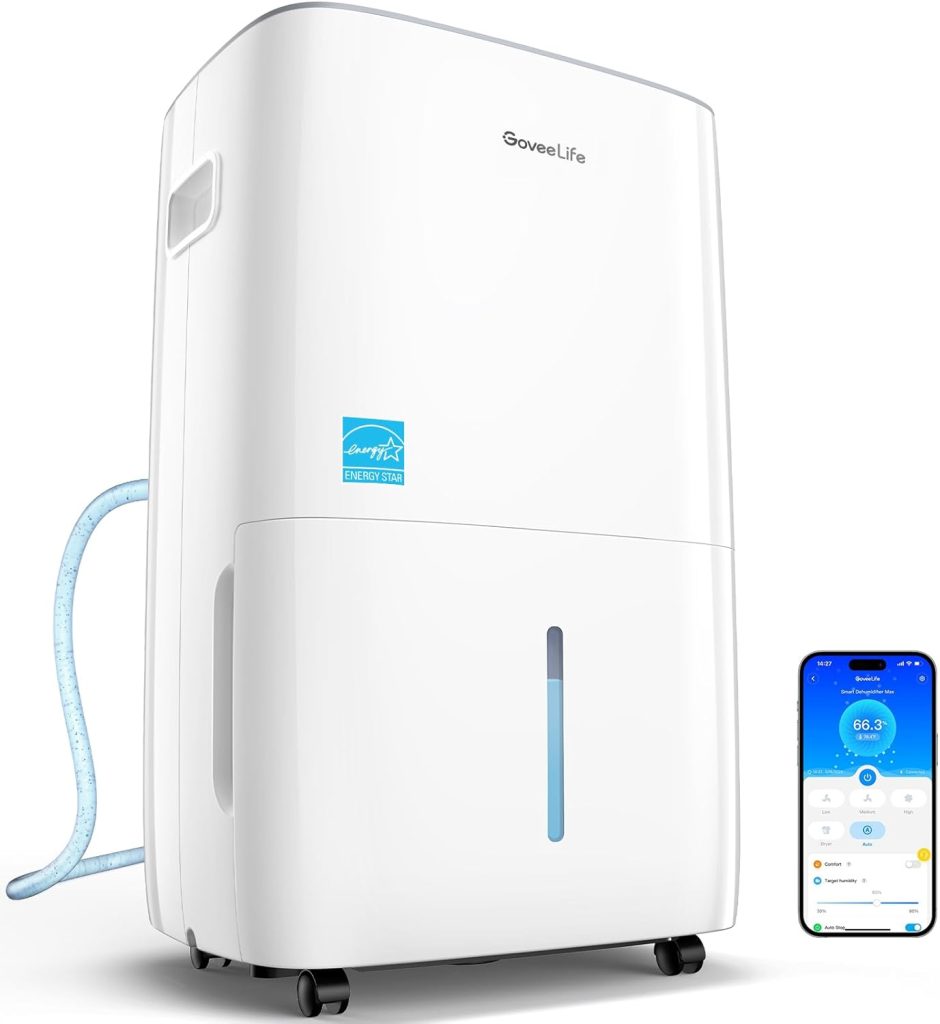
The GoveeLife Dehumidifier is one of the more affordable 50-pint options, and at about 39 pounds, one of the lighter ones. Reviewers like the app (which adjusts humidity 1% at a time) and note it can handle large areas.
Etitato 2.5-Pint Compact Dehumidifier
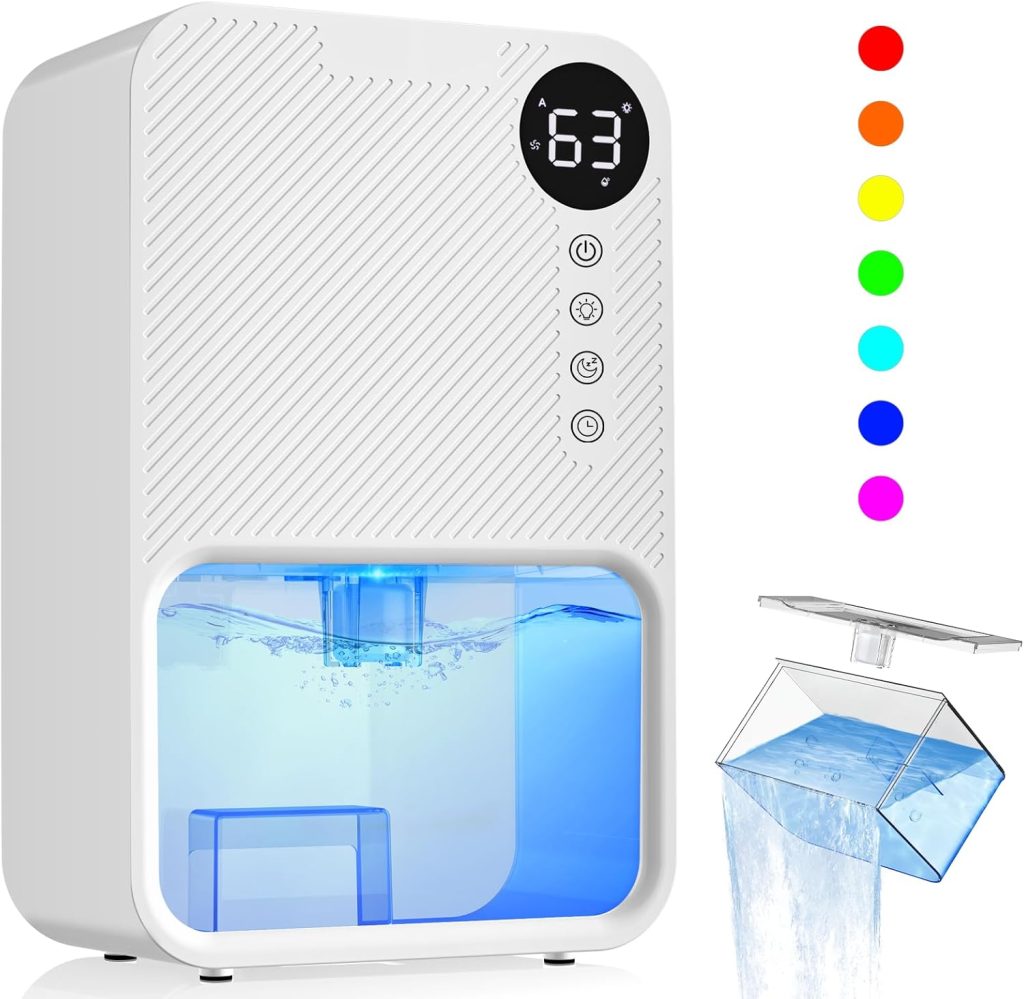
The compact Etitato is highly rated for small spaces (up to about 1,000 square feet) and has an automatic shut-off. Reviewers highlight its compact size, quiet operation, and efficiency — not for large basements, but ideal for a small home, apartment, or single damp room.
What about energy efficiency?
Step 1: Favor Energy Star certified models — the certification comes from the EPA and is independently verified.
Step 2: Read user reviews, which often mention real-world energy use.
Step 3: If it’ll run around the clock, prioritize a highly efficient model.
What size dehumidifier to get
Tank capacity matters — too small and you’ll constantly empty it (or risk overflow). A rough guide:
Capacity |
Square Footage |
Humidity Level |
20-30 pints |
~400 |
20 pints at the low end, 30 at the high end (60-90%) |
25-40 pints |
~600 |
~35 pints for 70%+ humidity |
35-50 pints |
~800 |
~45 pints for 70%+ humidity |
50-60 pints |
1,000-1,200 |
~50 pints up to 70% humidity |
Measure your humidity first to size correctly.
FAQs
Do dehumidifiers prevent mold?
To a point — you can’t remove every mold spore from indoor air, but since mold thrives in damp conditions, keeping humidity down makes your home far less hospitable to it.
Do I need a commercial/industrial unit?
Usually not. Consumer Reports notes that smaller units struggle in spaces 1,200 square feet or larger, so a commercial dehumidifier mainly makes sense for big or extremely damp spaces.
What’s the ideal indoor humidity?
The EPA recommends keeping indoor humidity between 30% and 50% — comfortable, and low enough to discourage mold and dust mites.
Any downsides to running one all day?
By removing moisture, a dehumidifier can dry out skin, hair, and nasal passages. Staying hydrated helps, and a humidistat that maintains a set level (rather than running nonstop) avoids over-drying.
Conclusion
The right basement dehumidifier matters most if anyone in your home deals with allergies, asthma, or other respiratory conditions. Size it to your space and humidity, favor an efficient model if it’ll run often, and keep your basement in that 30-50% range to keep mold and mildew at bay.