
How to Clean Your Ceiling Fan Like a Pro
Pro Housekeepers is a nationwide housekeeping company. This how-to shows the safest way to clean a ceiling fan — pillowcase dusting, grease removal for kitchen fans, and motor care — so dust and allergens stop raining down on furniture and beds.
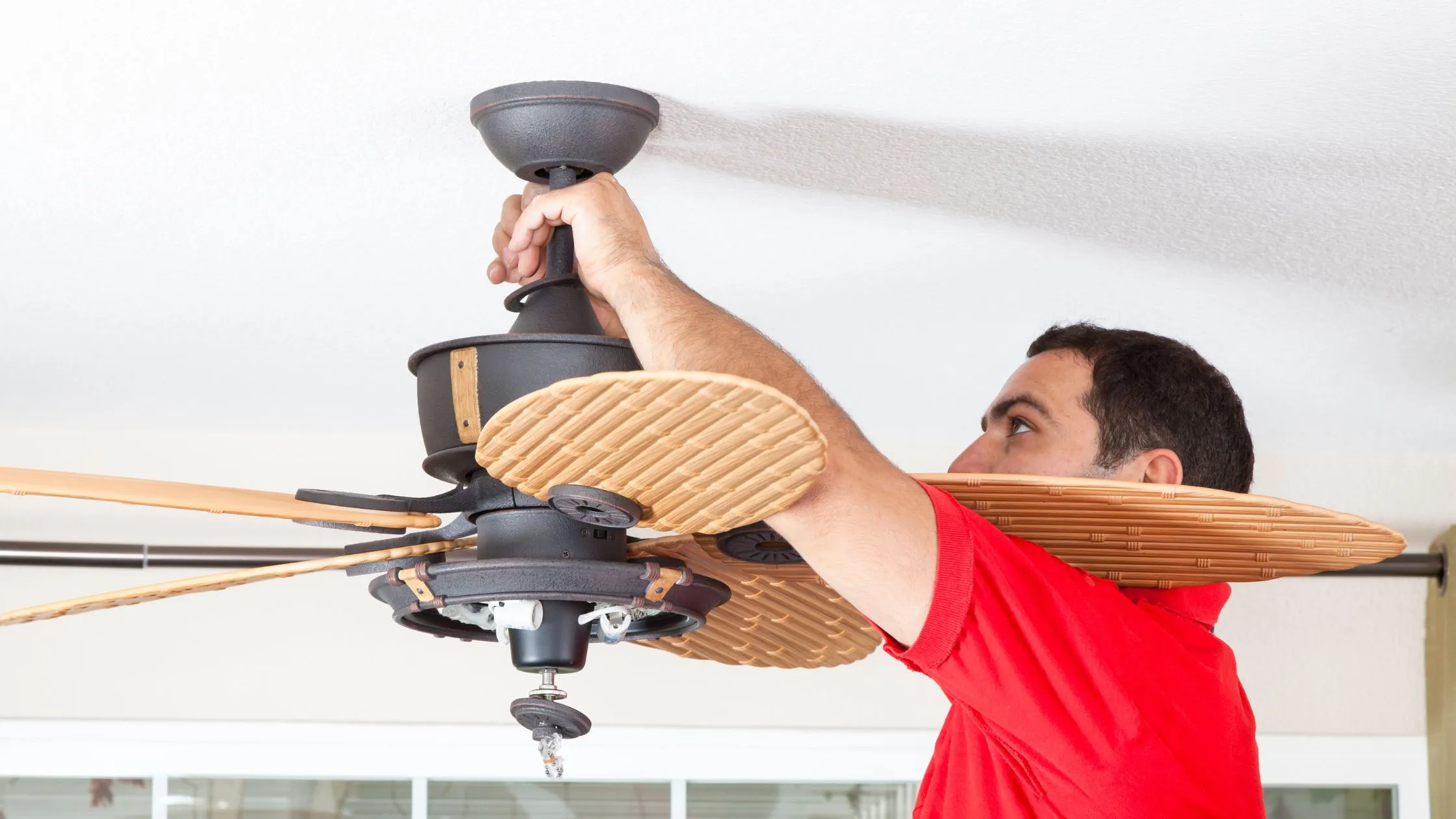
To clean a ceiling fan, turn it off, lay a sheet underneath to catch falling dust, and set up a sturdy ladder. The easiest method is the pillowcase trick: slip an old pillowcase over each blade and pull it back toward you, trapping dust inside instead of scattering it. For grease buildup (common on kitchen fans), wipe blades with a wrung-out cloth dipped in warm soapy water, and use compressed air on the motor housing vents. Always clean top-down — fan first, then furniture, then floors.
Why keep ceiling fans clean?
Dusting a fan is not only cosmetic. Household dust affects indoor air quality, as the American Lung Association notes:
- Dust mixes skin cells, dust-mite debris, animal dander, and pollen.
- Tens of millions of Americans deal with dust-mite allergy; the Cleveland Clinic cites dust mites as a major asthma and allergy trigger.
- Most people spend up to about 90% of their time indoors, so indoor dust exposure is constant.
Once dust settles on blades, the spinning fan flings it around the room — and a fan over a bed can drop it onto you as you sleep. Cleaning it regularly is worth prioritizing, especially in allergy season.
Cleaning supplies you’ll need
Cleaning products |
Supplies |
Mild, grease-cutting dish soap |
Microfiber cloths |
White vinegar |
Old pillowcase |
All-purpose cleaner |
Drop cloth or sheet |
Warm water |
Sturdy ladder or step stool |
Compressed air (for motor vents) |
Dish soap and water, vinegar and water, or an all-purpose spray will all work — use what you have. Do not mix bleach with other cleaners.
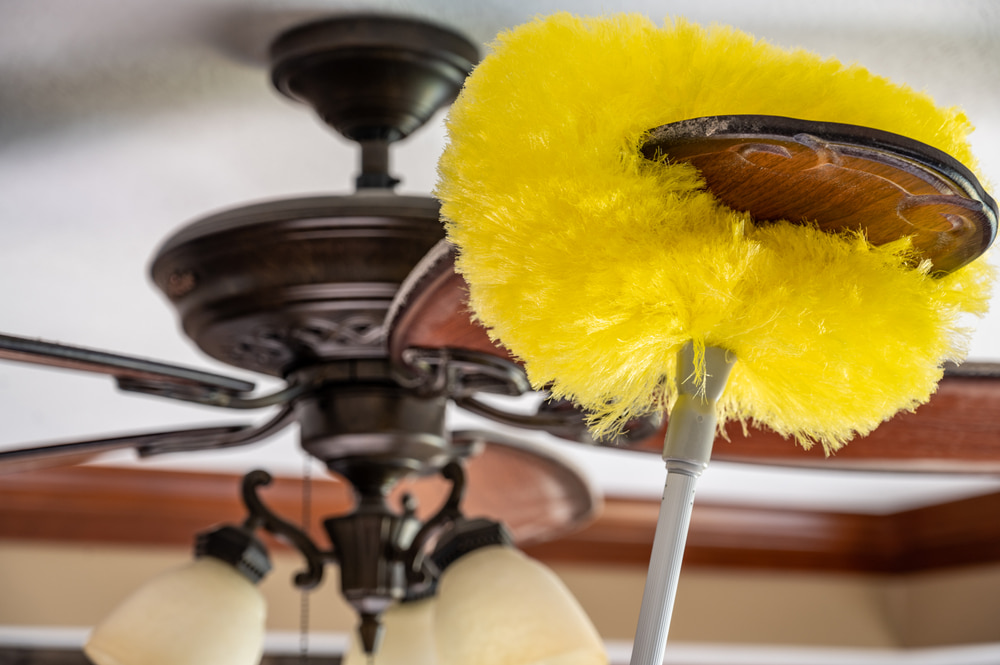
Before you start
- Turn the fan off at the switch (and wall control if you have one). Make sure no one turns it on while you work.
- Open shades and turn on lights so you can see the dust.
- Pick a time when you can dust and vacuum the room afterward.
- Spread a sheet or drop cloth under the fan.
- Clean top-down: fan → furniture → floors.
Tip: pair this with laundry day — strip the bed, use old sheets to catch dust, then wash them when you finish.
Ladder safety: use a stable step ladder on a level floor, keep three points of contact, and never stand on the top cap. If the fan is too high or the footing is shaky, hire help rather than risk a fall.
How to dust fan blades with a pillowcase
The pillowcase method captures dust instead of dropping it onto everything below.
- Position a sturdy ladder under the fan.
- Lightly mist the inside of an old pillowcase with all-purpose cleaner or a vinegar-and-water mix (damp, not dripping).
- Slip the pillowcase over a blade, press gently, and pull it back toward you so dust collects inside.
- Repeat on each blade.
- Wipe any remaining film with a sprayed microfiber cloth.
How to remove grease and grime buildup
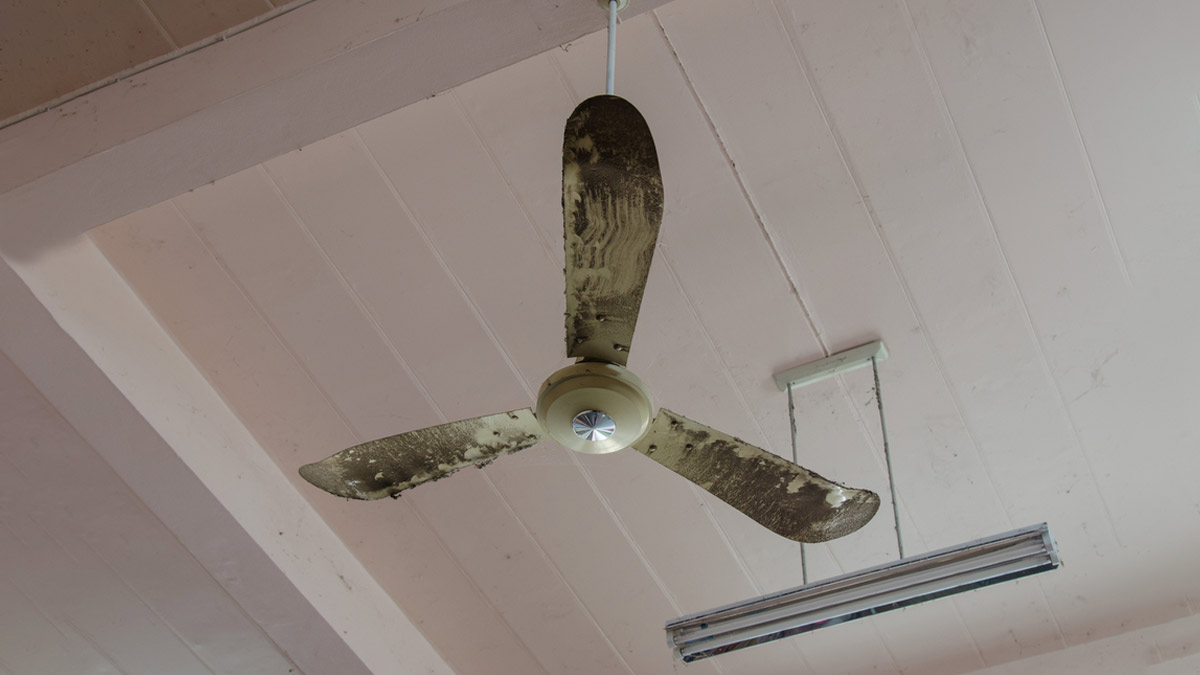
Kitchen fans collect a sticky grease-and-dust film that needs more than dry dusting.
- Set the ladder so you can reach comfortably without overreaching.
- Fill a bowl with warm water and a little grease-cutting dish soap.
- Dip a microfiber cloth, wring it well (wet blades can drip streaks onto floors), and firmly wipe each blade.
- Rinse the cloth often until blades feel smooth, not tacky.
If the fan sits in or near the kitchen, a quick weekly wipe keeps grime from hardening into a thick film.
How to clean the motor and pull chains
- Reach the housing safely from your ladder.
- Spray cleaner onto a microfiber cloth — not directly into the motor.
- Gently wipe the motor housing and pull chains.
- Blow dust out of motor vents with compressed air; trapped dust can hurt performance.
While you are up there for a seasonal clean, check fan direction: clockwise in winter (on many models) helps push warm air down off the ceiling; counterclockwise in summer creates a cooling downdraft. Confirm your model’s manual if unsure.
Cleaning method comparison
Light dust |
Pillowcase method |
All-purpose or vinegar mix |
Heavy dust |
Microfiber cloth |
Vinegar and water |
Dust and grease |
Microfiber cloth |
Warm water and dish soap |
Motor |
Damp cloth + compressed air |
Never soak electrical parts |
Frequently asked questions
Can I clean the fan while it’s running?
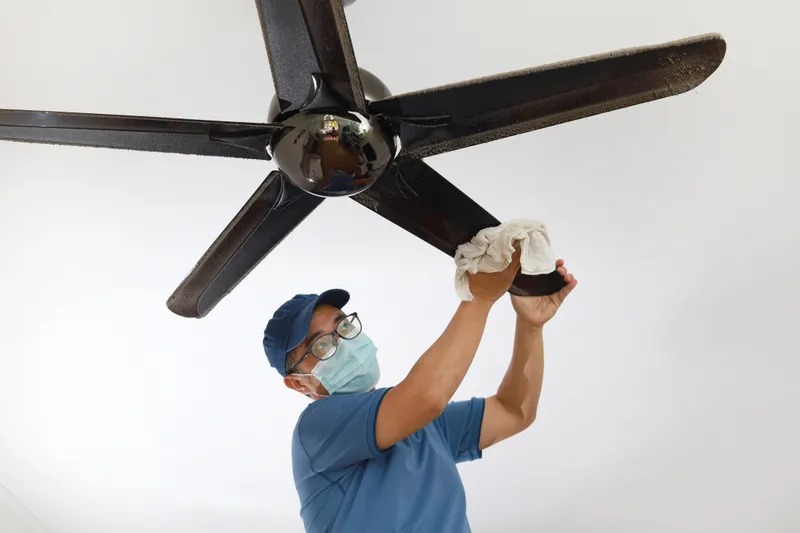
No. A moving fan flings dust everywhere and blades can hit you or knock you off the ladder. Always switch it off first.
How often should I clean it?
Every couple of months for most rooms; monthly or more if someone has allergies or asthma, or weekly for greasy kitchen fans.
How do I slow new dust buildup?
After cleaning, a light wipe with an anti-static dryer sheet can help repel dust between deeper cleans.
What’s the best overall method?
The pillowcase method for routine dust. Add soapy water for kitchen grease, and compressed air for the motor vents.
Prefer to leave high dusting to a crew? Book Pro Housekeepers’ deep cleaning (fans, vents, baseboards) or keep rooms maintained with regular cleaning. For more dust control tips, see how to get rid of dust.