
How to Clean Bath Toys and Prevent Mold
Pro Housekeepers is a nationwide housekeeping company. This guide shows how to clean bath toys and prevent mold — bleach, vinegar, and peroxide soaks, dishwasher tips, and daily drying habits — so hollow toys stay safer for kids between baths.
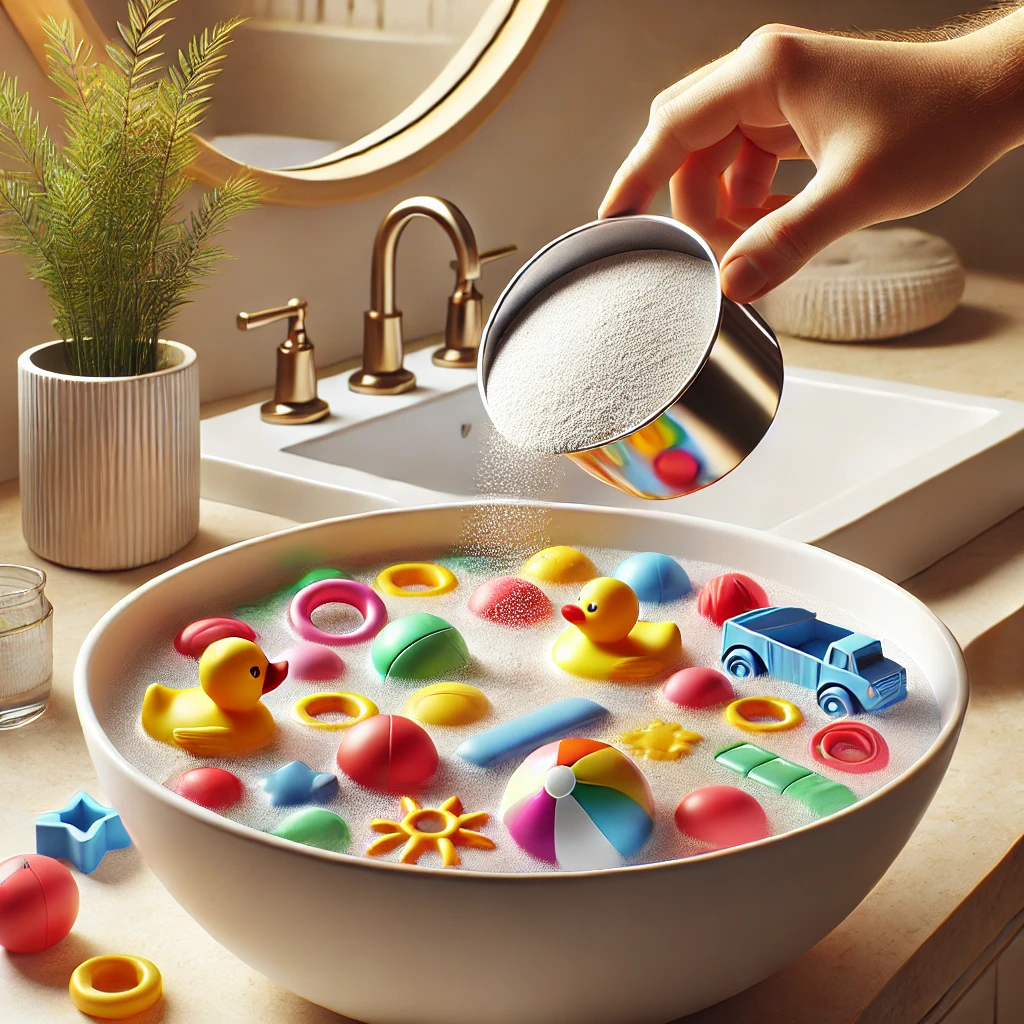
Rubber ducks, squirters, and soft plastic animals trap water in tiny holes. That leftover moisture breeds mold, mildew, and bacteria that kids put back in their mouths. The fix is simple but consistent: rinse after every bath, dry completely, and disinfect on a schedule. Pick one disinfectant method per session — never mix bleach with vinegar, ammonia, or hydrogen peroxide.
Why bath toys get moldy
- Hollow toys hold water long after play ends
- Warm, humid bathrooms keep interiors damp overnight
- Infrequent deep cleaning lets biofilm build up inside
- Soft rubber and silicone can stain or grow mildew where you cannot see
Buying tips help long-term: prefer phthalate-free, BPA-free toys, and designs that open for cleaning when you can find them. Sealed squirters are fun but harder to sanitize.
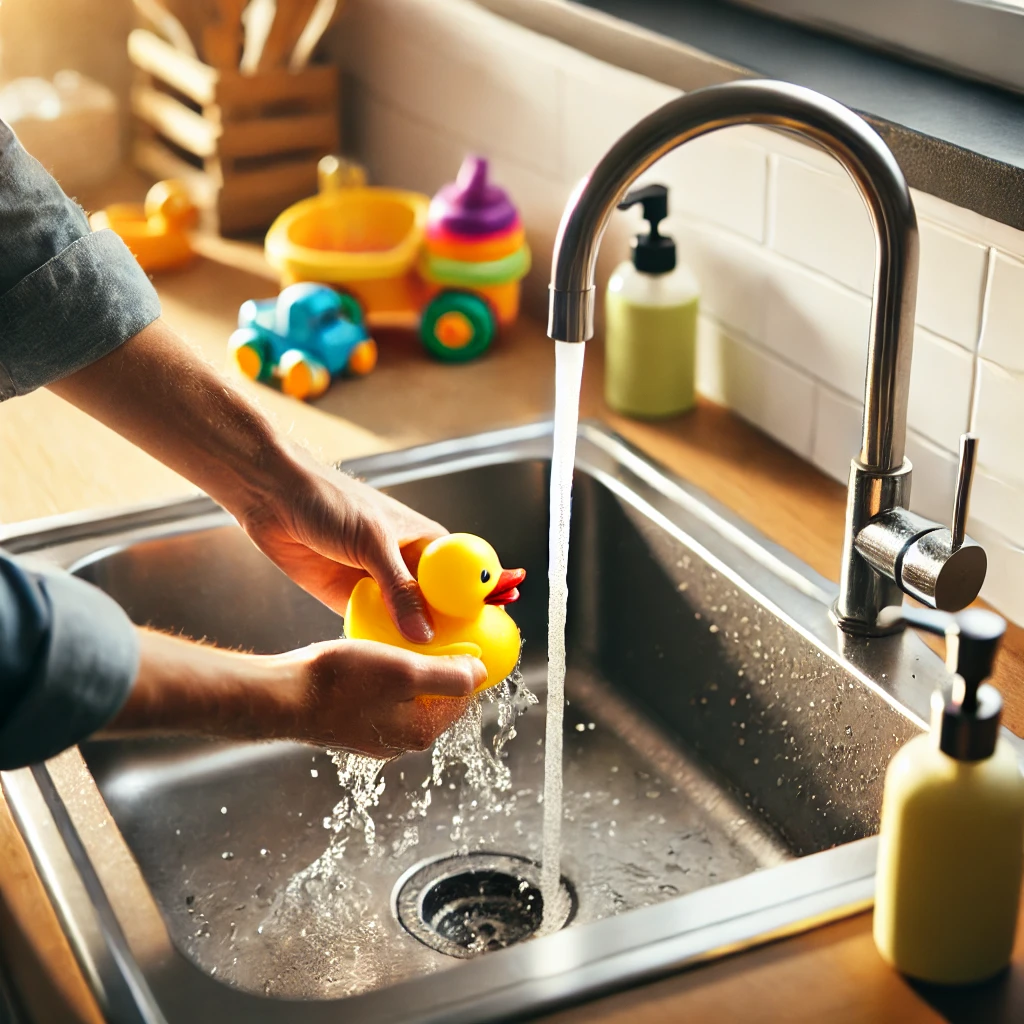
When to disinfect (not just rinse)
- After any pee or poop accident in the tub with toys present
- When you see black, pink, orange, or slimy spots inside
- At least every 1–2 weeks for heavily used toys
- After illness in the household (cold, flu, stomach bug)
Supplies you will need
- Mild dish soap; clean sponge; plastic tub or basin
- Household bleach or white vinegar or 3% hydrogen peroxide (choose one)
- Kitchen gloves; open a window or run the fan for bleach work
- Mesh laundry bag if using the dishwasher for small toys
Safety: never mix bleach with vinegar, ammonia, or peroxide — toxic gases can form. Rinse toys thoroughly before children use them again. Keep concentrated bleach out of reach of kids and pets. Discard any toy you cannot fully clean inside — replacement is safer than guessing.
Bleach soak (strong disinfection)
- Mix about 10 parts hot water to 1 part bleach in a plastic tub (example: 10 cups water + 1 cup bleach).
- Submerge toys; squeeze hollow ones so solution fills the cavity.
- Keep wet for at least 6 minutes (up to about 10 for stubborn mildew).
- Rinse repeatedly with hot water, squeezing out interiors until no bleach smell remains.
- Air-dry completely before reuse — overnight if needed.
For oversized toys that will not fit in a tub, glove up and keep the surface wet with bleach solution for the full dwell time, then rinse thoroughly.
Vinegar soak (moldy rubber duck rescue)
- Mix equal parts white vinegar and water.
- Fill cavities and soak at least 15 minutes — up to 24 hours for interior mold.
- Squeeze out, rinse well under hot water, air-dry fully.
If mold keeps returning after thorough soaks, replace the toy. Vinegar is gentler than bleach and useful on some wooden bath toys, but it is not a registered hospital-grade disinfectant.
Hydrogen peroxide option
Equal parts water and 3% hydrogen peroxide, soak 15+ minutes with cavities filled, then rinse and dry. Use this instead of bleach when you want a different oxidizer — still do not combine with bleach.
Dishwasher method
- Rinse off loose dirt and soap scum.
- Place toys on the top rack, openings facing down; bag small pieces so they do not fall.
- Run a normal cycle with detergent; allow the dry cycle to finish.
- Shake out leftover water and finish air-drying on a rack.

Daily habits that prevent mold
- Rinse every toy after each bath and stand openings down to drain
- Store in a mesh bag or open basket — not a closed wet bin
- Optional: seal squirt holes with a dab of waterproof glue to block water entry
- Inspect interiors monthly; toss toys you cannot sanitize
- Wipe the tub rim and toy shelf so standing water does not rewet clean toys
For bathrooms that stay damp after family baths, Pro Housekeepers’ regular cleaning and deep cleaning help control humidity buildup, soap scum, and mildew on hard surfaces. Related tip: our mildew guide covers walls and grout.
Frequently asked questions
Can bath toys go in the washing machine?
Often yes in a mesh bag alone — but air-dry only; dryer heat can warp plastic.
How long should a bleach soak last?
About 6 minutes submerged; rinse thoroughly afterward.
Is vinegar enough for mold inside a duck?
It often helps for light mold. Persistent growth means replace the toy.
Can I mix bleach and vinegar “just a little”?
No. Never mix them — even small amounts can release harmful gas.
How often should I deep-clean toys?
Every 1–2 weeks for daily bathers, plus any time after an accident or illness.