
How to Clean All Types of Cutting Boards
To clean a cutting board, match the method to the material. Wash every board with hot water and unscented dish soap after each use. Sanitize plastic with a mild bleach solution (about 1 teaspoon unscented bleach per quart of water), and use equal parts white vinegar and water on wood — never soak wood, and never bleach marble (acid and bleach both risk damage). Keep separate boards for raw meat and for produce. Oil wooden boards regularly so they stay sealed and crack-free.
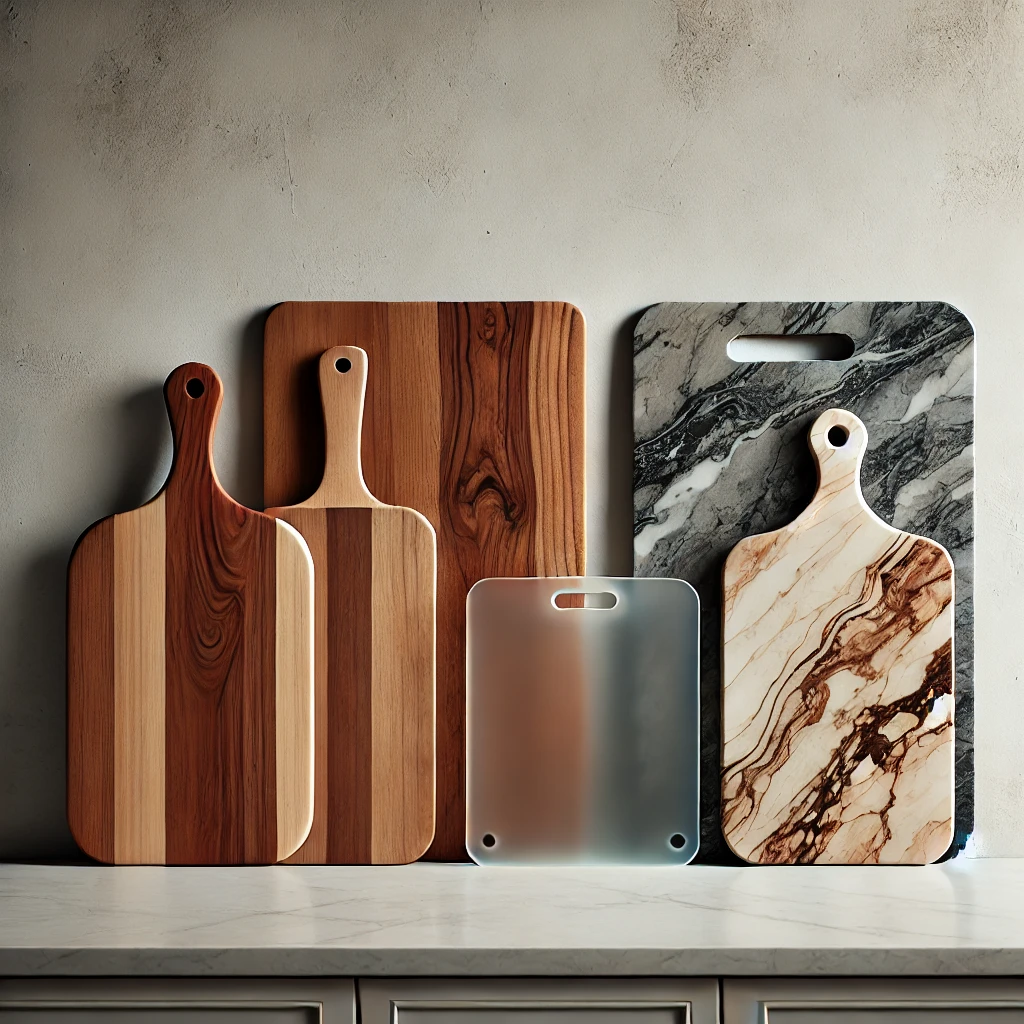
Types and best uses
- Plastic: durable, dishwasher-safe many times, best for raw meat and poultry because you can sanitize aggressively.
- Wood / bamboo: kind to knives; great for bread, produce, and cheese. Hand-wash only; oil monthly.
- Marble / stone: stylish serving boards more than heavy chopping; acid etches; no dishwasher.
- Glass: non-porous but dulls knives; clean like glassware.
Per USDA food-safety guidance, do not cut salad vegetables on the board you just used for raw chicken unless it has been washed and sanitized in between — separate boards are simpler.
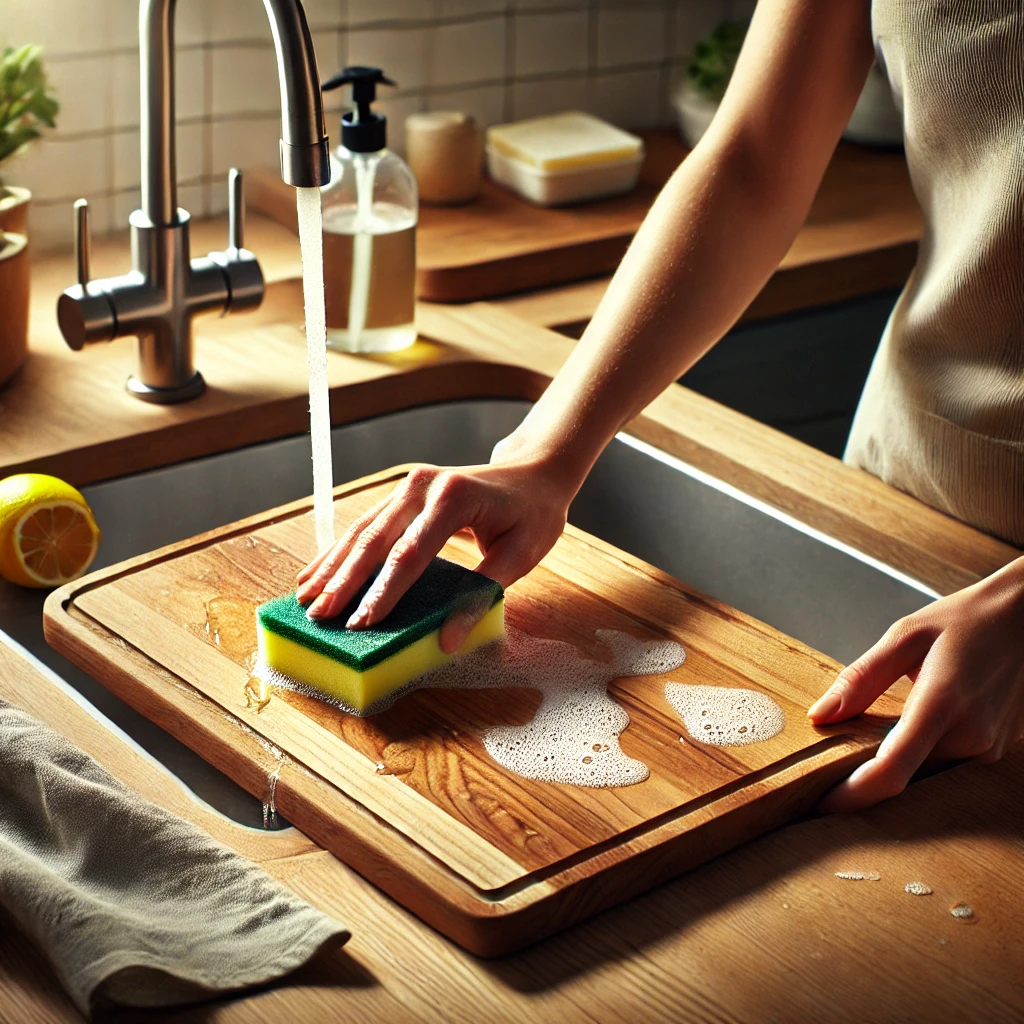
Wood or bamboo
- Scrape off food; wash with hot soapy water and a brush.
- Rinse; dry upright immediately — never soak or dishwasher.
- Sanitize with a vinegar-water wipe; air-dry.
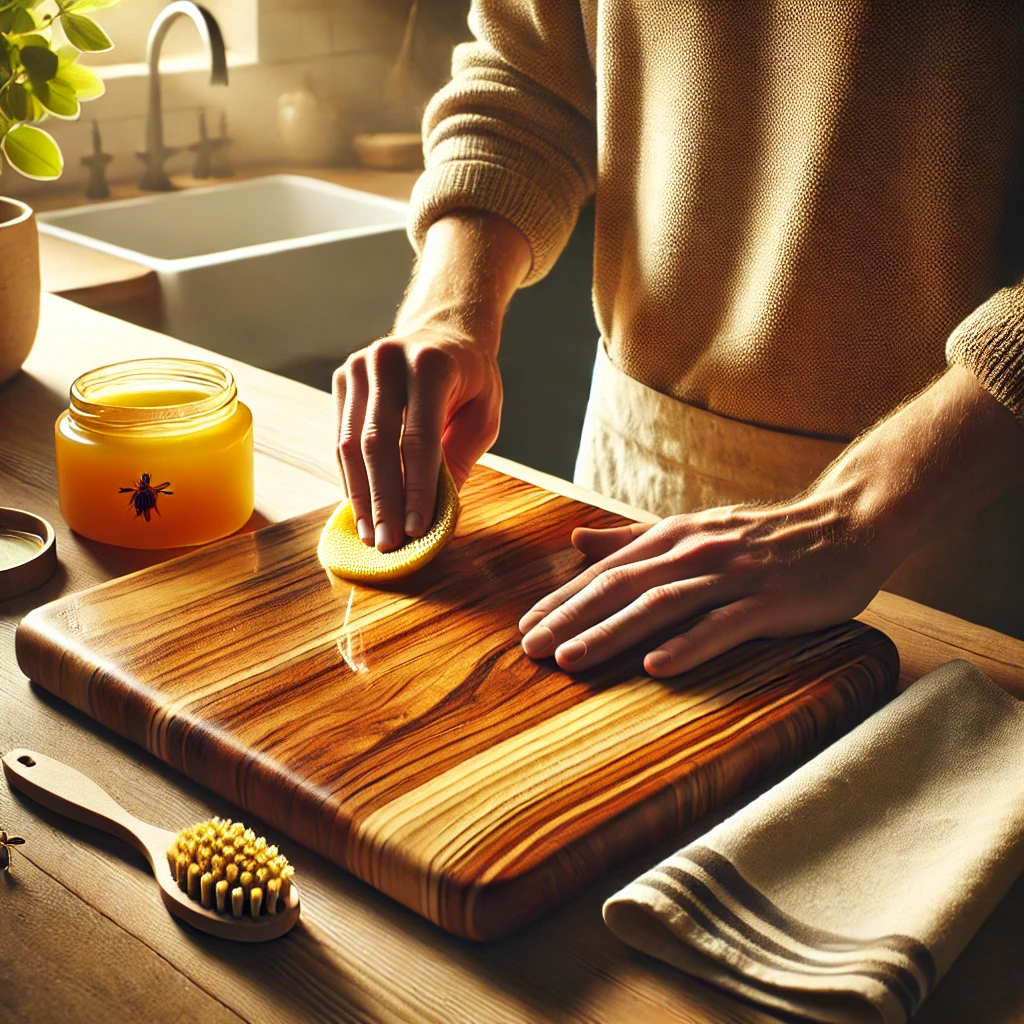
- When the surface looks dry or fuzzy, apply food-grade mineral oil (or a beeswax board cream); wipe excess after it soaks in.
Deep stains: coarse salt and half a lemon scrub, then rinse and dry. Replace boards with deep grooves that will not come clean.
Plastic
- Hot soapy wash or dishwasher if labeled safe.
- Sanitize with the mild bleach solution; contact a minute; rinse; dry.
- Retire scarred boards that stay stained after washing — grooves hold bacteria.
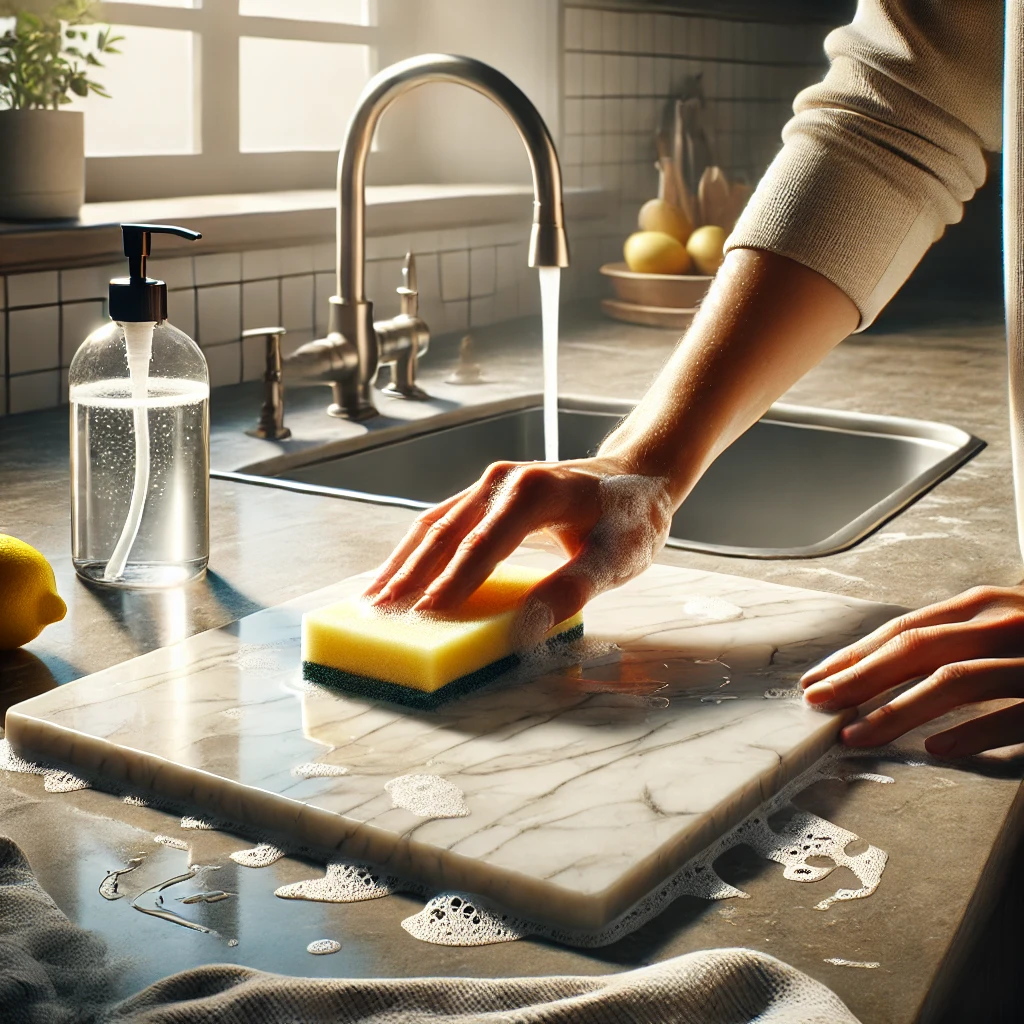
Marble and stone
Wipe with mild soap and water only. Skip vinegar, lemon, and bleach on marble. Dry promptly. Treat as a serving surface more than a raw-meat station.
Quick material cheat sheet
- Wood: soap + vinegar sanitize + oil
- Plastic: soap + mild bleach sanitize (or dishwasher)
- Marble: mild soap only
- All: separate raw meat from ready-to-eat foods
Frequently asked questions
Is wood less sanitary than plastic?
Both work when washed correctly. Plastic is easier to sanitize after raw meat; wood needs hand-washing and oiling. Deep knife scars matter more than material myths.
Can I use undiluted bleach?
No — it is harsh, fumes, and unnecessary. Stick to a dilute solution on plastic, then rinse.
How often should I oil wood?
Whenever water stops beading — often monthly with regular use.
A clean board is only part of a safe kitchen. When you want sinks, counters, and appliance exteriors handled too, book Pro Housekeepers’ regular cleaning or deep cleaning.